
Catalogue Search | MBRL


Are you sure you want to remove the book from the shelf?

{{itemTitle}}
4,410
result(s) for
"Religious films."
Sort by:

Art cinema and theology : the word was made film
This book examines postmodern theology and how it relates to the cinematic style of Robert Bresson, Carl Theodor Dreyer, Ingmar Bergman, and Luis Buنnuel. Ponder demonstrates how these filmmakers forefront religious issues in their use of mise en scلene. He investigates both the technical qualities of film \"flesh' and its theological features. The chapters show how art cinema uses sound, editing, lighting, and close-ups in ways that critique doctrine's authoritarianism, as well as philosophy's individualism, to suggest postmodern theologies that emphasize community. Through this book we learn how the cinematic style of modernist auteurs relates to postmodern theology and how the industry of art cinema constructs certain kinds of film-watching subjectivity.
Book
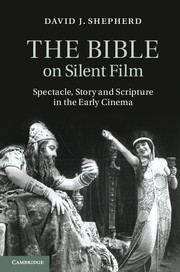
The Bible on Silent Film
Between the advent of motion pictures in the 1890s and the close of the 'silent' era at the end of the 1920s, many of the longest, most expensive and most watched films on both sides of the Atlantic drew upon biblical traditions. David J. Shepherd traces the evolution of the biblical film through the silent era, asking why the Bible attracted early film makers, how biblical films were indebted to other interpretive traditions, and how these films were received. Drawing upon rarely seen archival footage and early landmark films of directors such as Louis Feuillade, D. W. Griffith, Michael Curtis and Cecil B. DeMille, this history treats well-known biblical subjects including Joseph, Moses, David and Jesus, along with lesser-known biblical stars such as Jael, Judith and Jephthah's daughter. This book will be of great interest to students of Biblical studies, Jewish studies and film studies.
eBook

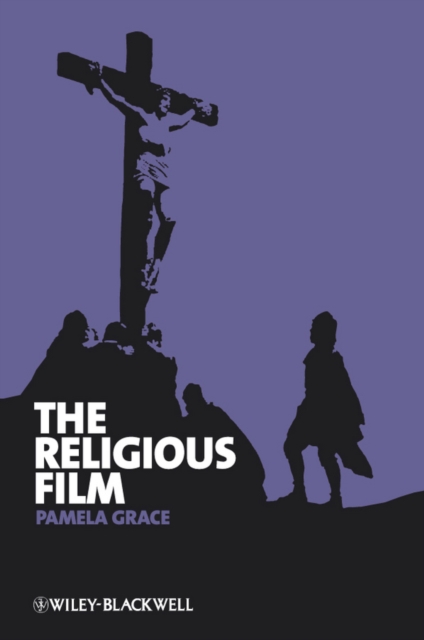
The religious film
From The Gospel According to Matthew to Jesus Christ Superstar, from The Passion of Joan of Arc to The Last Temptation of Christ and Jesus of Montreal, The Religious Film captures the glory, gore, and centrality of this important genre. A short, accessible introduction to religious film, exploring the genre as spectacle, as musical, and as controversy Examines the historical, cultural and critical background for religious films from the silent era through to the present day Introduces the complexities and characteristics of this iconic genre of film, including common sounds and images, and the values that most traditional films of this kind uphold.
eBook

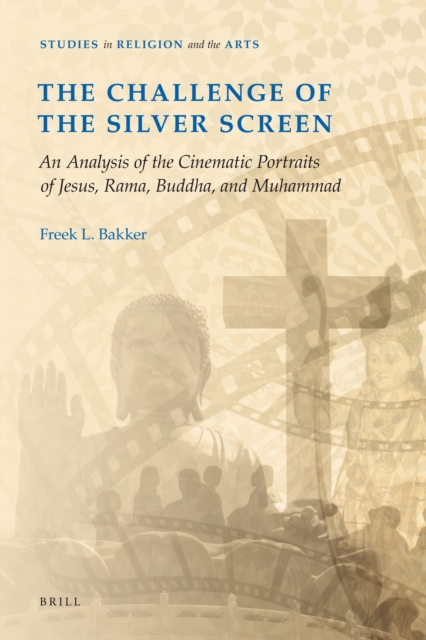
The Challenge of the Silver Screen
This book analyses the most important depictions in film of Jesus, Rama, Buddha and Muhammad and the religious and cultural background to portraying individuals who disclose the divine. It also addresses the reactions of religious leaders to these films.
eBook

Screening divinity
Lisa Maurice examines screen portrayals of gods-- covering Greco-Roman mythology, the Judeo-Christian God and Jesus - from the beginning of cinema to the present day. Focussing on the golden age of the Hollywood epic in the fifties and the twenty-first century second wave of big screen productions, she provides an over-arching picture that allows historical trends and developments to be demonstrated and contrasted. Engaging with recent scholarship on film, particularly film and theology as well as classical reception, she considers the presentation of these gods through examination of their physical and moral characteristics, as well as their interaction with the human world, against the background of the social contexts of each production.
Book
O zaślepieniu, nieprzejrzystości i reinkarnacji. „Zaćma” Ryszarda Bugajskiego
In his article Nadgrodkiewicz presents an analysis of selected scenes from the movie “Blindness” (“Zaćma”, 2016) directed by Ryszard Bugajski. For the author the main interpretative context is the tradition of the passion film – a subgenre within religious film – which is based on reiterated evocation of the archetypical image of the Passion of Jesus Christ that undergoes different artistic transformations in a movie. The author argues that “Blindness” can be perceived as a film that in its deep, oneiric layer of narration reveals itself as a peculiar remake of the passion theme. In order to reinforce the thesis Nadgrodkiewicz proposes a theoretic model of the wandering of the topos of the Way of the Cross and then states that Bugajski’s film in some sense disguises itself in the viewer’s eyes, hiding its status of a remake. The article is recapitulated with the metaphor of the reincarnation as an everlasting wandering of the topoi.
Journal Article

The partition project
\"When her grandmother comes off the airplane in Houston from Pakistan, Mahnoor knows that having Dadi move in is going to disrupt everything about her life. She doesn't have time to be Dadi's unofficial babysitter -- her journalism teacher has announced that their big assignment will be to film a documentary, which feels more like storytelling than what Maha would call \"journalism.\" As Dadi starts to settle into life in Houston and Maha scrambles for a subject for her documentary, the two of them start talking. About Dadi's childhood in northern India-- and about the Partition that forced her to leave her home and relocate to the newly created Pakistan. As details of Dadi's life are revealed, Dadi's personal story feels a lot more like the breaking news that Maha loves so much. And before she knows it, she has the subject of her documentary\"-- Provided by publisher.
Book
Doświadczanie transcendencji – współczesne kino religijne
In her article the author tries to capture the changes that are taking place in contemporary religious cinema. A number of artists are reviving this art form, but with a significant change in the accents – for example the emphasis on the body as a necessary medium of spirituality. In this manner personal experience becomes a dominating meta-category. Using this category and religiously oriented phenomenology of film, Stańczyk distinguishes three basic varieties of religious film: the contemplative cinema, epiphanic cinema and ecstatic cinema. These new formulas have been placed against the background of wider changes in the humanities associated primarily with the affective turn.
Journal Article