
Catalogue Search | MBRL


Are you sure you want to remove the book from the shelf?

{{itemTitle}}
6,080
result(s) for
"Religious nationalism"
Sort by:

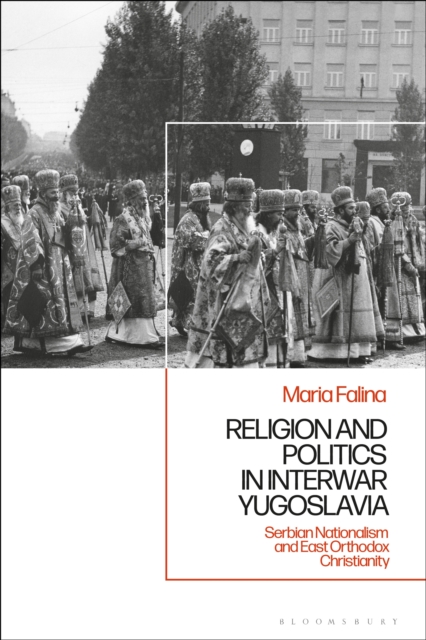
Religion and Politics in Interwar Yugoslavia
Religion and Politics in Interwar Yugoslavia explores the interaction between religion, nationalism, and political modernity in the first half of the 20th century, taking the case of the Serbian Orthodox Church as an example. This book historicizes the widely held assumption that the bond between religion and nationalism in the Balkans is a natural one or that this bond has been historically inevitable. It tells a complex story of how East Orthodox Christianity came to be at the core of one version of Serbian nationalism by bringing together the themes of religion, nationalism, politics, state-building, secularization, and modernity. Maria Falina reconstructs how the ideological fusion between Serbian nationalism and East Orthodox Christianity was forged. The analysis emphasizes ideas and ideologies through a close reading of public discourses and historical narratives while paying attention to individual actors and their personal histories. The book argues that the particular political vision of the Serbian Orthodox Church emerged in reaction to and in interaction with the challenges posed by political modernity that were not unique to Yugoslavia. These included establishing the modern multinational and multi-religious state, the fear of secularization, and the rise of communism and fascism. Religion and Politics in Interwar Yugoslavia makes an important contribution to understanding the history of interwar Yugoslavia, 20th-century Europe, and the ties between religion and nationalism.
eBook

Indian philosophy, Indian revolution : on caste and politics
In their brave and challenging book, grounded in political science and the Continental philosophical tradition, Divya Dwivedi and Shaj Mohan engage with the resurgence of upper-caste supremacism in India and its justification via the legacy of 'the Aryan doctrine' and Hindu nationalism. Their essays were written from 2016 to 2023, when India's democratic institutions were subverted and caste-based oppression overflowed into public space-killing and menacing the lower castes of all religions, minorities, women, students and the media. This book chronicles the ascending oppression of democracy in India, a veritable biography of authoritarianism. Dwivedi and Mohan reject simplistic accounts of India's politics as the opposition between 'Hindu majoritarian nationalism' and 'the religious minorities', or between 'Hindu fundamentalism' and 'religious pluralism'.
BOOK


State, faith, and nation in Ottoman and post-Ottoman lands
\"Current standard narratives of Ottoman, Balkan, and Middle East history overemphasise the role of nationalism in the transformation of the region. Challenging these accounts, this book argues that religious affiliation was in fact the most influential shaper of communal identity in the Ottoman era, that religion moulded the relationship between state and society, and that it continues to do so today in lands once occupied by the Ottomans. The book examines the major transformations of the past 250 years to illustrate this argument, traversing the nineteenth century, the early decades of post-Ottoman independence, and the recent past. In this way, the book affords unusual insights not only into the historical patterns of political development but also into the forces shaping contemporary crises, from the dissolution of Yugoslavia to the rise of political Islam\"-- Provided by publisher.
Book

Borders of Belief: Religious Nationalism and the Formation of Identity in Ireland and Turkey
Religion and nationalism are two of the most powerful forces in the world. And as powerful as they are separately, humans throughout history have fused religious beliefs and nationalist politics to develop religious nationalism, which uses religious identity to define membership in the national community. But why and how have modern nationalists built religious identity as the foundational signifier of national identity in what sociologists have predicted would be a more secular world? This book takes two cases - nationalism in both Ireland and Turkey in the 20th century - as a foundation to advance a new theory of religious nationalism. By comparing cases, Goalwin emphasizes how modern political actors deploy religious identity as a boundary that differentiates national groups This theory argues that religious nationalism is not a knee-jerk reaction to secular modernization, but a powerful movement developed as a tool that forges new and independent national identities.
eBook


Make Me a Man
Make Me a Man! argues that ideas about manhood play a key role in building and sustaining the modern nation. It examines a particular expression of nation and manliness: masculine Hinduism. This ideal, which emerged from India’s experience of British imperialism, is characterized by martial prowess, muscular strength, moral fortitude, and a readiness to go to battle. Embodied in the images of the Hindu soldier and the warrior monk, masculine Hinduism is rooted in a rigid “us versus them” view of nation that becomes implicated in violence and intolerance. Masculine Hinduism also has important connotations for women, whose roles in this environment consist of the heroic mother, chaste wife, and celibate, masculinized warrior. All of these roles shore up the “us versus them” dichotomy and constrict women’s lives by imposing particular norms and encouraging limits on women’s freedom.
Sikata Banerjee notes that the nationalism defined by masculine Hinduism draws on a more general narrative of nation found in many cultures. If the outcomes of this narrative are to be resisted, the logic of masculinity, armed manhood, and nation need to be examined in diverse contexts.
eBook


The law and the prophets : Black consciousness in South Africa, 1968-1977
\"No nation can win a battle without faith, \" Steve Biko wrote, and as Daniel R. Magaziner demonstrates in The Law and the Prophets, the combination of ideological and theological exploration proved a potent force. The 1970s are a decade virtually lost to South African historiography. This span of years bridged the banning and exile of the country's best-known antiapartheid leaders in the early 1960s and the furious protests that erupted after the Soweto uprisings of June 16, 1976. Scholars thus know that something happened—yet they have only recently begun to explore how and why. The Law and the Prophets is an intellectual history of the resistance movement between 1968 and 1977; it follows the formation, early trials, and ultimate dissolution of the Black Consciousness movement. It differs from previous antiapartheid historiography, however, in that it focuses more on ideas than on people and organizations. Its singular contribution is an exploration of the theological turn that South African politics took during this time. Magaziner argues that only by understanding how ideas about race, faith, and selfhood developed and were transformed in this period might we begin to understand the dramatic changes that took place.
eBook