
Catalogue Search | MBRL


Are you sure you want to remove the book from the shelf?

{{itemTitle}}
32,758
result(s) for
"Religious persecution"
Sort by:
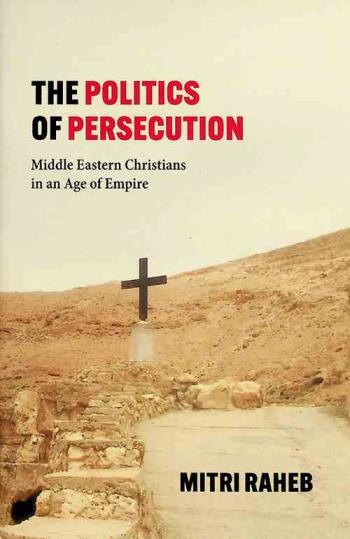
The politics of persecution : Middle Eastern Christians in an age of empire
\"Persecution of Christians in the Middle East has been a recurring theme since the middle of the nineteenth century. The topic has experienced a resurgence in the last few years, especially during the Trump era. Middle Eastern Christians are often portrayed as a homogeneous, helpless group ever at the mercy of their Muslim enemies, a situation that only Western powers can remedy. The Politics of Persecution revisits this narrative with a critical eye. Mitri Raheb charts the plight of Christians in the Middle East from the invasion of Napoleon Bonaparte in 1799 to the so-called Arab Spring. The book analyzes the diverse socioeconomic and political factors that led to the diminishing role and numbers of Christians in Palestine, Egypt, Syria, Lebanon, and Jordan during the eras of Ottoman, French, and British Empires, through the eras of independence, Pan-Arabism, and Pan-Islamism, and into the current era of American empire. With an incisive exposé of the politics that lie behind alleged concerns for these persecuted Christians--and how the concept of persecution has been a tool of public diplomacy and international politics--Raheb reveals that Middle Eastern Christians have been repeatedly sacrificed on the altar of Western national interests. The West has been part of the problem for Middle Eastern Christianity and not part of the solution, from the massacre on Mount Lebanon to the rise of ISIS. The Politics of Persecution, written by a well-known Palestinian Christian theologian, provides an insider perspective on this contested region. Middle Eastern Christians survived successive empires by developing great elasticity in adjusting to changing contexts; they learned how to survive atrocities and how to resist creatively while maintaining a dynamic identity. In this light, Raheb casts the history of Middle Eastern Christians not so much as one of persecution but as one of resilience.\" -- Provided by publisher.
Book

Global Visions of Violence
In Global Visions of Violence , the editors and contributors argue that violence creates a lens, bridge, and method for interdisciplinary collaboration that examines Christianity worldwide in the twentieth and twenty-first centuries. By analyzing the myriad ways violence, persecution, and suffering impact Christians and the imagination of Christian identity globally, this interdisciplinary volume integrates the perspectives of ethicists, historians, anthropologists, and ethnographers to generate new conversations. Taken together, the chapters in this book challenge scholarship on Christian growth that has not accounted for violence while analyzing persecution narratives that can wield data toward partisan ends. This allows Global Visions of Violence to push urgent conversations forward, giving voice to projects that illuminate wide and often hidden landscapes that have been shaped by global visions of violence, and seeking solutions that end violence and turn toward the pursuit of justice, peace, and human rights among suffering Christians.
eBook

Hate spin : the manufacture of religious offense and its threat to democracy
In the United States, elements of the religious right fuel fears of an existential Islamic threat, spreading anti-Muslim rhetoric into mainstream politics. In Indonesia, Muslim absolutists urge suppression of churches and minority sects, fostering a climate of rising intolerance. In India, Narendra Modi's radical supporters instigate communal riots and academic censorship in pursuit of their Hindu nationalist vision. Outbreaks of religious intolerance are usually assumed to be visceral and spontaneous. But in 'Hate Spin', Cherian George shows that they often involve sophisticated campaigns manufactured by political opportunists to mobilize supporters and marginalize opponents. Right-wing networks orchestrate the giving of offense and the taking of offense as instruments of identity politics, exploiting democratic space to promote agendas that undermine democratic values.
Book

'Controlled by' and 'Controlling with' Sex: Comparing Portrayal of 'Nooran' and 'Haseena Begum' - Two Female Characters of Khushwant Singh's Modern Classic: Train to Pakistan
Khushwant Singh's Train to Pakistan (1956), a quintessential post-colonial novel and a lucid modern classic - is based on the societal conditions and upheavals of during and post-liberation Pak - Indo subcontinent in 1947. Having set the plot of his novel in a fictional Punjabi village 'Mano Majra' - located near to the India - Pakistan border, Singh attempted to analyze how human relationships change in a tormented - apocalyptic society. However, this paper aims at studying how in an overtly masculine society as portrayed in the novel, amidst the fright of religious persecution, sexualized violence, the fallaciousness of mob rule, and formation of new identities via displacement - two of the novel's main female characters - Nooran, who is sexually subjugated within the text, and Haseena Begum, who uses her bodily charm to meet her days ends, stand out differently due to the disparity in their social orientations, and life choices. To explore the posed query, this paper will use Virginia Woolf's ideas from -\"Professions for Women\" (1942) an article apparently archaic today, but the ideas posited in it were very much contemporary to the novel's setting, as well as Julia Kristeva's apparently contemporary ideas in - \"Woman Can Never Be Defined\" (1974), where these critics talked about women's sexuality, their professions, their privileged relationship with father/paternal figure of their family, and how all these lead them to abidance towards prejudiced masculine norms set by the society.
Journal Article

Journey into Europe : Islam, immigration, and identity
An unprecedented, richly detailed, and clear-eyed exploration of Islam in Europe and the place of Islam in European history and civilization.
BOOK

King Philip II of Spain as a symbol of ‘Tyranny’ in Spinoza’s Political Writings
The highly abstract style of Spinoza’s philosophy has encouraged some interpretations of him as a thinker with little immediate connection with the whirl of social and cultural affairs around him. This article shows that all three major Western revolts - those of the Netherlands, Portugal and Aragon - against Philip II (his principal symbol and embodiment of tyranny, arbitrary and illicit governance, intolerance and repression of basic liberties) became in some sense internationally entwined and were intensely present in his life, which helps to understand that Spinoza was indeed a revolutionary.
Journal Article

Religion, Division of Labor, and Conflict
We study the role of economic incentives in shaping the coexistence of Jews, Catholics, and Protestants, using novel data from Germany for 1,000+ cities. The Catholic usury ban and higher literacy rates gave Jews a specific advantage in the moneylending sector. Following the Protestant Reformation (1517), the Jews lost these advantages in regions that became Protestant. We show (i) a change in the geography of anti-Semitism with persecutions of Jews and anti-Jewish publications becoming more common in Protestant areas relative to Catholic areas; (ii) a more pronounced change in cities where Jews had already established themselves as moneylenders. These findings are consistent with the interpretation that, following the Protestant Reformation, Jews living in Protestant regions were exposed to competition with the Christian majority, especially in moneylending, leading to an increase in anti-Semitism.
Journal Article

Children and Childhood in World Religions
While children figure prominently in religious traditions, few books have directly explored the complex relationships between children and religion. This is the first book to examine the theme of children in major religions of the world.
Each of six chapters, edited by world-class scholars, focuses on one religious tradition and includes an introduction and a selection of primary texts ranging from legal to liturgical and from the ancient to the contemporary. Through both the scholarly introductions and the primary sources, this comprehensive volume addresses a range of topics, from the sanctity of birth to a child's relationship to evil, showing that issues regarding children are central to understanding world religions and raising significant questions about our own conceptions of children today.
eBook

PERSECUTION PERPETUATED: THE MEDIEVAL ORIGINS OF ANTI-SEMITIC VIOLENCE IN NAZI GERMANY
How persistent are cultural traits? Using data on anti-Semitism in Germany, we find local continuity over 600 years. Jews were often blamed when the Black Death killed at least a third of Europe's population during 1348—50. We use plague-era pogroms as an indicator for medieval antiSemitism. They reliably predict violence against Jews in the 1920s, votes for the Nazi Party, deportations after 1933, attacks on synagogues, and letters to Der Stürmer. We also identify areas where persistence was lower: cities with high levels of trade or immigration. Finally, we show that our results are not driven by political extremism or by different attitudes toward violence.
Journal Article

The long-run effects of religious persecution
Religious persecution is common in many countries around the globe. There is little evidence on its long-term effects. We collect data from all across Spain, using information from more than 67,000 trials held by the Spanish Inquisition between 1480 and 1820. This comprehensive database allows us to demonstrate that municipalities of Spain with a history of a stronger inquisitorial presence show lower economic performance, educational attainment, and trust today. The effects persist after controlling for historical indicators of religiosity and wealth, ruling out potential selection bias.
Journal Article