
Catalogue Search | MBRL


Are you sure you want to remove the book from the shelf?

{{itemTitle}}
26,866
result(s) for
"Religious practices"
Sort by:

Embodying the Faith: Religious Practice and the Making of a Muslim Moral Habitus
Despite a number of contemporary theoretical works in sociology and moral philosophy arguing that the project of modern selfhood is necessarily a deeply moral endeavor, there are few empirical studies examining the specific ways in which social actors construct moral selves and lives. Utilizing ethnographic fieldwork and in-depth interviews, this article examines how a group of adult Muslim converts in Missouri produced new moral selves in and through the use of embodied religious practices. Drawing on the theoretical insights of Bourdieu, I demonstrate how the embodied religious practices of ritual prayer, fasting and covering formed within converts the moral dispositions, or habitus, associated with becoming a \"good Muslim.\"
Journal Article

How Does Religion Promote Forgiveness? Linking Beliefs, Orientations, and Practices
Scholars have long observed that religion and forgiveness are generally positively linked, but it is unclear why this is the case. This article proposes and tests potential mechanisms by which religion promotes forgiveness. Using data from the 1998 General Social Survey, I find that holding a collaborative orientation toward God, subscribing to a pervasive role of religion, and believing God forgives are primary factors promoting one's propensity to forgive both oneself and others. These factors have varying influence on interpersonal forgiveness compared to self-forgiveness and further illuminate the differences between the two processes. My findings demonstrate the importance of analyzing a person's religious beliefs and orientations directly, in addition to examining other dimensions of religion, such as affiliation, frequency of religious activity, and official religious teachings.
Journal Article
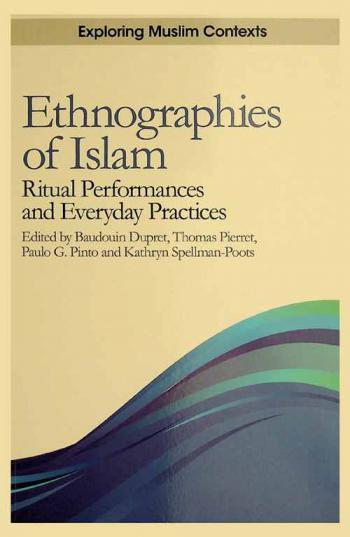
Ethnographies of Islam : ritual performances and everyday practices
This comparative approach to the various uses of the ethnographic method in research about Islam in anthropology and other social sciences is particularly relevant in the current climate. Political discourses and stereotypical media portrayals of Islam as a monolithic civilisation have prevented the emergence of cultural pluralism and individual freedom. Such discourses are countered by the contributors who show the diversity and plurality of Muslim societies and promote a reflection on how the ethnographic method allows the description, representation and analysis of the social and cultural complexity of Muslim societies in the discourse of anthropology.--provided by publisher.
Book
Testing the Veracity of Self-Reported Religious Practice in the Muslim World
Survey findings suggest that predominantly Muslim countries are among the most religious in the world and validate commonly held, but overly simplistic, perceptions of Muslims as extremely and uniformly religious. Existing research has demonstrated that survey estimates can give a distorted view of the reality of levels of religious practice; however, it has thus far focused exclusively on traditionally Christian, advanced Western democracies. To address this oversight, the veracity of self-reported religious practice in the Muslim world is tested using Pakistan, the Palestinian territories, and Turkey as cases for study. Comparing estimates of prayer from conventional surveys with those from time diaries, marginal rates of overreporting are estimated for each country by sex. The time-use measure of prayer is then imputed for the conventional survey data setto estimate overreporting at the respondent level and to predict overreporting using a measure of religious identity importance. Findings suggest that overreporting of prayer occurs in each country considered, although more consistently for women than for men. Moreover, religious identity importance is strongly correlated with overreporting of prayer, suggesting that a similar mechanism may promote the measurement error for overreported prayer in the Muslim world and overreported church attendance in the West.
Journal Article

Health Outcomes and Volunteering: The Moderating Role of Religiosity
In this paper, we examine whether and what extent public and private forms of religiosity act as moderators of the volunteering and well-being relationship in mid- to later-life. We use data from the second wave of the National Survey of Midlife Development in the United States (n = 1,805). We analyzed the relationships between volunteering and indicators of well-being (self-rated physical and mental health), and tested the moderating effects of public and private religiosity on the volunteering and well-being relationship. Our findings suggest that salubrious effects of volunteering on the self-perceived physical and mental health of middle- aged and older-aged adults varied by their participation in different forms of religiosity. In particular, volunteers who engaged in more public forms of religiosity reported significantly better physical and mental health than non-volunteers who engaged in these forms of religiosity. In other words, individuals who were actively engaged public forms of religious practices and who volunteered, maximized the associated health benefits.
Journal Article


The Relationship of Religiosity and Marital Satisfaction: The Role of Religious Commitment and Practices on Marital Satisfaction Among Pakistani Respondents
The sociology of religion focuses on an individual’s social and married life. This research performed the first focalized examination of the influence of spirituality and religiosity on the marital satisfaction of Pakistani Muslim couples and how religious commitment and religious practice strengthens the relationship of married couples. This study incorporates the Kansas Marital Satisfaction scale (KMSS), the Religious Commitment Inventory (RCI-10) and the Religious Practice scale to measure marital satisfaction. Survey questionnaires, including a survey invitation letter and an informed consent form, were sent to married couples residing in five urban areas of Pakistan. The sample consisted of 508 valid responses, 254 males and 254 females, exploring the respondent’s perception of their marital satisfaction. The data received were screened and tested through SPSS version 25. The first step of the data analysis was to examine the impact of religiosity variables (religious commitment, religious practice) on marital satisfaction. Findings indicated that religious commitment and religious practice are vital for a happy married life. The findings help explain the social dynamics of marital satisfaction in Pakistani culture. The results also indicated that religious commitment and religious practice strengthened and promoted marital satisfaction. This study is novel in the context of Pakistani culture and conclusions cannot be generalized to the whole population. Other religious factors may provide further research directions. The results of this study may help practitioners and decision-makers focusing on marital satisfaction issues.
Journal Article