
Catalogue Search | MBRL


Are you sure you want to remove the book from the shelf?

{{itemTitle}}
6,844
result(s) for
"Religious refugees."
Sort by:

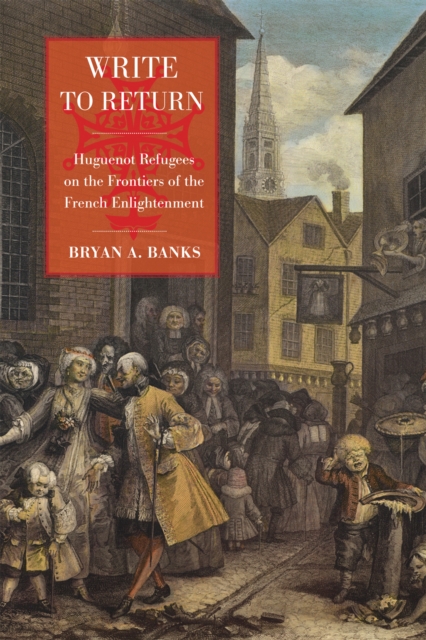
Write to Return : Huguenot Refugees on the Frontiers of the French Enlightenment: Huguenot Refugees on the Frontiers of the French Enlightenment
The revocation of the Edict of Nantes led more than 200,000 Huguenots to flee France after 1685. Many settled close to the country's frontiers, where their leaders published apologetic texts arguing for their right to return to France and be recognized as French citizens. By framing their refugee experiences intentionally, even using the term \"refugee\" to describe their diaspora, Huguenots profoundly influenced Enlightenment debates on citizenship and religious tolerance.Write to Return is a cultural history of these Huguenot apologetics in which Bryan Banks examines the work of four authors: Pierre Jurieu, Pierre Bayle, Antoine Court, and Jean-Paul Rabaut Saint-Etienne. Each author advanced his arguments using key ideas of the Enlightenment, appealing to reason to argue for freedom of conscience all while appealing to emotion in his descriptions of Huguenot victimhood. The authors' campaign succeeded. In 1789, France's revolutionary National Assembly granted repatriation to all expelled Huguenots, offering them citizenship regardless of place of birth or baptism, and even permitting them to reclaim ancestral lands.International refugees played an overlooked role in shaping discourse around the nation and nationalism in the eighteenth century. Write to Return shows how early modern refugees could advocate for their interests, build international networks, and even craft a new collective identity. By presenting themselves as loyal citizens of France, Huguenots were at the forefront of constructing a French national identity.
eBook
Migration and Islamic ethics : issues of residence, naturalization and citizenship
\"Migration and Islamic Ethics, Issues of Residence, Naturalization and Citizenship addresses how Islamic ethical and legal traditions can contribute to current global debates on migration and displacement; how Islamic ethics of mu®akha, ٍdiyهafa, ijهara, amهan, jiwهar, sutra, kafهala, among others, may provide common ethical grounds for a new paradigm of social and political virtues applicable to all humanity, not only Muslims. The present volume more broadly defines the Islamic tradition to cover not only theology but also to encompass ethics, customs and social norms, as well as modern political, humanitarian and rights discourses. The first section addresses theorizations and conceptualizations using contemporary Islamic examples, mainly in the treatment of asylum-seekers and refugees; the second, contains empirical analyses of contemporary case studies; the third provides historical accounts of Muslim migratory experiences\"-- Provided by publisher.
Book

Radicals in exile : English Catholic books during the reign of Philip II
Facing persecution in early modern England, some Catholics chose exile over conformity. Some even cast their lot with foreign monarchs rather than wait for their own rulers to have a change of heart. This book studies the relationship forged by English exiles and Philip II of Spain. It shows how these expatriates, known as the \"Spanish Elizabethans,\" used the most powerful tools at their disposal—paper, pens, and presses—to incite war against England during the \"messianic\" phase of Philip's reign, from the years leading up to the Grand Armada until the king's death in 1598.
Freddy Cristóbal Domínguez looks at English Catholic propaganda within its international and transnational contexts. He examines a range of long-neglected polemical texts, demonstrating their prominence during an important moment of early modern politico-religious strife and exploring the transnational dynamic of early modern polemics and the flexible rhetorical approaches required by exile. He concludes that while these exiles may have lived on the margins, their books were central to early modern Spanish politics and are key to understanding the broader narrative of the Counter-Reformation.
Deeply researched and highly original, Radicals in Exile makes an important contribution to the study of religious exile in early modern Europe. It will be welcomed by historians of early modern Iberian and English politics and religion as well as scholars of book history.
eBook


The Church in Exile
The church in North America today lives in a post-Christian society. Lee Beach helps the people of God today to develop a hopeful and prophetic imagination, a theology responsive to its context, and an exilic identity marked by faithfulness to God?s mission in the world.
eBook

Humanity in crisis : ethical and religious response to refugees
The major humanitarian crises of recent years are well known: the Shoah, the killing fields of Cambodia, Rwandan genocide, the massacre in Bosnia, the tsunami in southeast Asia, not to mention bloody conflicts in Sudan, Syria, and Afghanistan. Millions have been killed and many millions more have been driven from their homes; the world is sadly full of refugees and internally displaced persons. Could these crises have been prevented? Why do they continue? This book seeks to understand how humanity is in crisis, and what we can do about it. Hollenbach draws on the values that have shaped major humanitarian initiative over the past century and a half, such as the commitments of the International Committee of the Red Cross, Oxfam, Doctors without Borders, as well as the values of religious and ethical traditions, to examine the scope of our responsibilities and practical solutions to these global crises. He also explores the economic and political causes of these tragedies, drawing on on-the-ground interviews with refugees and government and NGO leaders, and uncovers key moral issues for practitioners in the field.
Book
Write to Return
The revocation of the Edict of Nantes led more than 200,000 Huguenots to flee France after 1685. Many settled close to the country's frontiers, where their leaders published apologetic texts arguing for their right to return to France and be recognized as French citizens. By framing their refugee experiences intentionally, even using the term \"refugee\" to describe their diaspora, Huguenots profoundly influenced Enlightenment debates on citizenship and religious tolerance.
Write to Return is a cultural history of these Huguenot apologetics in which Bryan Banks examines the work of four authors: Pierre Jurieu, Pierre Bayle, Antoine Court, and Jean-Paul Rabaut Saint-Étienne. Each author advanced his arguments using key ideas of the Enlightenment, appealing to reason to argue for freedom of conscience all while appealing to emotion in his descriptions of Huguenot victimhood. The authors' campaign succeeded. In 1789, France's revolutionary National Assembly granted repatriation to all expelled Huguenots, offering them citizenship regardless of place of birth or baptism, and even permitting them to reclaim ancestral lands.
International refugees played an overlooked role in shaping discourse around the nation and nationalism in the eighteenth century. Write to Return shows how early modern refugees could advocate for their interests, build international networks, and even craft a new collective identity. By presenting themselves as loyal citizens of France, Huguenots were at the forefront of constructing a French national identity.
eBook

Eleven words for love : a journey through Arabic expressions of love
\"A family has fled their homeland in search of safety in another country, carrying a single suitcase. As their journey unfolds, the oldest child reflects on the special contents of that suitcase: photo albums that evoke eleven of many names for love in Arabic. From sunshine-warm friendship to the love that dissolves all tears; from the love that makes you swoon to the love that leaves you yearning for the heart's homeland--her family has experienced it all. Illustrated in vibrant watercolor pencil and collage on textured card stock, this moving scrapbook shows a family embracing an unknown future even as they honor the past, casting immigration and the refugee experience in the light of universal human connection.\"-- Provided by publisher.
Book

Immigrants and Refugees: The Jewish Mitzvah of Hospitality and Its Implications for the Field of Education
The recent war in Europe, the Ukraine–Russia war, has had a huge impact in the lives of millions of people in the European continent—in the lives of both those who have fled the conflict and of those who have welcomed them with open arms. In this paper, we conduct a philosophical investigation into the issue of hospitality to others, to strangers, to foreigners trying to understand this phenomenon taking place in Europe, and elsewhere. First, we investigate the Jewish Mitzvah of Hospitality by referring to two passages in the Torah that exemplify hospitality and one that instantiates its opposite, hostility to the other, to strangers and foreigners. Following from this, we provide a discussion on Jewish ethics and its deontological and virtue ethics connections. In the last section, we engage with a discussion connecting the field of education and the matter of hospitality.
Journal Article