
Catalogue Search | MBRL


Are you sure you want to remove the book from the shelf?

{{itemTitle}}
19,994
result(s) for
"Religious teachings"
Sort by:

How Does Religion Promote Forgiveness? Linking Beliefs, Orientations, and Practices
Scholars have long observed that religion and forgiveness are generally positively linked, but it is unclear why this is the case. This article proposes and tests potential mechanisms by which religion promotes forgiveness. Using data from the 1998 General Social Survey, I find that holding a collaborative orientation toward God, subscribing to a pervasive role of religion, and believing God forgives are primary factors promoting one's propensity to forgive both oneself and others. These factors have varying influence on interpersonal forgiveness compared to self-forgiveness and further illuminate the differences between the two processes. My findings demonstrate the importance of analyzing a person's religious beliefs and orientations directly, in addition to examining other dimensions of religion, such as affiliation, frequency of religious activity, and official religious teachings.
Journal Article
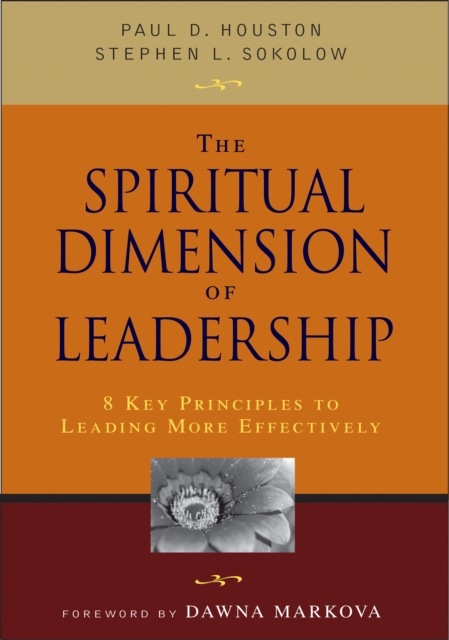
The spiritual dimension of leadership
'In this book, Paul Houston and Steve Sokolow sow seeds of wisdom that offer hope and sound guiding principles for America's educational leaders' - Richard W. Riley, former U.S. Secretary of Education and former Governor of South Carolina 'This book fills a troubling void in the leadership literature by highlighting the vital spiritual side of a leader's role' - Terrence E. Deal, Author Leading With Soul and Reframing the Path to School Leadership 'Houston and Sokolow focus on how leaders can remain true to their core beliefs and still lead successful organizations. This should be required reading for all leaders and prospective leaders' - Vincent L. Ferrandino, Executive Director, National Association of Elementary School Principals 'I can't imagine a more timely and important book for educators' - Margaret J. Wheatley, Author, Leadership and the New Science 'Houston and Sokolow have done an extraordinary job of looking beyond the traditional view of leadership to incorporate a spiritual dimension' - Dr. Gerald N. Tirozzi, Executive Director, National Association of Secondary School Principals 'The Spiritual Dimension of Leadership reminds us that the job of leadership is complex, but the actions we take can be very simple and yet have a big impact' - Anne L. Bryant, Executive Director, National School Boards Association Busy school leaders rarely have the time to reflect on what motivates them to do the difficult work they do. The authors argue that many of the values, beliefs, and principles that guide and sustain school leaders have underlying spiritual roots. The more in touch school leaders can be with those spiritual roots, the more enlightened their leadership becomes, and the more effective they become in leading others to a better future. This book offers eight principles of enlightened leadership that, the authors suggest, are accessible to everyone. Each principle is clearly outlined, defined by several examples, and then applied to the practice of school leadership, offering ways for readers to become more mindful of enlightened leadership principles in their own work and lives.
eBook

Spirituality, Philosophy and Education
The possibilities and importance of a spiritual dimension to education are subjects receiving increased consideration from educational practitioners, policymakers and philosophers. Spirituality, Philosophy and Education brings together contributions to the debate by a team of renowned philosophers of education. They bring to this subject a depth of scholarly and philosophical sophistication that was previously missing, and between them offer a wide-ranging exploration and analysis of what spiritual values have to offer contemporary education. The contributors address such subjects as what we mean by 'spiritual values'; scholarship and spirituality; spirituality and virtue; spirituality, science and morality; the shaping of character; the value of spiritual learning; spiritual development and the curriculum and many others. All students of the philosophy of education and anyone interested in how spiritual values might play a part in informing education policy and practice will find this stimulating collection a rich source of ideas and a major addition to the thinking on the meaning, role and possibilities of spirituality in education.
'This book offers a welcomed contribution to seriously exploring spirituality...It offers some grounding in many perspectives, and provides a rich collection of references for further research.' - International Journal of Children's Spirituality
David Carr is Professor of Philosophy of Education in the Faculty of Education of the University of Edinburgh John Haldane is Professor of Moral Philosophy at the University of St. Andrews.
eBook

Islamic Perspectives on Profit Maximization
Ethical considerations, especially those religiously driven, play a significant role in shaping business conduct and priorities. Profit levels and earnings constitute an integral part of business considerations and are relevant and closely linked to prevailing ethics. In this paper, Islamic prescriptions on profit maximization are introduced. Islamic business ethics are outlined as well. It is suggested that while Islamic teaching treats profits as reward for engaging in vital activities necessary for serving societal interests, profit maximization is not sanctioned and therefore should not be the goal of ethically guided business ventures.
Journal Article

Institutionalizing the Relationship between Religious Teaching and Religious Freedom: The Case of the Republic of San Marino
This paper examines the principles of denominational religious teaching in public schools at the background of a broader debate, concerning its compatibility with the standards of freedom of/from religion, by assessing the case of the Republic of San Marino. In doing so, revisions were made to some of the solutions proposed within the framework of international documents, such as the Toledo Guiding Principles on Teaching about Religions and Beliefs in Public Schools (OSCE/ODIHR). Among the various solutions, the Toledo document proposes the preparation of an alternative lesson of equal dignity, for those pupils who do not avail themselves of denominational education. The preparation of an alternative lesson is to be followed by a detailed analysis of the regulatory procedure that led to the achievement of this solution in the Republic of San Marino; the procedure entailed setting up a course on “Ethics, culture and society” in public schools for those who do not wish to avail themselves of Catholic religious education. These types of lessons were introduced, experimentally, in the academic year of 2019–2020 and the monitoring of the experiment is currently in progress. Shown, in conclusion, will be how this educational experiment could be a good practice for institutionalizing religious freedom in a small country, in which denominational religious teaching is mandatory.
Journal Article


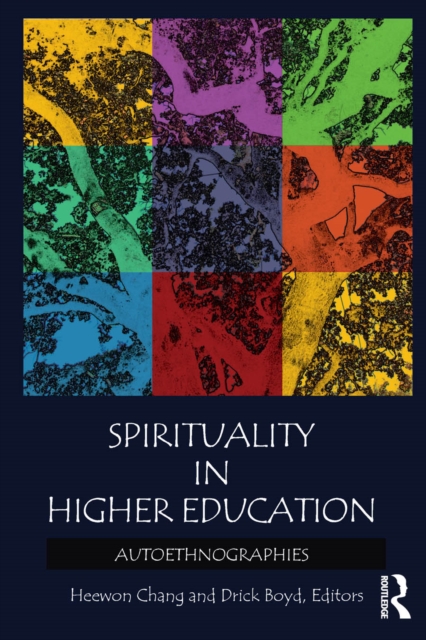
Spirituality in higher education
This collection of articles explores how a wide range of academics-- diverse in location, rank and discipline-- understand and express how they deal with spirituality in their professional lives and how they integrate spirituality in teaching, research, administration, and advising. The contributors also analyze the culture of academia and its challenges to the spiritual development of those involved. Twenty chapter authors--from a variety of faith traditions--discuss the ways in which their own beliefs have affected their journeys through higher education. By using an autoethnographic, self-analytical lens, this collection shows how various spiritualities have influenced how higher education is understood, taught and performed. The book will stimulate debate and conversations on a topic traditionally ignored in academia
eBook
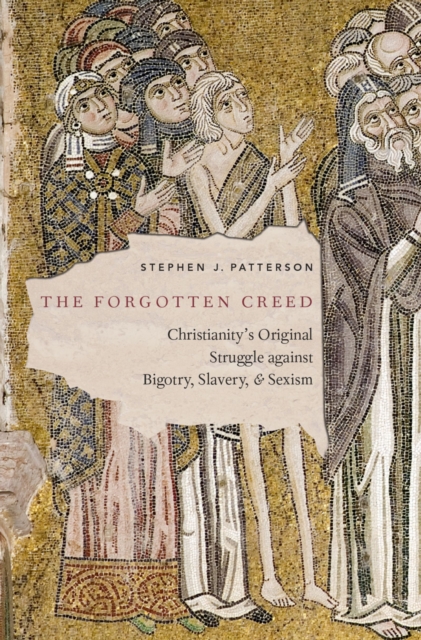
The forgotten creed : Christianity's original struggle against bigotry, slavery, and sexism
This book examines the history and legacy of a forgotten early Christian creed embedded in Galatians 3:26–28, remarkable for its declaration of solidarity across race, class, and gender lines. It claims that distinctions based on race, class, and gender are a human conceit; race, class, and gender simply do not exist. The book describes how ancients used these categories to create “otherness” and to structure society to the advantage of native, free males, and how, and why, certain early followers of Jesus, including Paul, came to reject these “othering” categories and instead embrace their unity and solidarity as children of God. It also traces the failure of nerve that eventually led the church to abandon this ideal and once again leverage race, class, and gender to the advantage of native, free males: let women be subordinate, slaves be obedient, and foreigners beware. This discussion is set in the context of the contemporary debate about race, class, and gender and demonstrates that these are not late-arriving modern concerns deriving from the current culture wars. Race, class, and gender have always been used to divide the human community into “us” and “them.” This forgotten creed is an early strike against the age-old problem of racism, classism, and sexism.
eBook