
Catalogue Search | MBRL


Are you sure you want to remove the book from the shelf?

{{itemTitle}}
89
result(s) for
"Religious tolerance Europe."
Sort by:

Journey into Europe : Islam, immigration, and identity
An unprecedented, richly detailed, and clear-eyed exploration of Islam in Europe and the place of Islam in European history and civilization.
BOOK
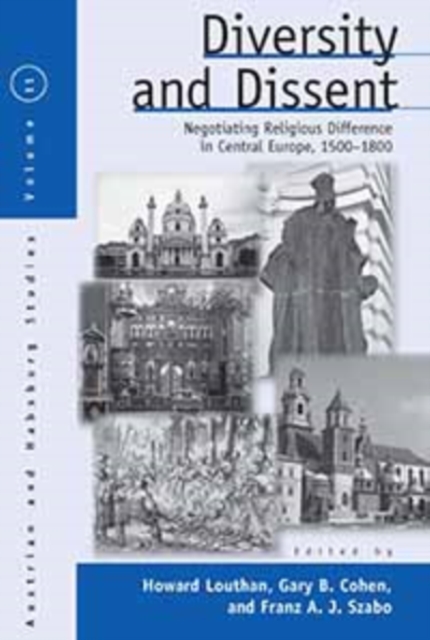
Diversity and dissent
Early modern Central Europe was the continent's most decentralized region politically and its most diverse ethnically and culturally. With the onset of the Reformation, it also became Europe's most religiously divided territory and potentially its most explosive in terms of confessional conflict and war. Focusing on the Holy Roman Empire and the Polish-Lithuanian Commonwealth, this volume examines the tremendous challenge of managing confessional diversity in Central Europe between 1500 and 1800. Addressing issues of tolerance, intolerance, and ecumenism, each chapter explores a facet of the complex dynamic between the state and the region's Catholic, Protestant, Orthodox, Utraquist, and Jewish communities. The development of religious toleration—one of the most debated questions of the early modern period—is examined here afresh, with careful consideration of the factors and conditions that led to both confessional concord and religious violence.
eBook

Mediating Religious Cultures in Early Modern Europe
In recent years, writing on early-modern culture has turned from examining the upheavals of the Reformation as the ruptured birth of early modernity out of the late medieval towards a striking emphasis on processes of continuity, transition, and adaptation. No longer is the religious seen as institutional or doctrinaire, but rather as a cultural and social phenomenon that exceeds the rigid parameters of modern definition. Recent analyses of early-modern cultures offer nuanced accounts that.
eBook
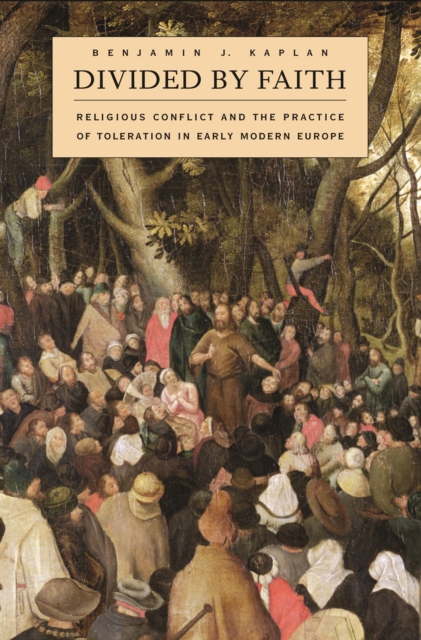
Divided by Faith
Can people coexist in peace when their basic beliefs are irreconcilable? Kaplan responds by taking us back to early modern Europe, when the issue of religious toleration was no less pressing than it is today. Divided by Faith is both history from the bottom up and a much-needed challenge to our belief in the triumph of reason over faith. This compelling story reveals that toleration has taken many guises in the past and suggests that it may well do the same in the future.
eBook


Forgetting Faith?
For the last decade, early modern studies have significantly been reshaped by raising new and different questions on the uses of religion. This 'religious turn' has generated new discussion of the social processes at work in early modern Europe and their cultural effects ? from the struggle over religious rites and doctrines to the persecution of secret adherents to forbidden practices. The issue of religious pluralisation has been mostly debated in terms of dissent and escalation. But confessional controversy did not always erupt into hostilities over how to symbolize and perform the sacred nor lead to a paralysis of social agency. The order of the day may often have been to suspend confessional allegiances rather than enforce religious conflict, suggesting a pragmatic rather than polemic handling of religious plurality. This raises the urgent question of how 'normal' transconfessional and even transreligious interaction was produced in a context of highly sharpened and always present reflexivity on religious differences. Our volume takes up this question and explores it from an interdisciplinary and interconfessional perspective. The title \"Forgetting Faith?\" raises the question whether it was necessary or indeed possible to sidestep religious issues in specific contexts and for specific purposes. This does not mean, however, to describe early modern culture as a process of secularization. Rather, the collection invites discussion of the specific ways available to deal with confessional conflict in an oblivional mode, precisely because faith still mattered more than many other social paradigms emerging at that time, such as nationhood, ethnic origin or class defined through property.
eBook

All Can Be Saved
It would seem unlikely that one could discover tolerant religious attitudes in Spain, Portugal, and the New World colonies during the era of the Inquisition, when enforcement of Catholic orthodoxy was widespread and brutal. Yet this groundbreaking book does exactly that. Drawing on an enormous body of historical evidence-including records of the Inquisition itself-the historian Stuart Schwartz investigates the idea of religious tolerance and its evolution in the Hispanic world from 1500 to 1820. Focusing on the attitudes and beliefs of common people rather than those of intellectual elites, the author finds that no small segment of the population believed in freedom of conscience and rejected the exclusive validity of the Church.
The book explores various sources of tolerant attitudes, the challenges that the New World presented to religious orthodoxy, the complex relations between \"popular\" and \"learned\" culture, and many related topics. The volume concludes with a discussion of the relativist ideas that were taking hold elsewhere in Europe during this era.
eBook

Conscience and Community
Religious toleration appears near the top of any short list of core liberal democratic values. Theorists from John Locke to John Rawls emphasize important interconnections between the principles of toleration, constitutional government, and the rule of law. Conscience and Community revisits the historical emergence of religious liberty in the Anglo-American tradition, looking deeper than the traditional emergence of toleration to find not a series of self-evident or logically connected expansions but instead a far more complex evolution.
Murphy argues that contemporary liberal theorists have misunderstood and misconstrued the actual historical development of toleration in theory and practice. Murphy approaches the concept through three myths about religious toleration: that it was opposed only by ignorant, narrow-minded persecutors; that it was achieved by skeptical Enlightenment rationalists; and that tolerationist arguments generalize easily from religion to issues such as gender, race, ethnicity, and sexuality, providing a basis for identity politics.
eBook

Secular Tolerance? Anti-Muslim Sentiment in Western Europe
The literature about secularization proposes two distinct explanations of anti-Muslim sentiment in secularized societies. The first theory understands it in terms of religious competition between Muslims and the remaining minority of orthodox Protestants; the second understands it as resulting from value conflicts between Muslims and the nonreligious majority. The two theories are tested by means of a multilevel analysis of the European Values Study 2008. Our findings indicate that, although more secularized countries are on average more tolerant towards Muslims and Islam, strongest anti-Muslim attitudes are nonetheless found among the nonreligious in these countries.
Journal Article