
Catalogue Search | MBRL


Are you sure you want to remove the book from the shelf?

{{itemTitle}}
706
result(s) for
"Religious tolerance History."
Sort by:

Locke on toleration
\"John Locke's Letter Concerning Toleration (1689) is one of the most widely-read texts in the political theory of toleration, and a key text for the liberal tradition. However, Locke also defended toleration more extensively in three subsequent Letters, which he wrote in response to criticism by an Anglican cleric, Jonas Proast. This edition, which includes a new translation of the original Letter, by Michael Silverthorne, enables readers to assess John Locke's theory of toleration by studying both his classic work and essential extracts from the later Letters. An introduction by Richard Vernon sets Locke's theory in its historical context and examines the key questions for contemporary political theorists which arise from this major work in the history of political thought\"-- Provided by publisher.
Book

Non-Muslims in the Early Islamic Empire
The Muslim conquest of the East in the seventh century entailed the subjugation of Christians, Jews, Zoroastrians and others. Although much has been written about the status of non-Muslims in the Islamic empire, no previous works have examined how the rules applying to minorities were formulated. Milka Levy-Rubin's remarkable book traces the emergence of these regulations from the first surrender agreements in the immediate aftermath of conquest to the formation of the canonic document called the Pact of 'Umar, which was formalized under the early 'Abbasids, in the first half of the ninth century. The study reveals that the conquered peoples themselves played a major role in the creation of these policies and that they were based on long-standing traditions, customs and institutions from earlier pre-Islamic cultures that originated in the worlds of both the conquerors and the conquered. In its connections to Roman, Byzantine and Sasanian traditions, the book will appeal to historians of Europe as well as Arabia and Persia.
eBook

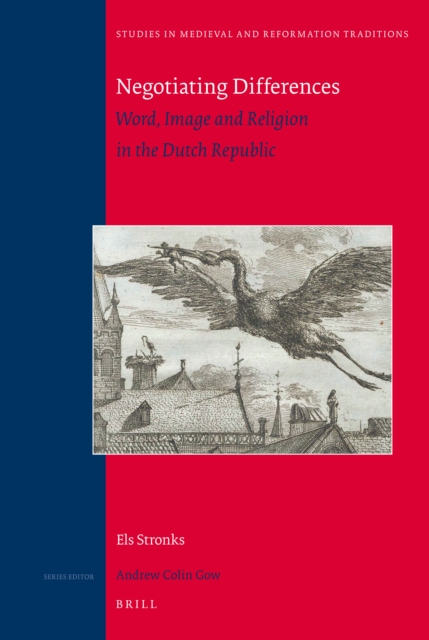
Negotiating Differences
This book explores the dynamics of peaceful coexistence in the seventeenth- and eighteenth-century Dutch Republic by tracing developments in illustrated religious literature. The highly controversial appropriation of textual and visual elements across confessional boundaries allows a close look at unexpectedly problematic confessional negotiations.
eBook

Toleration in conflict : past and present
\"The concept of toleration plays a central role in pluralistic societies. It designates a stance which permits conflicts over beliefs and practices to persist while at the same time defusing them, because it is based on reasons for coexistence in conflict - that is, in continuing dissension. A critical examination of the concept makes clear, however, that its content and evaluation are profoundly contested matters and thus that the concept itself stands in conflict. For some, toleration was and is an expression of mutual respect in spite of far-reaching differences, for others, a condescending, potentially repressive attitude and practice. Rainer Forst analyses these conflicts by reconstructing the philosophical and political discourse of toleration since antiquity. He demonstrates the diversity of the justifications and practices of toleration from the Stoics and early Christians to the present day and develops a systematic theory which he tests in discussions of contemporary conflicts over toleration\"-- Provided by publisher.
BOOK

Conscience and Community
Religious toleration appears near the top of any short list of core liberal democratic values. Theorists from John Locke to John Rawls emphasize important interconnections between the principles of toleration, constitutional government, and the rule of law. Conscience and Community revisits the historical emergence of religious liberty in the Anglo-American tradition, looking deeper than the traditional emergence of toleration to find not a series of self-evident or logically connected expansions but instead a far more complex evolution.
Murphy argues that contemporary liberal theorists have misunderstood and misconstrued the actual historical development of toleration in theory and practice. Murphy approaches the concept through three myths about religious toleration: that it was opposed only by ignorant, narrow-minded persecutors; that it was achieved by skeptical Enlightenment rationalists; and that tolerationist arguments generalize easily from religion to issues such as gender, race, ethnicity, and sexuality, providing a basis for identity politics.
eBook


New Netherland and the Dutch Origins of American Religious Liberty
The settlers of New Netherland were obligated to uphold religious toleration as a legal right by the Dutch Republic's founding document, the 1579 Union of Utrecht, which stated that \"everyone shall remain free in religion and that no one may be persecuted or investigated because of religion.\" For early American historians this statement, unique in the world at its time, lies at the root of American pluralism.
New Netherland and the Dutch Origins of American Religious Libertyoffers a new reading of the way tolerance operated in colonial America. Using sources in several languages and looking at laws and ideas as well as their enforcement and resistance, Evan Haefeli shows that, although tolerance as a general principle was respected in the colony, there was a pronounced struggle against it in practice. Crucial to the fate of New Netherland were the changing religious and political dynamics within the English empire. In the end, Haefeli argues, the most crucial factor in laying the groundwork for religious tolerance in colonial America was less what the Dutch did than their loss of the region to the English at a moment when the English were unusually open to religious tolerance. This legacy, often overlooked, turns out to be critical to the history of American religious diversity.
By setting Dutch America within its broader imperial context,New Netherland and the Dutch Origins of American Religious Libertyoffers a comprehensive and nuanced history of a conflict integral to the histories of the Dutch republic, early America, and religious tolerance.
eBook

The battle for home : memoir of a Syrian architect
Drawing on the author's personal experience of living and working as an architect in Syria, this book offers an eyewitness perspective on the country's bitter conflict through the lens of architecture, showing how the built environment offers a mirror to the community that inhabits it.
Book
Forbearance and Compulsion
Most surveys of religious tolerance and intolerance start from the medieval and early modern period, either passing over or making brief mention of discussions of religious moderation and coercion in Greco-Roman antiquity. Here Maijastina Kahlos widens the historical perspective to encompass late antiquity, examining ancient discussions of religious moderation and coercion in their historical contexts. The relations and interactions between various religious groups, especially pagans and Christians, are scrutinized, and the stark contrast often drawn between a tolerant polytheism and an intolerant Christianity is replaced by a more refined portrait of the complex late antique world.
eBook