
Catalogue Search | MBRL


Are you sure you want to remove the book from the shelf?

{{itemTitle}}
103
result(s) for
"Rembrandt Harmenszoon van Rijn, 1606-1669."
Sort by:

Rembrandt : the painter thinking
Throughout his life, Rembrandt van Rijn (1606-1669) was considered an exceptional artist by contemporary art lovers. In this highly original book, Ernst van de Wetering investigates why Rembrandt, from a very early age, was praised by high-placed connoisseurs like Constantijn Huygens. It turns out that Rembrandt, from his first endeavours in painting on, had embarked on a journey past all the 'foundations of the art of painting' which were considered essential in the seventeenth century. In his systematic exploration of these foundations, Rembrandt achieved mastery in all of them, thus becoming the 'pittore famoso' that count Cosimo the Medici visited at the end of his life. Rembrandt never stopped searching for ever better solutions to the pictorial problems he saw himself confronted with; this sometimes led to radical decisions and alterations in his way of working, which cannot simply be explained by attributing them to a 'change in style' or a 'natural development'. In a quest as rigorous and novel as Rembrandt's, Van de Wetering shows us how Rembrandt dealt with the foundations of his art and used them to try and become the best painter the world had ever seen. His book sheds new light both on Rembrandt's exceptional accomplishments and on the practice of painting in the Dutch Golden Age at large.
BOOK

Rembrandt and his Circle
This collection brings together art historians, museum professionals, conservators, and conservation scientists whose work involves Rembrandt van Rijn and associated artists such as Gerrit Dou, Jan Lievens, and Ferdinand Bol. The range of subjects considered is wide: from the presentation of convincing evidence that Rembrandt and his contemporary Frans Hals rubbed elbows in the Amsterdam workshop of Hendrick Uylenburgh to critical reassessments of the role of printmaking in Rembrandt's studio, his competition with Lievens as a landscape painter, his reputation as a collector, and much more. Developed from a series of international conferences devoted to charting new directions in Rembrandt research, these essays illuminate the current state of Rembrandt studies and suggest avenues for future inquiry.
eBook

Rembrandt's light
Rembrandt's Light' brings together paintings, etchings and drawings that focus on Rembrandt's mastery of visual storytelling through light, concentrating on the period from 1639-58, when he lived in his 'dream house' on the Breestraat in the heart of Amsterdam (today the Museum Het Rembrandthuis). The rooms on the first floor of the house, with their large windows and exceptional quality of light, offered new possibilities for the creation of art works.00Arranged thematically the book traces Rembrandt's innovation: from evoking a meditative mood, to lighting people, to creating impact and drama. Highlights include 'The Denial of St Peter', 'Pilgrims at Emmaus' and three of the artist's most famous images of women: 'A Woman Bathing in a Stream', 'A Woman in Bed' and 'Girl at a Window'.00Published to coincide with an exhibition at Dulwich Picture Gallery, and the celebrations taking place throughout Europe to mark 350 years since the artist's death (1669), Rembrandt's Light aims to refresh the way we look at works by this incomparable Dutch Master. 00Exhibition: Dulwich Picture Gallery, London, UK (04.10.2019-02.02.2020).
Book

Manhood, Marriage, and Mischief
A study of the theory and practice of seventeenth-century Dutch group portraits, Manhood, Marriage, and Mischief offers an account of the genre's comic and ironic features, which it treats as comments on the social context of portrait sitters who are husbands and householders as well as members of civic and proto-military organizations.The introduction picks out anomalous touches with which Rembrandt problematizes standard group-portrait motifs in The Night Watch: a shooter who fires his musket into the company; two girls who appear to be moving through the company in the wrong direction; guardsmen who appear to be paying little or no attention to their leader's enthusiastic gesture of command.Were the patrons and sitters aware of or even complicit in staging the anomalies? If not, did the painter get away with a subversive parody of militia portrait conventions at the sitters' expense? Parts One and Two respond to these questions at several levels: first, by analyzing the aesthetic structure of group portraiture as a genre; second, by reviewing the conflicting accounts modern scholars give of the civic guard company as an institution; third, by marking the effect on civic guardsmen of a mercantile economy that relied heavily on wives and mothers to keep the homefires burning. Two phenomena persistently recur in the portraits under discussion: competitive posing and performance anxiety.Part Three studies these phenomena in portraits of married couples and families. Finally, Part Four examines them in The Night Watch in the light of the first three parts. The result is an interpretation that reads Rembrandt's painting both as a deliberate parody by the sitters and as the artist's covert parody of the sitters.
eBook

A corpus of Rembrandt paintings. VI, Rembrandt's paintings revisited : a complete survey
This slightly updated reprint of the concluding sixth volume of 'A Corpus of Rembrandt Paintings' presents a revised, chronologically ordered survey of Rembrandt's entire oeuvre of 336 paintings. A considerable number of these paintings are reattributed to Rembrandt by the author after they were rejected by connoisseurs in the 1960s and subsequently. The book includes extensive commentaries on the re-attributed works and many of Rembrandt's other paintings. The book provides a multi-faceted new insight into Rembrandt's world and in the fields of Rembrandt connoisseurship and research.
Book

Rembrandt and his Circle
This collection brings together art historians, museum professionals, conservators, and conservation scientists whose work involves Rembrandt van Rijn and associated artists such as Gerrit Dou, Jan Lievens, and Ferdinand Bol. The range of subjects considered is wide: from the presentation of convincing evidence that Rembrandt and his contemporary Frans Hals rubbed elbows in the Amsterdam workshop of Hendrick Uylenburgh to critical reassessments of the role of printmaking in Rembrandt's studio, his competition with Jan Lievens as a landscape painter, his reputation as a collector, the publication of several newly discovered works, illuminating technical studies, and much more. Developed from a series of international conferences devoted to charting new directions in Rembrandt research, these essays illuminate the current state of Rembrandt studies and suggest avenues for future inquiry.
eBook

Rembrandt
Rembrandt van Rijn (1601-69) was one of the greatest masters of northern Europe, whose works contributed to the fantastically creative Dutch Golden Age of the seventeenth century. His supreme empathy for the human condition, exhibited in his portraits, self-portraits and genre paintings, have made him one of the best loved painters of the last four centuries. Reviving a much beloved group of artist monographs from the Phaidon archive, the new 'Phaidon Classics' bring to life the fine craftsmanship and design of Phaidon books of the 1930s, 40s and 50s created by Ludwig Goldscheider - art historian, designer and co-founder of Phaidon Press. Updated with a contemporary \"classic\" design, full colour images and new introductions by leading specialists on the work of each artist, these elegantly crafted volumes revive the fine bookmaking of the first half of the twentieth century, making 'Phaidon Classics' instant collectors' items.
Book

Rembrandt and his Circle
This collection brings together art historians, museum professionals, conservators, and conservation scientists whose work involves Rembrandt van Rijn and associated artists such as Gerrit Dou, Jan Lievens, and Ferdinand Bol.
eBook

Rembrandt X Rijksmuseum
\"The Rijksmuseum is home to the world's largest collection of Rembrandt's paintings, including 'The Night Watch', 'The Jewish Bride', 'The Syndics' and the impressive portraits of the couple Marten Soolmans and Oopjen Coppit. The museum also boasts a vast assembly of Rembrandt's drawings and etchings. For the first time, all 22 paintings and 60 drawings, as well as the 300 most beautiful etchings in the collection are presented together in \"Rembrandt X Rijksmuseum\". Together, they offer an unparalleled perspective on Rembrandt the artist, the human, the storyteller, elucidating the mastery of his innovation.\"--Back cover.
BOOK
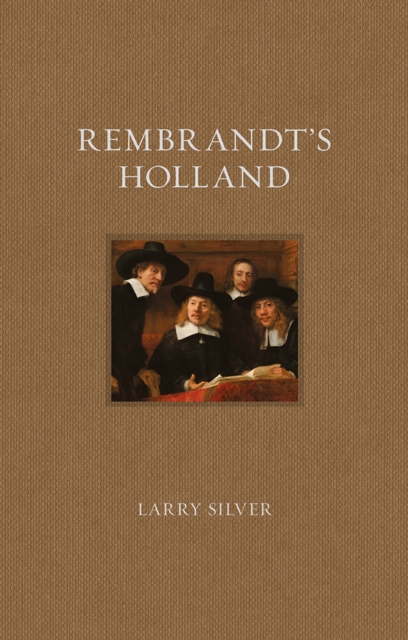
Rembrandt’s Holland
Rembrandt van Rijn and the Netherlands shared a profound connection. Born in Leiden in 1606, the artist witnessed the birth of the independent Dutch Republic. Settling in Amsterdam, Rembrandt gained renown as the city's leading portraitist. However, his later years were marred by financial hardship and personal tragedy. Now available in paperback, Rembrandt's Holland offers a fresh perspective on this celebrated painter. The book explores his life alongside the visual culture of the emerging Dutch Republic, and reassesses his artistic journey from grand religious works to intimate drawings, etchings, self-portraits and emotive depictions of saintly figures. Featuring up-to-date research, profound analysis of Rembrandt's major works and captivating imagery, this book is essential for art students and enthusiasts of the Dutch Masters.
eBook