
Catalogue Search | MBRL


Are you sure you want to remove the book from the shelf?

{{itemTitle}}
2,144
result(s) for
"Remodeling for other use"
Sort by:

Afterlives of Confinement
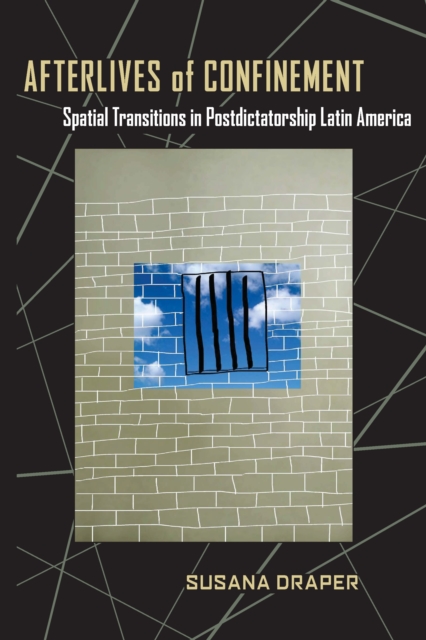
During the age of dictatorships, Latin American prisons became a symbol for the vanquishing of political opponents, many of whom were never seen again. In the postdictatorship era of the 1990s, a number of these prisons were repurposed into shopping malls, museums, and memorials. Susana Draper uses the phenomenon of the \"opening\" of prisons and detention centers to begin a dialog on conceptualizations of democracy and freedom in post-dictatorship Latin America. Focusing on the Southern Cone nations of Uruguay, Chile, and Argentina, Draper examines key works in architecture, film, and literature to peel away the veiled continuity of dictatorial power structures in ensuing consumer cultures.The afterlife of prisons became an important tool in the \"forgetting\" of past politics, while also serving as a reminder to citizens of the liberties they now enjoyed. In Draper's analysis, these symbols led the populace to believe they had attained freedom, although they had only witnessed the veneer of democracy-in the ability to vote and consume.In selected literary works by Roberto Bolaño, Eleuterio Fernández Huidoboro, and Diamela Eltit and films by Alejandro Agresti and Marco Bechis, Draper finds further evidence of the emptiness and melancholy of underachieved goals in the afterlife of dictatorships. The social changes that did not occur, the inability to effectively mourn the losses of a now-hidden past, the homogenizing effects of market economies, and a yearning for the promises of true freedom are thematic currents underlying much of these texts.Draper's study of the manipulation of culture and consumerism under the guise of democracy will have powerful implications not only for Latin Americanists but also for those studying neoliberal transformations globally.
eBook


Adaptive Reuse
Bauen im Bestand erfordert mehr als praktische Lösungen und Sicherheit in Stilfragen. Wenn bei der Umnutzung von Bauten die neuen Programme und Funktionen mit Veränderungen verbunden sind, stellt sich die fundamentale Frage, mit welchen Mitteln die Vergangenheit in den Entwurf für die Zukunft integriert werden soll. Auf dem Hintergrund langjähriger Lehrerfahrung gibt dieses Buch eine umfassende Einführung ins architektonische Entwerfen von Umbau-/Umnutzungsprojekten. Es zieht Bildwelten von Frankenstein bis Rem Koolhaas zur Verdeutlichung heran, behandelt Geschichte und Theorie, Bautypologie, Material- und Konstruktionsfragen sowie Aspekte von Denkmalschutz, Urbanistik und Innenarchitektur und stellt so das Bauen im Bestand als ein eigenständiges Gebiet des architektonischen Arbeitens dar.
Building in existing fabric requires more than practical solutions and stylistic skills. The adaptive reuse of buildings, where changes in the structure go along with new programs and functions, poses the fundamental question of how the past should be included in the design for the future. On the background of long years of teaching and publishing, and using vivid imagery from Frankenstein to Rem Koolhaas and beyond, the author provides a comprehensive introduction to architectural design for adaptive reuse projects. History and theory, building typology, questions of materials and construction, aspects of preservation, urban as well as interior design are dealt with in ways that allow to approach adaptive reuse as a design practice field of its own right.
eBook


Retired, Rehabbed, Reborn
Each year in the United States, hundreds of religious buildings and schools become vacant or underutilized as congregations and populations merge, move, or diminish. These structures are often well located, attractive, eligible for tax credits, and available for redevelopment. In this practical and innovative handbook, authors Simons, DeWine, and Ledebur have compiled a step-by-step guide to finding sustainable new uses for vacant structures. The reuse of these important buildings offers those charged with revitalizing them an opportunity to capture their embodied energy, preserve local beloved landmarks, and boost sustainability. Rehabbing presents an opportunity for developers to recoup some value from these assets. Neighbors and other stakeholders also enjoy benefits as the historic structures are retained and the urban fabric of communities is preserved.
Retired, Rehabbed, Reborn features ten in-depth case studies of adaptive reuse outcomes for religious buildings and public schools that have achieved varying degrees of success. Several case vignettes appear within various chapters to illustrate specific points. The book is a useful tool for architects, planners, developers, and others interested in reusing these important structures. In addition to covering the demographics of demand and supply for historic buildings, the authors demonstrate how to identify a worthy project and how to determine a building’s highest and best use, its market potential, and its financial feasibility, including costs and public subsidies. Finally, they address the planning process and how to time the redevelopment and repurposing of these venerable buildings.
Simons, DeWine, and Ledebur explain that while each rehab deal is unique and tricky—especially for prominent community structures that hold significant nostalgic and historical value to community stakeholders—there are identifiable patterns of successful and unsuccessful approaches, patterns that are addressed in turn throughout the redevelopment process.
As the nation moves toward a mind-set and practice of recycling, reusing, and repurposing, this unique exploration of how that applies to buildings is an essential guide for anyone interested in being part of the process as communities develop and change.
eBook

Old & new : design manual for revitalizing existing buildings
This title features practical organization of example projects according to the renovation approach, provides architects with helpful information for design and planning, and addresses topics of current interest such as energy optimization in existing building stock.
Book

Stewardship of the Built Environment
When we think of green building, we tend to picture new construction. But Robert A. Young argues that the greenest building is often the one that has already been built. In Stewardship of the Built Environment, he shows how rehabilitating and reusing existing structures holds untapped potential for achieving sustainable communities. Students and professionals alike will discover the multifaceted benefits of reuse.
eBook

Sustainable building adaptation
How to adapt existing building stock is a problem being addressed by local and state governments worldwide. In most developed countries we now spend more on building adaptation than on new construction and there is an urgent need for greater knowledge and awareness of what happens to commercial buildings over time.
Sustainable Building Adaptation: innovations in decision-making is a significant contribution to understanding best practice in sustainable adaptations to existing commercial buildings by offering new knowledge-based theoretical and practical insights. Models used are grounded in results of case studies conducted within three collaborative construction project team settings in Australia and the Netherlands, and exemplars are drawn from the Americas, Asia, Japan, Korea and Europe to demonstrate the application of the knowledge more broadly.
Results clearly demonstrate that the new models can assist with informed decision-making in adaptation that challenges some of the prevailing solutions based on empirical approaches and which do not accommodate the sustainability dimension. The emphasis is on demonstrating how the new knowledge can be applied by practitioners to deliver professionally relevant outcomes.
The book offers guidance towards a balanced approach that incorporates sustainable and optimal approaches for effective management of sustainable adaptation of existing commercial buildings.
eBook