
Catalogue Search | MBRL


Are you sure you want to remove the book from the shelf?

{{itemTitle}}
34
result(s) for
"Repetitive patterns (Decorative arts)"
Sort by:


Symmetry : through the eyes of old masters
A large range of symmetries in art is presented through clear and aesthetically outstanding examples of historical ornaments.Compendious comments illustrate the selected photographic material by addressing the interested and specialist reader alike.
eBook

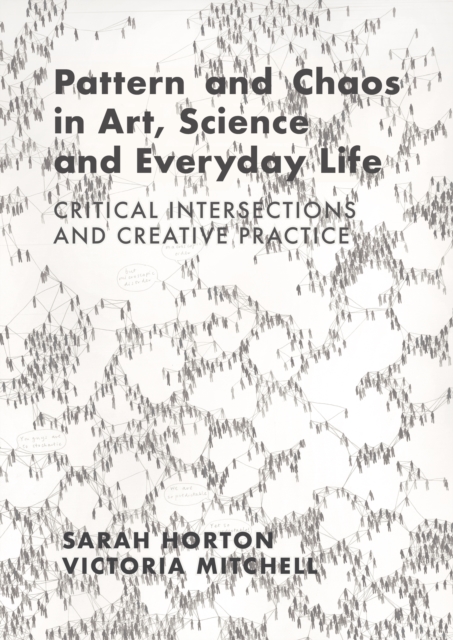
Pattern and Chaos in Art, Science and Everyday Life
This collection explores critical and visual practices through the lens of interactions and intersections between pattern and chaos. The dynamic of the inter-relationship between pattern and chaos is such as to challenge disciplinary boundaries, critical frameworks and modes of understanding, perception and communication, often referencing the in-between territory of art and science through experimentation and visual scrutiny. A territory of 'pattern-chaos' or 'chaos-pattern' begins to unfold.
Drawing upon fields such as visual culture, sociology, physics, neurobiology, linguistics or critical theory, for example, contributors have experimented with pattern and/or chaos-related forms, processes, materials, sounds and language or have reflected on the work of other artists, scientists and scholars. Diagrams, tessellations, dust, knots, mazes, folds, creases, flux, virus, fire and flow are indicative of processes through which pattern and chaos are addressed.
The contributions are organized into clusters of subjects which reflect the interdisciplinary terrain through a robust, yet also experimental, arrangement. These are 'Pattern Dynamics', 'Morph Flux Mutate', 'Decompose Recompose', 'Virus; Social Imaginary' and 'Nothings in Particular'.
eBook

Zenspirations : letters & patterning
\"Patterning is fun, easy & relaxing-- and it's a great way to add interest and texture to any design. Whether you like to journal, draw, doodle, design, or craft, you'll find a world of inspiration in the pages of this book\"--Back cover.
Book


Quilter's precut companion
Are you crazy for precuts? We are! With over 30 precut friendly blocks and all the reference information you could need at your fingertips you are going to love this tool. From 3 easy ways to make half-square triangles to time saving tips and tricks, you can sew up your Jelly Rolls, Turnovers or Charm packs right now.
Book
Pattern
As models and paradigms, patterns have been helping to orient architects since the Middle Ages. But patterns are also the basis of the history of ornament, an aesthetic phenomenon that links all times and cultures at a fundamental level. Ornament - and hence pattern as well - was abolished by the avant-garde in the first half of the twentieth century, but the notion of pattern has taken on new meaning and importance since the 1960s. Complexity research has ultimately shown that even highly complex, dynamic patterns may be based on simple behavioral rules, and that has allowed the notions of pattern and pattern formation to take on new meanings, that are also central for architecture. Today the use of generative computerized methods is opening up new ways of talking about an idea that is becoming increasingly abstract and dynamic. Pattern explores the question: what are the notions of pattern that must be discussed in the context of contemporary architecture?
eBook


How’re Things? Some Observations about Things, Non-Things and Serial Things
Attempts to understand what artists might be attempting to convey when they adopt the mode of repetition across the span of a series of paintings. Draws on the work of Elizabeth Helmuth Margulis who examines the role of repetition in music. Discusses how an attempt to touch the ineffable and paint the inexpressible may be seen in such artists as Gretchen Albrecht, with her repeating hemispheres, and Susan Rothenberg with her horses. Explores the concepts of infinity, transcendence, the sacred, and the 'nothing' beyond things. Source: National Library of New Zealand Te Puna Matauranga o Aotearoa, licensed by the Department of Internal Affairs for re-use under the Creative Commons Attribution 3.0 New Zealand Licence.
Journal Article