
Catalogue Search | MBRL


Are you sure you want to remove the book from the shelf?

{{itemTitle}}
4,831
result(s) for
"Representations (Philosophy)"
Sort by:

Words Fail
There has been much philosophical speculation on the potential failure of language as well as the search for a presentation of the “thing itself\" beyond representation. Words Fail pursues the writings of a trio of philosophers—Jacques Derrida, Philippe Lacoue-Labarthe, and Giorgio Agamben—as prime examples of how modern poetry presents us with a profitable vantage point from which to survey the ongoing struggle of living in a highly fragmented world. Alongside these thinkers, this book looks specifically at the form of spirituality that is given shape by this intersection of poetics and theological-philosophical reflection—all of which offer rich suggestions about our spiritual nature.
eBook

Kant on Representation and Objectivity
This book is a study of the second-edition version of the 'Transcendental Deduction' (the so-called 'B-Deduction'), which is one of the most important and obscure sections of Kant's Critique of Pure Reason. By way of a close analysis of the B-Deduction, Adam Dickerson makes the distinctive claim that the Deduction is crucially concerned with the problem of making intelligible the unity possessed by complex representations - a problem that is the representationalist parallel of the semantic problem of the unity of the proposition. Along the way he discusses most of the key themes in Kant's theory of knowledge, including the nature of thought and representation, the notion of objectivity, and the way in which the mind structures our experience of the world.
eBook

Representation and the mind-body problem in Spinoza
This first extensive study of Spinoza’s philosophy of mind concentrates on two problems crucial to the philosopher’s thoughts on the matter: the requirements for having a thought about a particular object, and the problem of the mind’s relation to the body. Della Rocca contends that Spinoza’s positions are systematically connected with each other and with a principle at the heart of his metaphysical system: his denial of causal or explanatory relations between the mental and the physical. In this way, Della Rocca’s exploration of these two problems provides a new and illuminating perspective on Spinoza’s philosophy as a system.
eBook

Diversity representation in advertising
In this article we develop a comprehensive understanding of diverse representation in advertising. While numerous studies highlight increasing demand for diversity among some consumers, such enthusiasm is not universal. This is creating challenges for brands, some of which have faced backlash, either due to a perceived lack of authenticity in their diversity efforts or because not all consumer groups value diversity equally. Amidst these challenges, technological advancements, such as data-driven decision-making and generative AI, present both new opportunities and risks. The current literature on diverse representation in advertising, although expansive, is relatively siloed. Through a detailed eight-step process, we assess and synthesize the body of literature on diversity representation, reviewing 337 articles spanning research on age, beauty, body size, gender, LGBTQIA+ , physical and mental ability, and race and ethnicity. Our investigation offers two major contributions: a summarization of insights from the broader literature on these seven key areas of diverse representation and development of an integrated conceptual framework. Our conceptual framework details mechanisms, moderators, and outcomes that are either prevalent across the literature or can be reasonably expected to generalize across other forms of diversity. This framework not only offers a holistic perspective for academics and industry professionals but also exposes potential future research avenues.
Journal Article

Founding acts : constitutional origins in a democratic age
All democratic constitutions feature \"the people\" as their author and ultimate source of legitimacy. They claim to embody the political form that citizens are in some sense supposed to have given themselves. But in what sense, exactly? When does a constitution really or genuinely speak for the people? Such questions are especially pertinent to our present condition, where the voice of \"the people\" turns out to be irrevocably fragmented, and people themselves want to speak and be heard in their own voices. Founding Acts explores the relationship between constitutional claims of popular sovereignty and the practice of constitution-making in our pluralistic age. Serdar Tekin argues that the process of making a constitution, or its pedigree, is as morally and politically significant as its content. Consequently, democratic constitution-making is not only about making a democratic constitution but also about making it, as much as possible, democratically.Tekin develops two overarching arguments in support of this claim. First, citizen participation in the process of constitution-making is essential to the democratic legitimacy of a new constitution. Second, collective action, that is, the political experience of constructing public life together, is what binds diverse people into a democratic peoplehood. Bringing into dialogue a wide range of canonical and contemporary thinkers, Tekin examines historical realities extending from revolutionary America and France to contemporary South Africa and Germany.
eBook
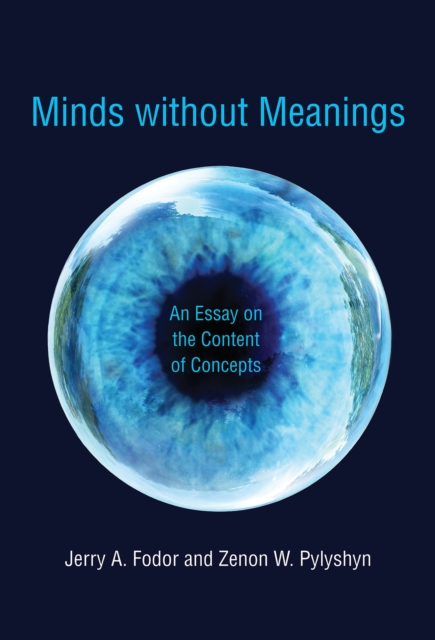
Minds without Meanings
In cognitive science, conceptual content is frequently understood as the \"meaning\" of a mental representation. This position raises largely empirical questions about what concepts are, what form they take in mental processes, and how they connect to the world they are about. InMinds without Meaning, Jerry Fodor and Zenon Pylyshyn review some of the proposals put forward to answer these questions and find that none of them is remotely defensible. Fodor and Pylyshyn determine that all of these proposals share a commitment to a two-factor theory of conceptual content, which holds that the content of a concept consists of its sense together with its reference. Fodor and Pylyshyn argue instead that there is no conclusive case against the possibility of a theory of concepts that takes reference as their sole semantic property. Such a theory, if correct, would provide for the naturalistic account of content that cognitive science lacks -- and badly needs. Fodor and Pylyshyn offer a sketch of how this theory might be developed into an account of perceptual reference that is broadly compatible with empirical findings and with the view that the mental processes effecting perceptual reference are largely preconceptual, modular, and encapsulated.
eBook

Semiotics of Religion
Following the heyday of Lévi-Straussian structuralism in the 1970s-80s, little attention has been paid by scholars of religion to semiotics. Semiotics of Religion reassesses key semiotic theories in the light of religious data. Yelle examines the semiotics of religion from structural and historical perspectives, drawing on Peircean linguistic anthropology, Jakobsonian poetics, comparative religion and several theological traditions. This book pays particular attention to the transformation of religious symbolism under modernization and the rise of a culture of the printed book. Among the topics addressed are: - ritual repetition and the poetics of ritual performance - magic and the belief in a natural (iconic) language - Protestant literalism and iconoclasm - disenchantment and secularization - Holiness, arbitrariness, and agency Building from the legacy of structuralism while interrogating several key doctrines of that movement, Semiotics of Religion both introduces the field to a new generation and charts a course for future research.
eBook

Expressivism, Pragmatism and Representationalism
Pragmatists have traditionally been enemies of representationalism but friends of naturalism, when naturalism is understood to pertain to human subjects, in the sense of Hume and Nietzsche. In this volume Huw Price presents his distinctive version of this traditional combination, as delivered in his René Descartes Lectures at Tilburg University in 2008. Price contrasts his view with other contemporary forms of philosophical naturalism, comparing it with other pragmatist and neo-pragmatist views such as those of Robert Brandom and Simon Blackburn. Linking their different 'expressivist' programmes, Price argues for a radical global expressivism that combines key elements from both. With Paul Horwich and Michael Williams, Brandom and Blackburn respond to Price in new essays. Price replies in the closing essay, emphasising links between his views and those of Wilfrid Sellars. The volume will be of great interest to advanced students of philosophy of language and metaphysics.
eBook

Underrepresentation of women in randomized controlled trials: a systematic review and meta-analysis
Background
Although regulatory changes towards correcting the underrepresentation of women in randomized controlled trials (RCTs) occurred (National Institutes of Health 1994), concerns exist about whether an improvement is taking place. In this systematic review and meta-analysis, we aimed to assess the inclusion rates of women in recent RCTs and to explore the potential barriers for the enrollment of women.
Methods
RCTs published in 2017 examining any type of intervention in adults were searched in PubMed and Cochrane Library. The following predefined medical fields were included: cardiovascular diseases, neoplasms, endocrine system diseases, respiratory tract diseases, bacterial and fungal infections, viral diseases, digestive system diseases, and immune system diseases. Studies were screened independently by two reviewers, and an equal number of studies was randomly selected per calendric month. The primary outcome was the enrollment rate of women, calculated as the number of randomized women patients divided by the total number of randomized patients. Rates were weighted by their inverse variance; statistical significance was tested using general linear models (GLM).
Results
Out of 398 RCTs assessed for eligibility, 300 RCTs were included. The enrollment rate of women in all the examined fields was lower than 50%, except for immune system diseases [median enrollment rate of 68% (IQR 46 to 81)]. The overall median enrollment rate of women was 41% (IQR 27 to 54). The median enrollment rate of women decreased with older age of the trials’ participants [mean age of trials’ participants ≤ 45 years: 47% (IQR 30–64), 46–55 years: 46% (IQR 33–58), 56–62 years: 38% (IQR 27–50), ≥ 63 years: 33% (IQR 20–46),
p
< 0.001]. Methodological quality characteristics showed no significant association with the enrollment rates of women. Out of the 300 included RCTs, eleven did not report on the number of included women. There was no significant difference between these studies and the studies included in the analysis.
Conclusions
Women are being inadequately represented, in the selected medical fields analyzed in our study, in recent RCTs. Older age is a potential barrier for the enrollment of women in clinical trials. Low inclusion rates of elderly women might create a lack of crucial knowledge in the adverse effects and the benefit/risk profile of any given treatment. Factors that might hinder the participation of women should be sought and addressed in the design of the study.
Journal Article
