
Catalogue Search | MBRL


Are you sure you want to remove the book from the shelf?

{{itemTitle}}
3,295
result(s) for
"Research associate"
Sort by:

When Computers Were Human
Before Palm Pilots and iPods, PCs and laptops, the term \"computer\" referred to the people who did scientific calculations by hand. These workers were neither calculating geniuses nor idiot savants but knowledgeable people who, in other circumstances, might have become scientists in their own right. When Computers Were Human represents the first in-depth account of this little-known, 200-year epoch in the history of science and technology. Beginning with the story of his own grandmother, who was trained as a human computer, David Alan Grier provides a poignant introduction to the wider world of women and men who did the hard computational labor of science. His grandmother's casual remark, \"I wish I'd used my calculus,\" hinted at a career deferred and an education forgotten, a secret life unappreciated; like many highly educated women of her generation, she studied to become a human computer because nothing else would offer her a place in the scientific world. The book begins with the return of Halley's comet in 1758 and the effort of three French astronomers to compute its orbit. It ends four cycles later, with a UNIVAC electronic computer projecting the 1986 orbit. In between, Grier tells us about the surveyors of the French Revolution, describes the calculating machines of Charles Babbage, and guides the reader through the Great Depression to marvel at the giant computing room of the Works Progress Administration. When Computers Were Human is the sad but lyrical story of workers who gladly did the hard labor of research calculation in the hope that they might be part of the scientific community. In the end, they were rewarded by a new electronic machine that took the place and the name of those who were, once, the computers.
eBook

Bridging sponsor–site operations through reciprocal on-site training of CRAs and CRCs: Impact on workflow knowledge and behavior among trial staff
Opportunities for face-to-face interaction between sponsor-side clinical research associates (CRAs) and site-side clinical research coordinators (CRCs) have decreased with remote and risk-based monitoring, potentially impeding communication and mutual understanding - key determinants of team functioning. Accordingly, we implemented a reciprocal on-site training to enhance CRA-CRC mutual understanding and evaluated its impact.
Seventeen sponsor staff, including 11 CRAs, joined an 8-hour hospital tour with CRC-guided process simulations and discussion; conversely, 14 hospital staff, including 11 CRCs, attended a 4-hour sponsor-office visit with system demonstrations and discussion. Self-assessed understanding of counterpart workflows and impressions of the counterpart group were rated pre- and post-training on 5-point Likert scales. Free-text feedback underwent text-mining analysis. Behavioral change was surveyed 6 months later.
CRAs improved on all 9 understanding items (e.g. \"flow of daily medical practice:\" median score 2.0 vs. 4.0, pre- and post-training, respectively,
< 0.0001); CRCs improved on 4 of 5. Positive impressions increased and negative impressions decreased in both groups (e.g. \"bright atmosphere:\" median 3.0 vs. 5.0 for CRAs,
= 0.0002; 3.0 vs. 5.0 for CRCs,
= 0.0044). Text-mining revealed the specific content participants learned, which included keywords reflecting this training's objective of enhancing mutual understanding. At 6 months, 70% of CRAs and 88% of CRCs reported changes in their work behavior.
A brief, reciprocal, on-site training improved CRA-CRC mutual understanding and perceptions, with sustained self-reported behavioral changes in work practices. From a team science perspective, such practical training may strengthen sponsor-site communication and collaboration.
Journal Article

Investigation on the occupational situation of clinical research associates in China
Clinical research associates (CRAs) are the sponsor’s representatives, monitor the process and quality of clinical trials, their professional quality can affect the quality of clinical trials. But there is a conflict between the large number of CRAs personnel and unsatisfactory quality of clinical trial monitoring, and the reason is unknown. Therefore, our study investigated the occupational status of CRAs through a questionnaire survey. A total of 401 eligible questionnaires were included in the final analysis. Of whom, 71.32% were females, the average age is 27.86 years (range: 22–46 years), 95.01% had a bachelor’s degree or above, and 60% had a pharmaceutical major. 76.31% had month income of <20,000 Yuan RMB, and dissatisfied with their current salary level. Over 80% weekly working time more than 40 h. 79.3% CRAs traveling for less than 7 days per month under the impact of the COVID-19 epidemic. 80% of them are satisfied with promotion channels and company training. Furthermore, Through the analysis of satisfaction differences, we found that CRAs with different educational backgrounds have significant differences in career satisfaction. It was suggested by more than 80% CRAs that the application materials for clinical trials should be unified nationwide and an ethical mutual recognition system. In conclusion, our study is the first large-scale survey of CRAs in China, the current professional situation of CRAs is considerable, but overall it still needs further improvement and enhancement, the monitoring difficulties faced by CRAs mainly come from hospitals, companies, and themselves. With the robust growth of clinical trials in China, hospitals and companies need to improve the professional quality and status of CRAs through a series of measures, further driving the improvement of clinical trial quality.
Journal Article

Facilitating accrual to cancer control and supportive care trials: the clinical research associate perspective
Background
Accrual to Cancer Control and Supportive Care (CCL) studies can be challenging. Our objective was to identify facilitators and perceived barriers to successful Children’s Oncology Group (COG) CCL accrual from the clinical research associate (CRA) perspective.
Methods
A survey was developed that focused on the following features from the institutional perspective: (1) Components of successful accrual; (2) Barriers to accrual; (3) Institutional changes that could enhance accrual; and (4) How COG could facilitate accrual. The survey was distributed to the lead CRA at each COG site with at least 2 CCL accruals within the previous year. The written responses were classified into themes and sub-themes.
Results
57 sites in the United States (n = 52) and Canada (n = 5) were contacted; 34 (60%) responded. The four major themes were: (1) Staff presence and dynamics; (2) Logistics including adequate numbers of eligible patients; (3) Interests and priorities; and (4) Resources. Suggestions for improvement began at the study design/conception stage, and included ongoing training/support and increased reimbursement or credit for successful CCL enrollment.
Conclusions
The comments resulted in suggestions to facilitate CCL trials in the future. Soliciting input from key team members in the clinical trials process is important to maximizing accrual rates.
Journal Article

Risk-based monitoring: Review of the current perceptions and toward effective implementation
The United States Food and Drug Administration issued a guidance to industry in August 2013 on risk-based approach to monitoring. This prompted industry (sponsors and contract research organizations) to brainstorm, conceptualize, and implement risk-based monitoring (RBM) in their clinical studies and programs. The acceptance and implementation across the organizations have been variable in terms of pace and methodology. Published literature, commentaries, and views through Internet search were reviewed to understand the perceptions about RBM of different key stakeholders whose function has been significantly impacted, as these highlight ground-level challenges while implementing this major change. Some solutions are proposed to address these perceptions and challenges, as sooner than later RBM will become a way of life, given that recent ICH E6, revision 2 (November 2016) includes RBM in the document. Conceptual clarity, change management, skillset, and capacity building will be the key areas of focus to make RBM successful.
Journal Article

Empirical Study on Job Satisfaction of Clinical Research Associates in China
Backgrounds:
The level of job satisfaction among clinical research associates (CRAs) is of importance because it may affect CRAs’ retention, turnover, and then further affect the quality of clinical trials.
Objectives:
The objectives of this study were to (1) examine the level of job satisfaction among CRAs in China and (2) explore the association between CRAs’ demographic and work-related characteristics and their job satisfaction.
Methods:
A Chinese CRA job satisfaction questionnaire was developed to measure CRAs’ attitudes in relation to their job. The questionnaire contained 6 subcomponents, including work content, work reward, supervisors, coworkers, investigators, and organization administration. Then an anonymous cross-sectional web-based survey was conducted among CRAs in China.
Results:
465 valid questionnaires were received (93% response rate). The overall job satisfaction of Chinese CRAs was moderate. As for the individual subcomponents, coworkers ranked the highest and work reward ranked the lowest. The female group was more satisfied with investigators than were the male group. Different scores with supervisors were seen among age groups. Different scores with overall satisfaction, work reward, and organizational administration were seen among geographic location groups and also among company type groups. There were no significant differences in job satisfaction based on marital status, education level, and working position of the respondents.
Conclusions:
Chinese CRAs were moderately satisfied with their job. They were most satisfied with coworkers and most dissatisfied with work reward. Further, Chinese CRAs’ job satisfaction levels were more related with work-related characteristics, including geographic location and company type.
Journal Article

Educating Scholars
Despite the worldwide prestige of America's doctoral programs in the humanities, all is not well in this area of higher education and hasn't been for some time. The content of graduate programs has undergone major changes, while high rates of student attrition, long times to degree, and financial burdens prevail. In response, the Andrew W. Mellon Foundation in 1991 launched the Graduate Education Initiative (GEI), the largest effort ever undertaken to improve doctoral programs in the humanities and related social sciences. The only book to focus exclusively on the current state of doctoral education in the humanities, \"Educating Scholars\" reports on the GEI's success in reducing attrition and times to degree, the positive changes implemented by specific graduate programs, and the many challenges still to be addressed. Over a ten-year period, the Foundation devoted almost eighty-five million dollars through the GEI to provide support for doctoral programs and student aid in fifty-four departments at ten leading universities. The authors examine data that tracked the students in these departments and in control departments, as well as information gathered from a retrospective survey of students. They reveal that completion and attrition rates depend upon financial support, the quality of advising, clarity of program requirements, and each department's expectations regarding the dissertation. The authors consider who earns doctoral degrees, what affects students' chances of finishing their programs, and how successful they are at finding academic jobs. Answering some of the most important questions being raised about American doctoral programs today, \"Educating Scholars\" will interest all those concerned about our nation's intellectual future. (Verlag).
eBook

The Cryptologic Contributions of Dr. Donald Menzel
Dr. Donald H. Menzel is well known for his work in astronomy, but his cryptologic work has never received a thorough review. The present article describes how his interest in this area was first sparked and provides the details of the secret class he led in \"Naval Communications\" (really cryptanalysis) at Radcliffe College during World War II. This class served as a prototype and was copied elsewhere. A sketch of some of the classified work he carried out during the war, and after, as a consultant, is also included, along with a brief overview of Menzel's personality and other interests.
Journal Article
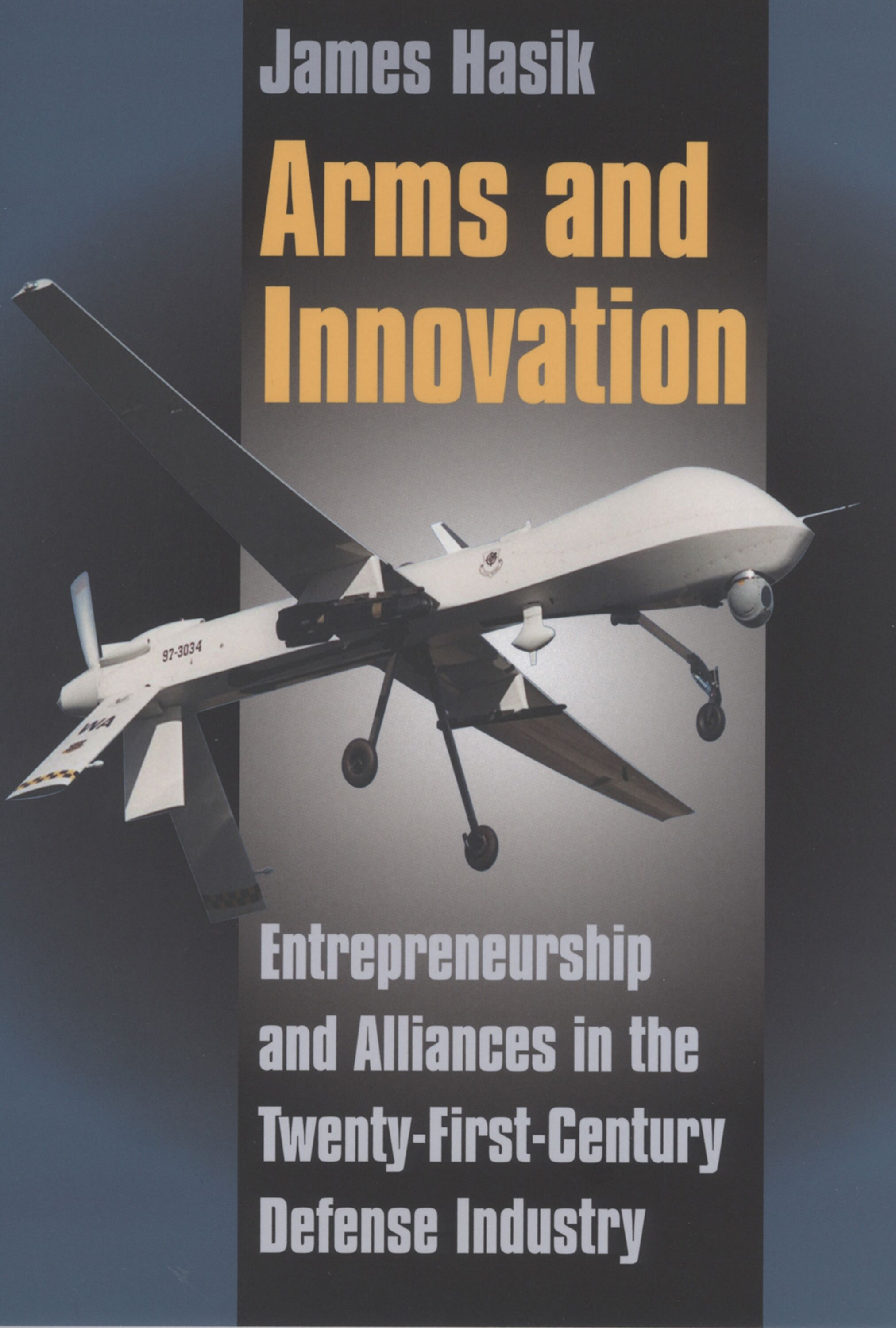
Arms and Innovation
With many of the most important new military systems of the past decade produced by small firms that won competitive government contracts, defense-industry consultant James Hasik argues in Arms and Innovation that small firms have a number of advantages relative to their bigger competitors. Such firms are marked by an entrepreneurial spirit and fewer bureaucratic obstacles, and thus can both be more responsive to changes in the environment and more strategic in their planning. This is demonstrated, Hasik shows, by such innovation in military technologies as those that protect troops from roadside bombs in Iraq and the Predator drones that fly over active war zones and that are crucial to our new war on terror. For all their advantages, small firms also face significant challenges in access to capital and customers. To overcome such problems, they can form alliances either with each other or with larger companies. Hasik traces the trade-offs of such alliances and provides crucial insight into their promises and pitfalls. This ground-breaking study is a significant contribution to understanding both entrepreneurship and alliances, two crucial factors in business generally. It will be of interest to readers in the defense sector as well as the wider business community.
eBook

J. John Sepkoski Jr. (1948–1999)
With Jack Sepkoski's sudden death from heart failure on May 1, 1999, paleontology lost one of its most important figures. In his 25–year career, Jack published more than 70 research articles, 15 of them in this journal, and an equal number of reviews, commentaries, and abstracts. He co-edited Paleobiology (1983–86), received the Schuchert Award (1983), and served as President of the Paleontological Society (1995–96). In 1997, he was elected to the Polish Academy of Sciences and in the same year received the Medal of the University of Helsinki. Further recognition would surely have followed but for his untimely death.
Journal Article