
Catalogue Search | MBRL


Are you sure you want to remove the book from the shelf?

{{itemTitle}}
1,095
result(s) for
"Retórica"
Sort by:

Bocetos para un vitral
Humanimales y divinanimales protagonizan escenas privadas y públicas de la vida cotidiana y otras costumbres. Caracteres trasvestidos y travestismo de personajes se abren campo en situaciones entre absurdas e hilarantes, grotescas y desconcertantes, ridículas e ingeniosas. Todas urdidas con la aguja de la retórica y las ilaciones de lo onírico. Los dibujos de J. J. Grandville constituyen los textos satíricos y críticos de su época, la primera mitad del siglo xix que transcurre en medio de tensiones álgidas entre pensamientos renovadores y reaccionarios.
Journal Article

Structures, délimitation et éléments rhétoriques et stylistiques dans le prologue au Bestiaires d'Amour de Richard de Fournival
El objetivo principal de este artículo consiste en extraer y describir los variados elementos retóricos y estilísticos del prólogo al Bestiaire d'Amour de Richard de Fournival, así como considerar la problemática de especificar los límites de dicho fragmento literario tanto formal como semánticamente, pues el Bestiaire d'Amour representa una obra tan especial e innovadora que demanda asimismo una introducción específica. Alejado de otros bestiarios medievales anteriores así como de otras composiciones similares cuyo íncipit, si existía, se centraba en la invocación divina o se mantenía aparentemente ligada a relaciones feudales, nuestro prólogo se construye sobre una fusión de elementos religiosos, artísticos, morales, amorosos o militares, sin mencionar las relaciones vasalláticas. Todo ello está adecuadamente estructurado por medio de elementos y técnicas propias de la Retórica clásica, pero mantenidas al día en la Edad Media ya que se implementaban constantemente en las composiciones literarias.
Journal Article
HELMER, Étienne (ed.). Platon: Ménexène. Introduction, nouvelle traduction (texte grec en regard) et commentaire par É. Helmer. Paris: Vrin, 184 pp
Reseña de: HELMER, Étienne (ed.). Platon: Ménexène. Introduction, nouvelle traduction (texte grec en regard) et commentaire par É. Helmer. Paris: Vrin, 184 pp.
Journal Article

Victor Hugo, Longin et le sublime: puissance esthétique de l’indicible
This article examines the sublime as an aesthetic experience through a comparative reading of Longinus’s On the Sublime and Victor Hugo’s poem Puissance égale bonté. It high- lights the tension between discourse, silence and image, analyzing the rhetoric of the unspeakable, its cognitive functioning and its effects on the reader. Drawing on the concept of inference, the study proposes a model of the phenomenon based on Longinus and explores how Hugo reinterprets these resources within his poetic project. This approach underscores the central role of the implicit, offering a reading of the sublime as a space of transversal connection between cognitive, aesthetic and poetic dimensions
Journal Article
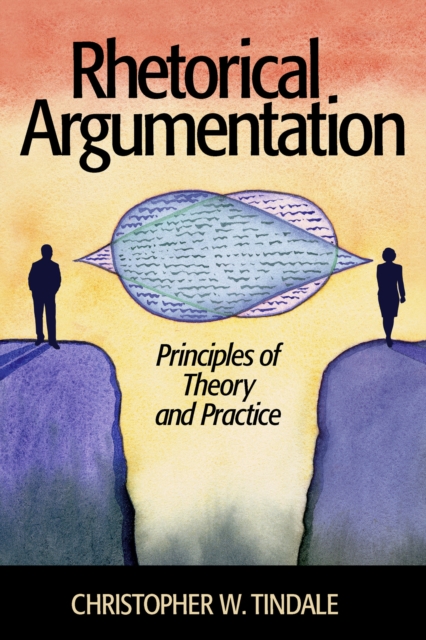
Rhetorical Argumentation
The study of argumentation has primarily focused on logical and dialectical approaches, with minimal attention given to the rhetorical facets of argument. Rhetorical Argumentation: Principles of Theory and Practice approaches argumentation from a rhetorical point of view and demonstrates how logical and dialectical considerations depend on the rhetorical features of the argumentative situation. Throughout this text, author Christopher W. Tindale identifies how argumentation as a communicative practice can best be understood by its rhetorical features.
eBook
Intelligence artificielle et analyse des déclarations de politique générale en France de 2017 à 2024
The present contribution aims to engage in a reflection on a political corpus composed of general policy speeches from the French Fifth Republic from 2017 to 2024, using the meth-ods and techniques of statistical analysis and hyperdeep. The objective of this study is to trace the history of this political ritual, to characterize its linguistic evolution, to understand its ob-jectives and textual properties, and then to analyze the singularities that define each Prime Minister and the rhetorical choices adopted.
Journal Article

Psalm 121: YHWH is always saving me! That’s why I’m going to sing! Rhetorical Analysis: weaving a “seam” that binds and unites
Psalm 121 is a song of the pilgrims to Jerusalem, belonging to a set of fifteen psalms (120-134) in which the same title appears: “Song of the Ascents” or “Song of the steps”. From this set, and in relation to the “steps”, the psalms often use the gradual rhythm: the same words or expressions are echoed from one verse to another. This remarkable characteristic in the Hebrew poetry present in the book of Psalms and very well marked in Psalm 121 makes it possible to study it according to the presuppositions and methodology of Semitic Biblical Rhetoric Analysis, perceiving similarities and contrasts in its verses, parallels and antitheses, besides of inner chiasms – even in a single verse – and other elements found in the beauty of the rhythm of the psalm. Linking poetry to daily activity, the image of a seam that ties smaller and larger points in the same fabric or unites it to another comes to mind and points out that YHWH weaves, helps and saves the life of the one who seeks in him the strength to continue his journey in the steep climb of the steps of life.
Journal Article

Fernando Vallespín: \Política y verdad en el Leviatán de Thomas Hobbes\. Madrid: Tecnos, 2021, 219 pp
La lectura del profesor Fernando Vallespín sobre el Leviatán de Thomas Hobbes resulta tan heterodoxa como oportuna para entender las “guerras ideológicas” del presente, en tanto incide en la faceta retórica de su lenguaje y su sustrato pasional, así como revela el trasfondo de un dilema, inherente al liberalismo, que hoy vuelve a reproducirse: el de la conciliación entre el pluralismo axiológico y la adhesión a un conjunto de principios universales. En la condición de axioma del instinto de supervivencia en Hobbes, es decir, en la prevalencia del miedo como presupuesto de partida, que en sí no obedece a decisión racional alguna, probablemente radique un motivo crucial para que Hobbes no descartase acudir al lenguaje emocional. La complejidad reside en la intromisión de Hobbes en la “guerra de las plumas”, abierta a un pluralismo que se repliega en defensa del absolutismo y la cientificidad.
Journal Article
Os tradutores da Casa do Arco do Cego e a ciência iluminista: a conciliação pelas palavras
Entre 1799 e 1801, funcionou em Lisboa a Casa Literária do Arco do Cego. Voltada para a publicação de obras científicas e didáticas ligadas à aplicação das ciências naturais, a Arco do Cego foi dirigida pelo frei José Mariano da Conceição Veloso, naturalista brasileiro e tradutor incansável. Para realizar o objetivo de trazer o progresso para o reino português por meio da instrução, as atividades da Arco do Cego ocorreram dentro de um sistema de mecenato em que a coroa portuguesa arcava com as despesas dos projetos. Essas despesas incluíam aquelas referentes ao pagamento dos tradutores recrutados por Frei Veloso, como Manoel Jacinto Nogueira da Gama, matemático, filósofo naturalista e professor que traduziu obras nas áreas de matemática e engenharia. As traduções publicadas sob a supervisão de Veloso eram introduzidas por dedicatórias e prefácios de tom laudatório escritos pelos tradutores, que assim reconheciam seu débito com a monarquia e declaravam sua fidelidade à Coroa e às tradições portuguesas. O objetivo deste trabalho é mostrar que esses paratextos funcionaram como instrumentos para a aceitação dos princípios científicos iluministas, pois as ideias progressistas eram apresentadas aos leitores portugueses por discursos comprometidos com as tradições do antigo regime português e com a retórica escolástica. Abstract Between 1799 e 1801, the publishing house Casa Literaria do Arco do Cego was fully active in Lisbon and dedicated to publishing scientific and didactic works regarding the application of natural scientific knowledge. It was run by Friar José Mariano da Conceição Veloso, a Brazilian naturalist and tireless translator. To accomplish its aim of bringing progress to the Portuguese kingdom through instruction, Arco do Cego held its activities within a system of patronage in which the Portuguese crown would pay for all of its expenses, including the payment of the translators working for Veloso. One of these translators was Manoel Jacinto Nogueira da Gama, a mathematician, naturalist and lecturer who translated works in the areas of mathematics and engineering. The translations published under Veloso’s supervision were introduced by dedicatories and prefaces written in a laudatory tone by the translators, who through such paratexts acknowledged their debt to the Crown and declared their loyalty to the monarchical regime and traditions of the Portuguese society. In this paper, the aim is to show that the translators’ paratexts worked as tools for the acceptance of the enlightened scientific principles, because the progressive ideas were presented to the Portuguese readers by discourses written in accordance with the scholastic tradition. Keywords: translation; enlightened science; rhetorics
Journal Article

A Systematic Theory of Argumentation
In this book two of the leading figures in argumentation theory present a view of argumentation as a means of resolving differences of opinion by testing the acceptability of the disputed positions. Their model of a 'critical discussion' serves as a theoretical tool for analysing, evaluating and producing argumentative discourse. They develop a method for the reconstruction of argumentative discourse that takes into account all aspects that are relevant to a critical assessment. They also propose a practical code of behaviour for discussants who want to resolve their differences in a reasonable way. This is a major contribution to the study of argumentation and will be of particular value to professionals and graduate students in speech communication, informal logic, rhetoric, critical thinking, linguistics, and philosophy.
eBook