
Catalogue Search | MBRL


Are you sure you want to remove the book from the shelf?

{{itemTitle}}
17
result(s) for
"Return migration Egypt"
Sort by:
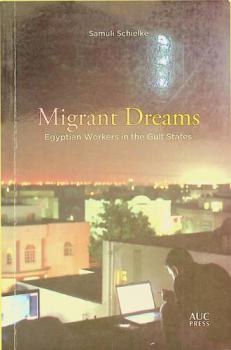
Migrant dreams : Egyptian workers in the Gulf states
\"A vivid ethnography of Egyptian migrants to the Arab Gulf states, Migrant Dreams is about the imagination which migration thrives on, and the hopes and ambitions generated by the repeated experience of leaving and returning home. What kind of dreams for a good or better life drives labor migrants? What does being a migrant worker do to one's hopes and ambitions? How does the experience of migration to the Gulf, with its attendant economic and legal precarities, shape migrants' particular dreams of a better life? What do those dreams--be they realistic and productive, or fantastic and unlikely--do to the social worlds of the people who pursue them, and to their families and communities back home upon their return? Based on ten years of ethnographic fieldwork and conversations with Egyptian men from mostly low-income rural backgrounds who migrated as workers to the Gulf, returned home, and migrated again over a period of about a decade, this fine-grained study explores and engages with these questions and more, as the men reflect on their strivings and the dreams they hope to fulfill. Throughout the book, Samuli Schielke highlights the story of one man, Tawfiq, who is particularly gifted at analyzing his own situation and struggles, resulting in a richly nuanced account that will appeal not only to Middle East scholars, but to anyone interested in the lived lives of labor migrants and what their experiences ultimately mean to them.\"--Publisher's description
Book

Selection, selection, selection: the impact of return migration
The evidence on the impact of return migration on the sending country is rather sparse, though growing. The contribution of this paper is in addressing various selectivity problems while quantifying the impact of return migration on wages of returnees using non-experimental data. Using Egyptian household-level survey data, I estimate the wages of return migrants controlling for several selectivity biases arising from emigration choice, return migration choice, labor force participation choice, and occupational choice following return. The findings provide strong evidence that overseas temporary migration results in a wage premium upon return, even after controlling for the various potential selection biases. However, the estimates underscore the significance of controlling for both emigration and return migration selections. Ignoring the double selectivity in migration would overestimate the impact of return migration on the wage premium of returnees, as migrants are positively selected relative to non-migrants, but returnees are negatively selected among migrants.
Journal Article
Return migrants and the wage premium: does the legal status of migrants matter?
This paper examines the impact of the legal status of overseas migrants on their wages upon return to the home country. Using unique data from Egypt, which allows us to distinguish between return migrants according to whether their international migration was documented or undocumented, we examine the impact of illegal status on wages upon return. Relying on a Conditional Mixed Process model, which takes into account the selection into emigration, into return, and into the legal status of temporary migration, we find that, upon return, undocumented migrants experience a wage penalty compared with documented migrants, as well as relative to non-migrants. Our results are the first to show the impact of undocumented migration on the migrant upon return to the country of origin.
Journal Article

International migration, economic development & policy
This book provides new thinking on the nexus between migration and different development indicators, such as education and fertility, as well as analyses on the impact of host country policies on migration flows.
eBook

Children as active citizens and Egyptian primary schools
Purpose - This paper aims to provide an evaluation of the new education system, based on Life Skills and Citizenship Education (LSCE), in Egyptian primary schools. This study analyzes how effective could be the implementation of LSCE in the process of constructing active democratic citizens, in particular, in the case of Egypt, highlighting problems facing the new education approach. Design/methodology/approach - The study methodologies are twofold; the content analysis of the primary one new curriculum \"Discover\", to assess the curriculum's strengths and weakness; and the questionnaire to the primary six students, to investigate the relationship among the twelve life skills. Findings - Content analysis of the textbook shows that the learning process based on LSCE is appropriate for the construction of active citizens. The textbook provides Egyptian children with the necessary opportunities to learn and create, through creative participatory methods. The relationship between the social dimension and other dimensions has been proven by means of the chi-square test. The relationship between participation and the two approximately absent skills \"resilience and empathy\" has been clarified as both are strongly interrelated with participation. The results illuminate a strong relationship between participation and the remaining life skills. Research limitations/implications - More questionnaires are needed to assess the grade of life skills achievement among students in grade one and two, as it is regarded one of the limitations of the present study, owing to the complicated procedures and the limited time. Practical implications - The research suggests the formulation of wider project-based activities to be included in the textbooks of all the primary grades. In this regard, real contribution with NGOs and local governments shall be developed to facilitate the involvement of children in actual projects, in accordance with their ages, and to encourage students to participate, as they notice the efficient results of their contribution. Social implications - The research stresses on the importance of enhancing participation, as it is proven through the chi-square test that it is strongly related to other skills. Originality/value - The scarcity of analytical studies to evaluate the effectiveness of citizenship education programs on children, after the application of the new Egyptian education system.
Journal Article

The impact of female education on fertility: a natural experiment from Egypt
This paper presents new evidence on the impact of female education on fertility in Egypt using the change in the length of primary schooling as the source of exogenous variation in education. Beginning in 1988, the Egyptian government cut the number of primary school years from six to five, moving from a 12-year system of pre-university education to an 11-year system. This policy change affected all individuals born on or after October 1977. Using triennial pooled cross-section data from 1992 to 2014 and a nonparametric regression discontinuity approach, we compare education and fertility of women born just before and right after October 1977. Our analysis shows that female education significantly reduces the number of children born per woman. The reduction in fertility seems to result from delaying maternal age rather than changing women’s fertility preferences. We also provide evidence that female education in Egypt does not boost women’s labor force participation or affect their usages of contraceptive methods. Female education, however, does appear to increase women’s age at marriage which might explain the delay of maternal age.
Journal Article
The impact of education to the transition from unemployment to employment in Egypt
Purpose - This paper aims to identify the level of contribution of different levels of education to remaining in unemployment as well as the transition from unemployment to employment in Egypt. Design/methodology/approach - In this paper, transition probabilities matrix differentiated by gender, age groups, educational levels, marital status and place of residence based on worker flows across employment, unemployment and out of labor force states during the period 2012-2018 using Egypt Labor Market Panel Survey of 2018. The results point to the highly static nature of the Egyptian labor market. Employment and the out of labor force states are the least mobile among labor market states. This is because employment state is very desirable and the out of labor force is the largest labor market states, especially for females. Also, this study examines the impact of different educational levels separately on remaining in unemployment and transition from unemployment to employment state using eight binary logistic regression models. Findings - The main results of transitions from unemployment to employment are relatively large for males, elder-age, uneducated workers as well as workers who are not married and urban residents, and the results of the logistic regression models consistent with the transition probabilities matrix results, except for few cases. Based on the above findings, there is enough evidence to accept the null hypothesis that no education has a positive significant impact to transition unemployed individuals from unemployment to employment, while less than intermediate as well as higher education have a negative significant impact to transition unemployed individuals from unemployment to employment. Originality/value - This paper proposes to address the problem of the unemployment among highly educated which is much higher compared with illiterates and try to understand the impact of different levels of education separately on the transition from unemployment to employment, to help the policymakers to eradicate the gap between education and the demand of the labor market in Egypt.
Journal Article

Young people school-to-work transition in the aftermath of the Arab Spring
PurposeThe purpose of this paper is to examine the school-to-work transition of young people from subsequent school exit cohorts between 2001 and 2012 in Egypt, thus, presenting an early evidence on the adjustments of the labor market in terms of patterns of youth transition to a first job following the 2011 Egyptian uprising.Design/methodology/approachThe analysis compares the early employment outcomes of those who left school after the January 25, 2011 uprising to that of those who left before 2011. The authors also separately control for the cohorts who left school in 2008 and 2009, in an attempt to disentangle any labor market adjustments that might have happened following the financial crisis, and before the revolution. Using novel and unexploited representative data from the 2014 Survey of Young People in Egypt (SYPE), the authors estimate the probability of transition to any first job within 18 months from leaving education and that of the transition to a good-quality job, controlling for the year of school exit. The authors also estimate the hazard of finding a first job and a good-quality job using survival analysis.FindingsSchool exit cohorts of 2008–2009 (following the financial crisis) and those of 2011–2012 (in the aftermath of the 2011 uprisings) experienced a significantly higher likelihood of finding a first job within 18 months than that of the cohorts of 2001–2007. However, this came at the expense of the quality of job, conditional on having found a first job. The results of the hazard model show that school leavers after 2008 who were not able to transition to a job shortly after leaving school experienced longer unemployment spells than their peers who left school before 2007. The odds of finding a good-quality job appears to decline with time spent in non-employment or in a bad-quality first job.Originality/valueThis paper contributes to a limited, yet growing, literature on how school-to-work transition evolved during the global financial crisis and the Egyptian 2011 revolution. Using data from SYPE 2014, the most recent representative survey conducted in Egypt on youth and not previously exploited to study youth school-to-work transition, the paper investigates the short-term adjustments of the youth labor market opportunities during that critical period of Egypt and the region’s history.
Journal Article

Climate change and security in the Israeli— Palestinian context
The Middle East is among the least stable and most fragile regions. It is not surprising, therefore, that concerns have been raised regarding the potential implications of climate change. This article critically examines the potential interactions between climate change and conflict in the Israeli-Palestinian case. Based on a review of the possible effects of climate change, water is identified as the main issue which may be affected, and it also has transboundary implications. We illustrate the potential implications of reduced freshwater availability by assessing the ability to supply normative domestic water needs under rapid population growth scenarios, including return of refugees. In addition, the ability to supply environmental needs and the needs of peripheral farmers under extremely reduced availability scenarios is examined. The normative domestic demand in Israel and the West Bank can be supplied on the basis of natural resources, though re-allocation of water from Israel to the Palestinians is necessary. The Gaza Strip cannot supply the normative domestic needs under any scenario and hence requires immediate augmentation, regardless of climate change. Desalination can supply Gaza's needs and augment water resources in Israel and the West Bank, thereby partially decoupling domestic and agricultural use from climate. Thus, it is unlikely that climate change will directly affect the conflict. However, framing water as a security issue, along with the potential for furthering such securitization with reference to climate change, may adversely affect the readiness of the parties to take adaptive measures and lead them to rigidify their negotiating positions. Possible effects of climate change on other regional players, particularly Egypt and Jordan, may have indirect effects on the Israeli-Palestinian scene. But this hypothesis requires further study.
Journal Article
Migration and family change in Egypt: a comparative approach to social remittances
Based on two ethnographical studies, our article explores social remittances from France and from the Gulf States, i.e. the way Egyptian migrants and returnees contribute to social change in their homeland with a focus on gender ideals and practices, as well as on the ways families cope with departure, absence and return. Policies in the home and host countries, public discourse, translocal networks, and individual locations within evolving structures of power, set the frame for an analysis of the consequences of migration in Egypt. This combination of structural factors is necessary to grasp the complex negotiations of family and gender norms, as asserted through idealized models, or enacted in daily practices in immigration and back home.
Journal Article