
Catalogue Search | MBRL


Are you sure you want to remove the book from the shelf?

{{itemTitle}}
357
result(s) for
"Reusable space vehicles."
Sort by:


Single Stage to Orbit: Politics, Space Technology, and the Quest for Reusable Rocketry
While the glories and tragedies of the space shuttle make headlines and move the nation, the story of the shuttle forms an inseparable part of a lesser-known but no less important drama-the search for a re-useable single-stage-to-orbit rocket. Here an award-winning student of space science, Andrew J. Butrica, examines the long and tangled history of this ambitious concept, from it first glimmerings in the 1920s, when technicians dismissed it as unfeasible, to its highly expensive heyday in the midst of the Cold War, when conservative-backed government programs struggled to produce an operational flight vehicle. Butrica finds a blending of far-sighted engineering and heavy-handed politics. To the first and oldest idea-that of the reusable rocket-powered single-stage- to-orbit vehicle-planners who belonged to what President Eisenhower referred to as the military-industrial complex added experimental (\" X \"), \"aircraft-like\" capabilities and, eventually, a \"faster, cheaper, smaller\" managerial approach. Single Stage to Orbit traces the interplay of technology, corporate interest, and politics, a combination that well served the conservative space agenda and ultimately triumphed-not in the realization of inexpensive, reliable space transport-but in a vision of space militarization and commercialization that would appear settled United States policy in the early twenty-first century. \"The 'holy grail' of the spaceship movement has been the development of a vehicle that could accomplish single stage to orbit (SSTO) flight. This study describes the evolution of this concept from the 192'0s to the present, revealing a conservative space agenda that has not yet been the subject of historical analysis. As such, it makes an important contribution to space history literature.\"-Roger D. Launius, The Smithsonian Institution.
eBook

XCOR, developing the next generation spaceplane
Employing the same informational approach Erik Seedhouse used in \"SpaceX\" and \"Bigelow Aerospace\", this new book familiarizes space enthusiasts with the company XCOR Aerospace and examines the design of the two-seater Lynx. The new spaceplane's low weight and high octane fuel confer important advantages, such as direct runway launches and the ability to fly several times per day. Over the last 15 years, XCOR has developed and built 13 different rocket engines, built and flown two manned rocket-powered aircraft and has accumulated over 4,000 engine firings and nearly 500 minutes of run time on their engines. This book serves as a go-to reference guide for suborbital scientists and those seeking to learn how one company has found success. Additionally, it describes the medical and training requirements for those flying on board the Lynx and the related critical roles of the astronaut trainers and a new breed of commercial space pilots. The end result is a thorough chronicle of the development of rocket propulsion, avionics, simulator and ground support operations being put into play by XCOR with the Lynx.
Book

Fault Detection and Isolation Based on Structural Analysis: Application to a Multi-Engine Propulsion Cluster
A multi-engine cluster of a launcher operates in extreme conditions, making the tasks of detection and isolation complex, with only a precise group of faults with small magnitudes worth being detected and isolated. To address this, a model-based Fault Detection and Isolation (FDI) system is developed for a multi-engine cluster using Structural Analysis (SA). A model of a multi-engine cluster composed of three engines is established, where different sensor and actuator faults are considered. After analyzing the model using SA, more than 16,000 residual generator candidates are obtained. An algorithm is then proposed to find subsets of residuals with minimal cardinality capable of isolating all faults. Each subset generates a unique fault signature for each fault, enabling fault isolation. The selection of the best subsets is based on the new definition of the Subset Sensitivity Index (SSI), according to which the subsets composed of the most sensitive residuals have the highest SSI values. The residual sensitivity is calculated using a new method based on the signal-to-noise ratio (SNR), where a new definition of the Residual Sensitivity Index (RSI) is given. Furthermore, a new algorithm is presented for fault isolation. Suppose a theoretical fault signature is not observed. In that case, the algorithm uses the knowledge of the residual sensitivity (RSI) to define which residual did not behave as expected and predicts which fault is active in the system. Monte Carlo simulations are conducted under ten different faults to analyze the performance of the proposed FDI system, including actuators and sensor faults.
Journal Article

Incremental Nonlinear Dynamic Inversion Considering Centroid Variation Control for Reusable Launch Vehicles
For the diverse payloads of Reusable Launch Vehicles and the inevitable problem of change in the center of mass, this paper proposes an incremental nonlinear dynamic inversion considering centroid variation control. Regarding the trans-atmosphere flight environment, the six-degree-of-freedom dynamics model considering centroid shift, Earth rotation, and the Clairaut Ellipsoid Model is established to improve model accuracy. An incremental nonlinear dynamic inversion considering a centroid variation controller with excellent dynamic performance and adjustment under the centroid variation is designed for the model, which fully meets the safety requirements of RLV reentry. An extended state observer considering centroid variation is proposed to solve the problem with difficult direct measurement of angular acceleration, which incorporates the influence of centroid variation into the known part to improve estimation accuracy and speed. Finally, the simulation results are provided to verify the robustness of the change of centroid position and good control quality with the proposed controller.
Journal Article
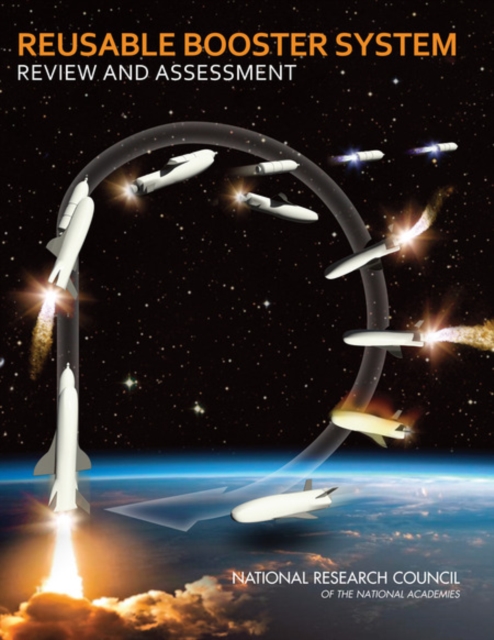
Reusable Booster System: Review and Assessment
On June 15, 2011, the Air Force Space Command established a new vision, mission, and set of goals to ensure continued U.S. dominance in space and cyberspace mission areas. Subsequently, and in coordination with the Air Force Research Laboratory, the Space and Missile Systems Center, and the 14th and 24th Air Forces, the Air Force Space Command identified four long-term science and technology (ST) challenges critical to meeting these goals. One of these challenges is to provide full-spectrum launch capability at dramatically lower cost, and a reusable booster system (RBS) has been proposed as an approach to meet this challenge.The Air Force Space Command asked the Aeronautics and Space Engineering Board of the National Research Council to conduct an independent review and assessment of the RBS concept prior to considering a continuation of RBS-related activities within the Air Force Research Laboratory portfolio and before initiating a more extensive RBS development program. The committee for the Reusable Booster System: Review and Assessment was formed in response to that request and charged with reviewing and assessing the criteria and assumptions used in the current RBS plans, the cost model methodologies used to fame [frame?] the RBS business case, and the technical maturity and development plans of key elements critical to RBS implementation.The committee consisted of experts not connected with current RBS activities who have significant expertise in launch vehicle design and operation, research and technology development and implementation, space system operations, and cost analysis. The committee solicited and received input on the Air Force launch requirements, the baseline RBS concept, cost models and assessment, and technology readiness. The committee also received input from industry associated with RBS concept, industry independent of the RBS concept, and propulsion system providers which is summarized in Reusable Booster System: Review and Assessment.
eBook
Coupling of Advanced Guidance and Robust Control for the Descent and Precise Landing of Reusable Launchers
This paper investigates the coupling of successive convex optimization guidance with robust structured H∞ control for the descent and precise landing of Reusable Launch Vehicles (RLVs). More particularly, this Guidance and Control (G&C) system is foreseen to be integrated into a nonlinear six-degree-of-freedom RLV controlled dynamics simulator which covers the aerodynamic and powered descent phase until vertical landing of a first-stage rocket equipped with a thrust vector control system and steerable planar fins. A cost function strategy analysis is performed to find out the most efficient one to be implemented in closed-loop with the robust control system and the vehicle flight mechanics involved. In addition, the controller synthesis via structured H∞ is thoroughly described. The latter are built at different points of the descent trajectory using Proportional-Integral-Derivative (PID)-like structures with feedback on the attitude angles, rates, and lateral body velocities. The architecture is verified through linear analyses as well as nonlinear cases with the aforementioned simulator, and the G&C approach is validated by comparing the performance and robustness with a baseline system in nominal conditions as well as in the presence of perturbations. The overall results show that the proposed G&C system represents a relevant candidate for realistic descent flight and precise landing phase for reusable launchers.
Journal Article
Elon Musk's SpaceX update
Bloomberg's Ed Ludlow joins Emily Chang as Elon Musk is expected to outline the progress SpaceX has made on its next generation launch systems: Starship and Falcon Heavy.
Streaming Video

Progress of Four Programs from the Comprehensive Addiction and Recovery Act
Substance use disorder (SUD) and opioid use disorder are significant public health threats that affect millions of Americans each year.To help address overdose deaths and lack of access to treatment, the Comprehensive Addiction and Recovery Act (CARA) was signed into law on July 22, 2016.
eBook
Controlling Cost Growth of NASA Earth and Space Science Missions
Cost and schedule growth is a problem experienced by many types of projects in many fields of endeavor.Based on prior studies of cost growth in NASA and Department of Defense projects, this book identifies specific causes of cost growth associated with NASA Earth and space science missions and provides guidance on how NASA can overcome these.
eBook