
Catalogue Search | MBRL


Are you sure you want to remove the book from the shelf?

{{itemTitle}}
555
result(s) for
"Revolutions -- Africa -- History"
Sort by:


Rethinking resistance : revolt and violence in African history
Rethinking Resistance analyzes revolts from the nineteenth century and early colonial Africa, post-colonial rebellions and recent conflicts in African history by reinterpreting resistance studies in the light of current scholarly thought and linking them to new conceptual perspectives on the changing nature of violence.
eBook

Africa uprising : popular protest and political change
\"From Egypt to South Africa, Nigeria to Ethiopia, a new force for political change is emerging across Africa: popular protest. Drawing on interviews and in-depth analysis, Adam Branch and Zachariah Mampilly offer a penetrating assessment of contemporary African protests, situating the current popular activism within its historical and regional contexts\"-- Back cover.
Book
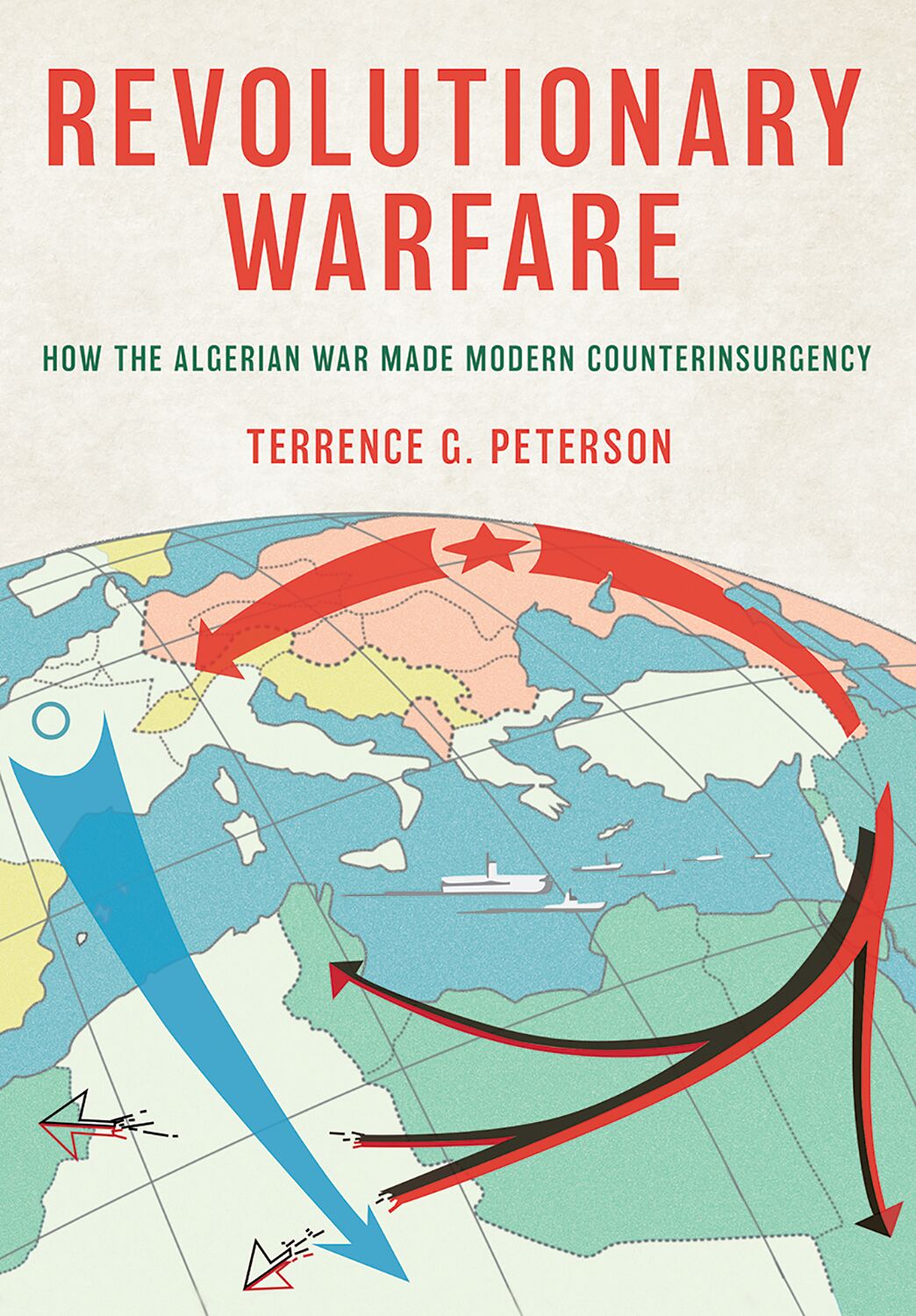
Revolutionary Warfare
Revolutionary Warfare
investigates how efforts to counter a revolution could also
be revolutionary. The Algerian War fractured the French
Empire, destroyed the legitimacy of colonial rule, and helped
launch the Third Worldist movement for the liberation of the Global
South. By tracing how French generals, officers, and civil
officials sought to counter Algerian independence with their own
project of radical social transformation, Terrence G. Peterson
reveals that the conflict also helped to transform the nature of
modern warfare.
The French war effort was never defined solely by repression. As
Peterson details, it also sought to fashion new forms of
surveillance and social control that could capture the loyalty of
Algerians and transform Algerian society. Hygiene and medical aid
efforts, youth sports and education programs, and psychological
warfare campaigns all attempted to remake Algerian social
structures and bind them more closely to the French state. In
tracing the emergence of such programs, Peterson reframes the
French war effort as a project of armed social reform that sought
not to preserve colonial rule unchanged, but to revolutionize it in
order to preserve it against the global challenges of
decolonization.
Revolutionary Warfare demonstrates how French officers'
efforts to transform warfare into an exercise in social engineering
not only shaped how the Algerian War unfolded from its earliest
months, but also helped to forge a paradigm of warfare that
dominated strategic thinking during the Cold War and after:
counterinsurgency.
eBook

Warfare in African History
This book examines the role of war in shaping the African state, society, and economy. Richard J. Reid helps students understand different patterns of military organization through Africa's history; the evolution of weaponry, tactics, and strategy; and the increasing prevalence of warfare and militarism in African political and economic systems. He traces shifts in the culture and practice of war from the first millennium into the era of the external slave trades, and then into the nineteenth century, when a military revolution unfolded across much of Africa. The repercussions of that revolution, as well as the impact of colonial rule, continue to this day. The frequency of coups d'états and civil war in Africa's recent past is interpreted in terms of the continent's deeper past.
eBook

Decolonization, Development and Knowledge in Africa
This provocative book is anchored on the insurgent and resurgent spirit of decolonization in the twenty-first century. The author calls upon Africa to turn over a new leaf in the domains of politics, economy, and knowledge as it frees itself from imperial global designs and global coloniality.
With a focus on Africa and its Diaspora, the author calls for a radical turning over of a new leaf, predicated on decolonial turn and epistemic freedom. The key themes subjected to decolonial analysis include: (1) decolonization/decoloniality - articulating the meaning and contribution of the decolonial turn; (2) subjectivity/identity - examining the problem of Blackness (identity) as external and internal invention; (3) the Bandung spirit of decolonization as an embodiment of resistance and possibilities, development and self-improvement; (4) development and self-improvement - of African political economy, as entangled in the colonial matrix of power, and the African Renaissance, as weakened by undecolonized political and economic thought; and (5) knowledge - the role of African humanities in the struggle for epistemic freedom.
This groundbreaking volume opens the intellectual canvas on the challenges and possibilities of African futures. It will be of great interest to students and scholars of Politics and International Relations, Development, Sociology, African Studies, Black Studies, Education, History, Postcolonial Studies, and the emerging field of Decolonial Studies.
eBook

Imperial Portugal in the age of Atlantic revolutions : the Luso-Brazilian world, c. 1770-1850
Portugal made great efforts to tie its territories together, but the Luso-Brazilian empire eventually succumbed to revolution like its British, French and Spanish counterparts. This book reveals the links and relationships between Portugal and Brazil that survived the demise of empire and shaped the trajectories of the two countries.
eBook

The Arab spring
In this landmark book, Hamid Dabashi argues that the revolutionary uprisings from Morocco to Iran and from Syria to Yemen were driven by a 'delayed defiance' - a point of rebellion against domestic tyranny and globalized disempowerment alike - that signifies no less than the end of Postcolonialism.
eBook
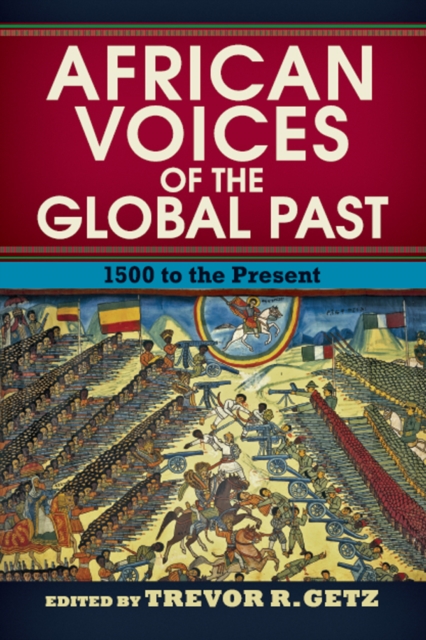
African Voices of the Global Past
Global historical events are too often recounted exclusively through European and American voices. African Voices of the Global Past explores six major historical developments of global significance - the Atlantic slave trade, industrialization, colonialism, the World Wars, decolonization, and the development of modern feminism - from an African perspective. Voices emerge throughout the text in the form of primary sources that explore the personal accounts of individuals. These enable students to look beyond the indistinct figures of Africans in European and American accounts to see the people directly involved and affected by the major global changes they experienced. Featuring contributed chapters from renowned scholars, many from the continent of Africa or the African diaspora, African Voices of the Global Past offers a unique view of global history from a traditionally overlooked perspective. This book is a perfect supplement for world history and African history instructors seeking to relate a compelling narrative of major world events.
eBook

Replenishing the Earth
Why does so much of the world speak English? This book gives a new answer to that question, uncovering a ‘Settler Revolution’ that took place from the early 19th century that led to the explosive settlement of the American West and its forgotten twin, the British West, comprising the settler dominions of Canada, Australia, New Zealand, and South Africa. Between 1780 and 1930, the number of English-speakers rocketed from 12 million in 1780 to 200 million, and their wealth and power grew to match. Their secret was not racial, or cultural, or institutional superiority but a resonant intersection of historical changes, including the sudden rise of mass transfer across oceans and mountains, a revolutionary upward shift in attitudes to emigration, the emergence of a settler ‘boom mentality’, and a late flowering of non-industrial technologies — wind, water, wood, and work animals — especially on settler frontiers. This revolution combined with the Industrial Revolution to transform settlement into something explosive — capable of creating great cities like Chicago and Melbourne and large socio-economies in a single generation. The ‘Settler Revolution’ was not exclusive to the Anglophone countries — Argentina, Siberia, and Manchuria also experienced it. But it was the Anglophone settlers who managed to integrate frontier and metropolis most successfully, and it was this that gave them the impetus and the material power to provide the world's leading super-powers for the last 200 years.
eBook