
Catalogue Search | MBRL


Are you sure you want to remove the book from the shelf?

{{itemTitle}}
13,371
result(s) for
"Reza"
Sort by:
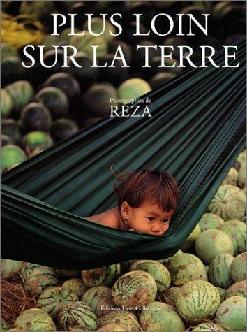

'This is a Prison...A Death in Life': Reza Shah's troubled exile on the Island of Mauritius
Reza Shah, the feared and powerful master of Iran for nearly two decades, spent the last years of his life in lonely exile, on the island of Mauritius, then in South Africa. His life in exile was hardly a happy one. The place and conditions of his exile were dictated not by himself but by the British, and the relationship between the two remained uneasy. Britain's handling of Reza Shah - the degree and freedom and choice they were prepared to allow him and his family - were determined by the exigencies of war. Reza Shah sought to loosen the bonds of British control. In Tehran, his son and successor, Mohammad Reza Shah, also played a role. He used what leverage he had with the British to help ease the conditions of his father's exile, while he endeavored to protect Iran's interests under a difficult foreign occupation. The push-and-pull of cross-purposes entailed by this triangular relationship defined Reza Shah's life in exile in both Mauritius and Johannesburg. This article examines the Mauritian period of his exile.
Journal Article

The Last Shah
The surprising story of Iran's transformation from America's ally in the Middle East into one of its staunchest adversaries Offering a new view of one of America's most important, infamously strained, and widely misunderstood relationships of the postwar era, this book tells the history of America and Iran from the time the last shah, Mohammad Reza Pahlavi, was placed on the throne in 1941 to the 1979 revolution that brought the present Islamist government to power. This revolution was not, as many believe, the popular overthrow of a powerful and ruthless puppet of the United States; rather, it followed decades of corrosion of Iran's political establishment by an autocratic ruler who demanded fealty but lacked the personal strength to make hard decisions and, ultimately, lost the support of every sector of Iranian society. Esteemed Middle East scholar Ray Takeyh provides new interpretations of many key events-including the 1953 coup against Prime Minister Mohammad Mossadeq and the rise of Ayatollah Ruhollah Khomeini-significantly revising our understanding of America and Iran's complex and difficult history.
eBook

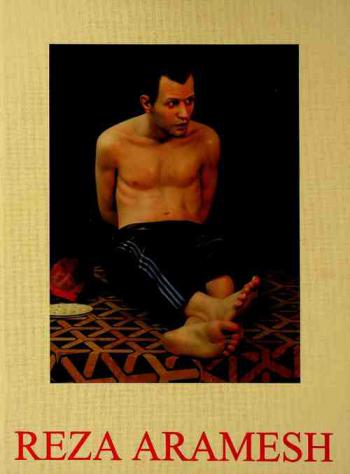
Site of the Fall : study of the Renaissance garden
\"The book comprises a compilation of recent works, focusing on three recent series: Site of the Fall- study of the renaissance garden, Metamorphosis- a study in liberation and Study of the Head as Cultural Artefacts. These series of works explore the aesthetics of violence expressed through the human body, counteracting general perceptions of victims.\"--Text from publishers website.
Book

From The Creators of Knowledge to the Specialists of Spirit: Anti-Clericalism in Iran’s Modernist Intellectual Discourse (1925–1941)
In the early twentieth century, the Iranian Reza Shah state (1925–1941), in conjunction with the emerging group of state-trained scholars, called the status of ulama as knowledge producers into question. Existing scholarship has primarily examined the impact of state modernization on the Muslim clergy and their responses to modernization but has paid lesser attention to the passive role of the ulama or their representation in modernist intellectual and literary discourses. I examine two major Persian sources of the period to argue that intellectual representation of the ulama, in both polemics and academic critique, aided the state in its attempt to push the ulama from the center of intellectual and social life to the margins of ritual purity. Among my primary sources is a previously unexamined academic thesis authored by Qasim Tuysirkani in 1938.
Journal Article

Healthcare Access and Quality Index based on mortality from causes amenable to personal health care in 195 countries and territories, 1990–2015: a novel analysis from the Global Burden of Disease Study 2015
National levels of personal health-care access and quality can be approximated by measuring mortality rates from causes that should not be fatal in the presence of effective medical care (ie, amenable mortality). Previous analyses of mortality amenable to health care only focused on high-income countries and faced several methodological challenges. In the present analysis, we use the highly standardised cause of death and risk factor estimates generated through the Global Burden of Diseases, Injuries, and Risk Factors Study (GBD) to improve and expand the quantification of personal health-care access and quality for 195 countries and territories from 1990 to 2015.
We mapped the most widely used list of causes amenable to personal health care developed by Nolte and McKee to 32 GBD causes. We accounted for variations in cause of death certification and misclassifications through the extensive data standardisation processes and redistribution algorithms developed for GBD. To isolate the effects of personal health-care access and quality, we risk-standardised cause-specific mortality rates for each geography-year by removing the joint effects of local environmental and behavioural risks, and adding back the global levels of risk exposure as estimated for GBD 2015. We employed principal component analysis to create a single, interpretable summary measure–the Healthcare Quality and Access (HAQ) Index–on a scale of 0 to 100. The HAQ Index showed strong convergence validity as compared with other health-system indicators, including health expenditure per capita (r=0·88), an index of 11 universal health coverage interventions (r=0·83), and human resources for health per 1000 (r=0·77). We used free disposal hull analysis with bootstrapping to produce a frontier based on the relationship between the HAQ Index and the Socio-demographic Index (SDI), a measure of overall development consisting of income per capita, average years of education, and total fertility rates. This frontier allowed us to better quantify the maximum levels of personal health-care access and quality achieved across the development spectrum, and pinpoint geographies where gaps between observed and potential levels have narrowed or widened over time.
Between 1990 and 2015, nearly all countries and territories saw their HAQ Index values improve; nonetheless, the difference between the highest and lowest observed HAQ Index was larger in 2015 than in 1990, ranging from 28·6 to 94·6. Of 195 geographies, 167 had statistically significant increases in HAQ Index levels since 1990, with South Korea, Turkey, Peru, China, and the Maldives recording among the largest gains by 2015. Performance on the HAQ Index and individual causes showed distinct patterns by region and level of development, yet substantial heterogeneities emerged for several causes, including cancers in highest-SDI countries; chronic kidney disease, diabetes, diarrhoeal diseases, and lower respiratory infections among middle-SDI countries; and measles and tetanus among lowest-SDI countries. While the global HAQ Index average rose from 40·7 (95% uncertainty interval, 39·0–42·8) in 1990 to 53·7 (52·2–55·4) in 2015, far less progress occurred in narrowing the gap between observed HAQ Index values and maximum levels achieved; at the global level, the difference between the observed and frontier HAQ Index only decreased from 21·2 in 1990 to 20·1 in 2015. If every country and territory had achieved the highest observed HAQ Index by their corresponding level of SDI, the global average would have been 73·8 in 2015. Several countries, particularly in eastern and western sub-Saharan Africa, reached HAQ Index values similar to or beyond their development levels, whereas others, namely in southern sub-Saharan Africa, the Middle East, and south Asia, lagged behind what geographies of similar development attained between 1990 and 2015.
This novel extension of the GBD Study shows the untapped potential for personal health-care access and quality improvement across the development spectrum. Amid substantive advances in personal health care at the national level, heterogeneous patterns for individual causes in given countries or territories suggest that few places have consistently achieved optimal health-care access and quality across health-system functions and therapeutic areas. This is especially evident in middle-SDI countries, many of which have recently undergone or are currently experiencing epidemiological transitions. The HAQ Index, if paired with other measures of health-system characteristics such as intervention coverage, could provide a robust avenue for tracking progress on universal health coverage and identifying local priorities for strengthening personal health-care quality and access throughout the world.
Bill & Melinda Gates Foundation.
Journal Article
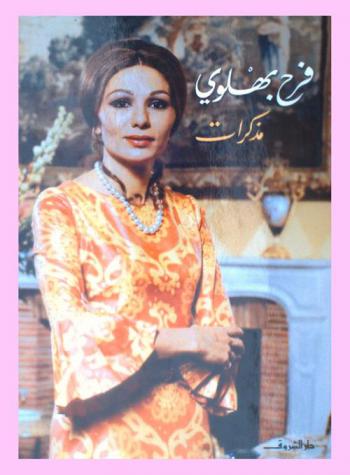
مذكرات /
عندما أتذكر ذلك الصباح من يناير 1979 يعاودني نفس إحساس الحزن الموجع بكل حدته. كانت طهران تعاني هجوما ضاريا منذ شهور، لكن صمتا متوترا يخيم الآن على المدينة كما لو أن عاصمة بلدنا تحبس أنفاسها فجأة اليوم السادس عشر من الشهر ونحن على وشك مغادرة بلدنا، تبدأ قصتها كبدايات القصص الخيالية، ففي الحادية والعشرين من عمرها تزوجت (فرح ديبا) شاه إيران (محمد رضا شاه بهلوي) وخلال أيام انقلبت حياتها الهادئة رأسا على عقب : غطت صحافة العالم حفل تتويجها إمبراطورة لإيران وبين ليلة وضحاها صارت شخصية مشهورة عالميا وشهدت سنوات زواجها الأولى زواجا قائما على الحب وتربية أربعة أطفال وتفانيا في القضايا الاجتماعية والثقافية، على الرغم من دلائل كانت ماثلة في الأفق على وجود انقسامات وطنية خطيرة وبعد عشرين عاما تحول الحلم إلى كابوس ؛ هزت البلاد مظاهرات وأعمال شغب وقررت (فرح) والشاه الرحيل لتجنب إراقة الدماء ولم ير الشاه المنفي وهو يعاني مرضا خطيرا وطنه بعد ذلك أبدا وسعيا معا إلى اللجوء للمغرب وجزر البهاما والمكسيك وبنما واختفيا عن الأعين في مستشفى بنيويورك حيث تلقى الشاه علاجا، حتى منحهما الرئيس المصري (أنور السادات) ملاذا في آخر المطاف، ثم اغتيل هو نفسه على أيدي الأصوليين بعد ثمانية عشر شهرا فحسب، قصة السنوات الأخيرة للشاه واحدة من أكثر الحلقات المؤثرة والمقلقة في أواخر القرن العشرين، حيث بدأت علاقة أمريكا المتوترة مع الشرق الأوسط تكشف عن أسسها الواهية وللمرة الأولى تحطم (فرح ديبا) ـالشاهبانوـ زوجة آخر أباطرة إيران حاجز صمتها وتحكي قصة حبها الموجعة لرجل وبلده وتطرح (حب باق) رؤيتها الحميمة لعصر من الاضطرابات، لكن الأهم من كل ذلك أنها تظل وثيقة إنسانية قوية لشخصية انحصرت حياتها بين ملحمة ومأساة المعركة الوطنية.
BOOK