
Catalogue Search | MBRL


Are you sure you want to remove the book from the shelf?

{{itemTitle}}
12,036
result(s) for
"Rhetoric Philosophy."
Sort by:


Deleuzian fabulation and the scars of history
By tracing its connections to other concepts and situating them within Deleuze's general aesthetics, Ronald Bogue develops a theory of fabulation, which he proposes as the guiding principle of a Deleuzian approach to literary narrative. This is an original and exciting project by a highly respected specialist in the field.
eBook
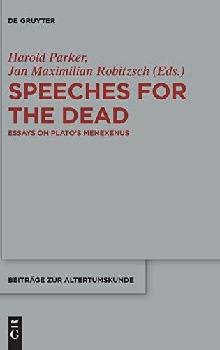
Speeches for the dead : essays on Plato's Menexenus
The Menexenus, in spite of the dearth of scholarly attention it has traditionally received compared to other Platonic texts, is an important dialogue for any consideration of Plato's views on political philosophy, history, and rhetoric - to say nothing of the dialogue's contribution to the study of civic ideology and institutions, natural law theory, and Plato's notion of race. Speeches for the Dead unites the contributions of scholars working on diverse aspects of the dialogue, growing out of a one-day workshop on the same subject at the University of Pennsylvania organized by the editors. In offering a variety of perspectives on the Menexenus, the volume is the very first of its kind in any language. In addition, the volume contains an up-to-date bibliography of scholarship in English, French, German, and Italian. This makes the book a definitive guide and ideal starting point for advanced students and scholars looking for further information about the dialogue.
BOOK

The Experientiality of Narrative
Recent developments in cognitive narrative theory have called attention to readers' active participation in making sense of narrative.However, while most psychologically inspired models address interpreters' subpersonal (i.e., unconscious) responses, the experiential level of their engagement with narrative remains relatively undertheorized.
eBook


Kenneth Burke + The Posthuman
While rhetoric as a discipline is firmly planted in humanism and
anthropology, posthumanism seeks to leave the human behind. This
highly original examination of Kenneth Burke's thought grapples
with these ostensibly contradictory concepts as opportunities for
invention, revision, and, importantly, transdisciplinary knowledge
making.
Rather than simply mapping posthumanist rhetorics onto Burke's
scholarship, Kenneth Burke + The Posthuman focuses on the
multiplicity of ideas found both in his work and in the idea of
posthumanism. Taking varied approaches organized within a framework
of boundaries and futures, the contributors show that studying the
humanist theories of Burke in this way creates a satisfyingly
chaotic web of interconnections. The essays look at how Burke's
writing on the human mind and technology, from his earliest works
to his very latest revisions, interrelates with current concepts
such as new materiality and coevolution. Throughout, the
contributors pay close attention to the fluidity, concerns, and
contradictions inherent in language, symbolism, and
subjectivity.
A unique, illuminating exploration of the contested relationship
between bodies and language, this inherently transdisciplinary book
will propel important future inquiry by scholars of rhetoric,
Burke, and posthumanism.
In addition to the editors, the contributors are Casey Boyle,
Kristie Fleckenstein, Nathan Gale, Julie Jung, Steven B. Katz,
Steven LeMieux, Jodie Nicotra, Jeff Pruchnic, Timothy Richardson,
Thomas Rickert, and Robert Wess.
eBook


A revolution in tropes
This book seeks to bring the problem of difference into the ongoing discussions vis-a-vis democratic deliberations about advancing rhetorical theory through the trope of the other, alloiosis, defined as the figure of difference, exception, and radical otherness.
eBook

The ancient art of thinking for yourself : the power of rhetoric in polarized times
\"For most of the 2,000-plus years since its foundation as a discipline by ancient Greek thinkers, rhetoric-the art of using language to persuade-was a keystone of a Western education. But in the early 20th century, studying rhetoric fell out of fashion. In The Ancient Art of Thinking for Yourself, Robin Reames, one of the world's leading scholars of rhetoric, argues that it's high time to bring it back. Drawing on examples ranging from the Sophist Alcibiades, whose speeches in favor of war led ancient Athens to destruction and defeat, to modern-day conspiracists like Alex Jones, Reames breaks down the major techniques of rhetoric, pulling back the curtain on how politicians, journalists, and \"journalists\" convince us to believe what we believe-and to vote and act accordingly. Understanding these techniques helps us avoid being manipulated by modern-day sophists who don't have our best interests at heart. But it also grants us rare insight into our own beliefs, and the values that shape them. Learning rhetoric, she argues, doesn't teach what to think but how to think - allowing us to understand our ideological commitments, and those of others, in a completely new way. Thoughtful, nuanced, and leavened with dry humor, The Ancient Art of Thinking for Yourself offers an antidote to our polarized, post-truth world\"-- Provided by publisher.
Book

Rhetoric's pragmatism : essays in rhetorical hermeneutics
For over thirty years, Steven Mailloux has championed and advanced the field of rhetorical hermeneutics, a historically and theoretically informed approach to textual interpretation. This volume collects fourteen of his most recent influential essays on the methodology, plus an interview.
Following from the proposition that rhetorical hermeneutics uses rhetoric to practice theory by doing history, this book examines a diverse range of texts from literature, history, law, religion, and cultural studies. Through four sections, Mailloux explores the theoretical writings of Heidegger, Burke, and Rorty, among others; Jesuit educational treatises; and products of popular culture such as Azar Nafisi's Reading Lolita in Tehran and Star Trek: The Next Generation. In doing so, he shows how rhetorical perspectives and pragmatist traditions work together as two mutually supportive modes of understanding, and he demonstrates how the combination of rhetoric and interpretation works both in theory and in practice. Theoretically, rhetorical hermeneutics can be understood as a form of neopragmatism. Practically, it focuses on the production, circulation, and reception of written and performed communication.
A thought-provoking collection from a preeminent literary critic and rhetorician, Rhetoric's Pragmatism assesses the practice and value of rhetorical hermeneutics today and the directions in which it might head. Scholars and students of rhetoric and communication studies, critical theory, literature, law, religion, and American studies will find Mailloux's arguments enlightening and essential.
eBook