
Catalogue Search | MBRL


Are you sure you want to remove the book from the shelf?

{{itemTitle}}
8,904
result(s) for
"Rhode Island"
Sort by:

Compass rose : a novel
Game warden Elsie Buttrick has just given birth to Dick's illegitimate daughter, Rose, and over the next 16 years the fiercely independent Elsie grapples with motherhood, aging, and love, and throws herself into a crusade to stop her land-grabbing brother-in-law from expanding his seaside resort. Meanwhile, Dick's wife, May, reconciles a public humiliation with an intense love for Rose. As Elsie's lust flares, May sinks deeper into her devotion to her children and Rose.
Book
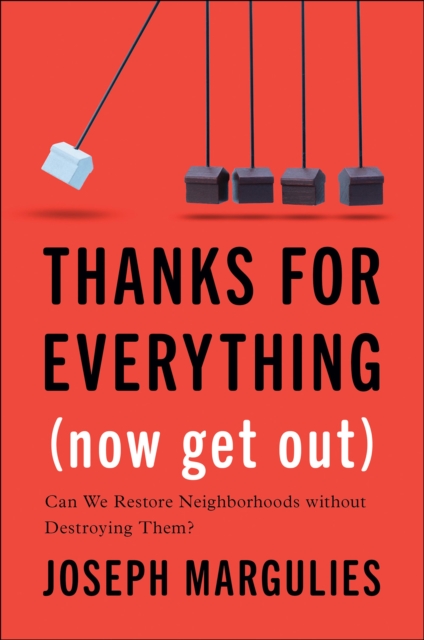
Thanks for Everything (Now Get Out)
When a distressed urban neighborhood gentrifies, all the ratios change: poor to rich; Black and Brown to white; unskilled to professional; vulnerable to secure. Vacant lots and toxic dumps become condos and parks. Upscale restaurants open and pawn shops close. But the low-income residents who held on when the neighborhood was at its worst, who worked so hard to make it better, are gradually driven out. For them, the neighborhood hasn't been restored so much as destroyed. Tracing the history of Olneyville, a neighborhood in Providence, Rhode Island, that has traveled the long arc from urban decay to the cusp of gentrification, Joseph Margulies asks the most important question facing cities today: Can we restore distressed neighborhoods without setting the stage for their destruction? Is failure the inevitable cost of success? Based on years of interviews and on-the-ground observation, Margulies argues that to save Olneyville and thousands of neighborhoods like it, we need to empower low-income residents by giving them ownership and control of neighborhood assets. His model for a new form of neighborhood organization-the \"neighborhood trust\"-is already gaining traction nationwide and promises to give the poor what they have never had in this country: the power to control their future.
eBook


Dark Work
Historians have written expansively about the slave economy and its vital role in early American economic life. InDark Work, Christy Clark-Pujara tells the story of one state in particular whose role was outsized: Rhode Island. Like their northern neighbors, Rhode Islanders bought and sold slaves and supplies that sustained plantations throughout the Americas; however, nowhere else was this business so important. During the colonial period trade with West Indian planters provided Rhode Islanders with molasses, the key ingredient for their number one export: rum. More than 60 percent of all the slave ships that left North America left from Rhode Island. During the antebellum period Rhode Islanders were the leading producers of \"negro cloth,\" a coarse wool-cotton material made especially for enslaved blacks in the American South.
Clark-Pujara draws on the documents of the state, the business, organizational, and personal records of their enslavers, and the few first-hand accounts left by enslaved and free black Rhode Islanders to reconstruct their lived experiences. The business of slavery encouraged slaveholding, slowed emancipation and led to circumscribed black freedom. Enslaved and free black people pushed back against their bondage and the restrictions placed on their freedom. It is convenient, especially for northerners, to think of slavery as southern institution. The erasure or marginalization of the northern black experience and the centrality of the business of slavery to the northern economy allows for a dangerous fiction-that North has no history of racism to overcome. But we cannot afford such a delusion if we are to truly reconcile with our past.
eBook
Don't be afraid of the dark
Sally Hurst is going to Rhode Island to live with her father Alex and his new girlfriend Kim in the nineteenth-century mansion they are restoring. While exploring the estate, Sally finds a hidden basement and accidentally lets loose a race of ancient, dark-dwelling creatures who conspire to drag her down into the mysterious house's bottomless depths. Before the evil lurking in the dark consumes them all, Sally must convince Alex and Kim that it's not a fantasy.
DVD

Faithful Bodies
In the seventeenth-century English Atlantic, religious beliefs and practices played a central role in creating racial identity. English Protestantism provided a vocabulary and structure to describe and maintain boundaries between insider and outsider. In this path-breaking study, Heather Miyano Kopelson peels back the layers of conflicting definitions of bodies and competing practices of faith in the puritan Atlantic, demonstrating how the categories of white, black, and Indian developed alongside religious boundaries between Christian and heathen and between Catholic and Protestant.Faithful Bodiesfocuses on three communities of Protestant dissent in the Atlantic World: Bermuda, Massachusetts, and Rhode Island. In this puritan Atlantic, religion determined insider and outsider status: at times Africans and Natives could belong as long as they embraced the Protestant faith, while Irish Catholics and English Quakers remained suspect. Colonists interactions with indigenous peoples of the Americas and with West Central Africans shaped their understandings of human difference and its acceptable boundaries. Prayer, religious instruction, sexual behavior, and other public and private acts became markers of whether or not blacks and Indians were sinning Christians or godless heathens. As slavery became law, transgressing people of color counted less and less as sinners in English puritans eyes, even as some of them made Christianity an integral part of their communities. As Kopelson shows, this transformation proceeded unevenly but inexorably during the long seventeenth century.
eBook


The Precious Birthright
In 1842, Black Rhode Islanders secured a stunning victory, a success rarely seen in antebellum America: they won the right to vote. Amid heightened public discourse around shifting ideas of race, citizenship, and political rights, they methodically deconstructed the arguments against their enfranchisement, exposing the arbitrariness of the color line in delineating citizenship rights and choosing the perfect moments in which to act forcefully. At the head of this movement, a cohort of prominent business and community members formed an early example of a Black leadership class in the US. CJ Martin draws upon a wealth of sources—including personal correspondences, government and organizational documents, tax records, and petitions—to argue that Black leaders employed a unique combination of agitation and accommodation to ensure the success of the movement. By investigating their tactics, Martin deepens the story of how race played a crucial role in American citizenship, and by focusing on Black leadership, he relates this history through the people who lived it—who thought, debated, petitioned, and enacted their own liberation. Telling the story of a fight that was as important to the pioneers of interracial democracy as it was for the civil rights activists of the twentieth century, The Precious Birthright provides new insight into the larger story of Black freedom.
eBook


World War II Rhode Island
Rhode Island's contribution to World War II vastly exceeded its small size.Narragansett Bay was an armed camp dotted by army forts and navy facilities.They included the country's most important torpedo production and testing facilities at Newport and the Northeast's largest naval air station at Quonset Point.
eBook