
Catalogue Search | MBRL


Are you sure you want to remove the book from the shelf?

{{itemTitle}}
15,487
result(s) for
"Rich people"
Sort by:

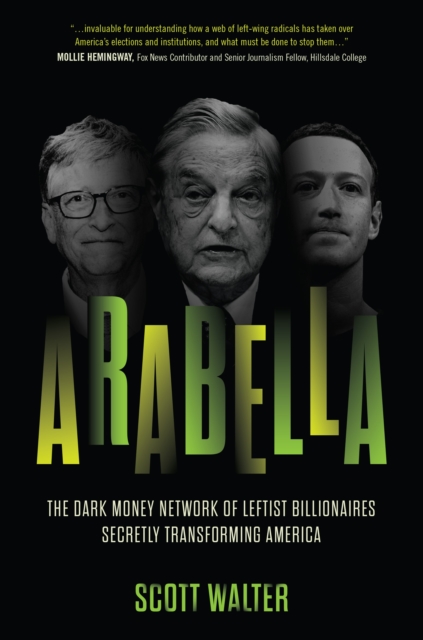
Arabella
Exposes Arabella Advisors as a major \"dark money\" operation that channels billions into progressive causes through opaque networks and deceptive grassroots groups, revealing its significant influence on U.S. politics and its far-reaching impact on issues from Supreme Court nominations to election manipulation. \"Ever heard of Arabella Advisors? Probably not. And that's strange, since they've done a lot to destroy the world you grew up in. You should know, so read this book.\" —Tucker Carlson While billionaires like George Soros, Bill Gates, and Warren Buffett are well known as left-wing megadonors transforming the country's politics, few Americans know about Arabella Advisors, a \"dark money\" operation that channels much of this money into particular causes via pop-up groups designed to look like grassroots outfits. Citizens across the spectrum will be shocked to learn how Arabella's empire secretly operates using arrangements that produce the darkest of \"dark money.\" Thanks to the author and his colleagues at the Capital Research Center, which first exposed Arabella, even the mainstream press have begun to report on this scandalous story. As this book reveals, Arabella is a major player in battles over Supreme Court nominations, environmentalism, abortion, Medicare for All, fake local news outlets, \"Zuck Bucks\" that manipulate election offices, lawsuits brought by Democratic super-lawyer (and Steele dossier booster) Marc Elias, and much more. The money is staggering. In the 2018 election cycle, Arabella's nonprofits took in {dollar}1.2 billion, more than double the fundraising of the Democratic National Committee and the Republican National Committee combined. In the 2020 election cycle, Arabella's fundraising spiked to {dollar}2.4 billion. This mountain of money explains why the left-leaning major media are alarmed. Arabella is \"the indisputable heavyweight of Democratic dark money, \" warns the Atlantic. A \"dark-money behemoth, \" says Politico. An \"opaque network, \" says the New York Times, that funnels \"hundreds of millions of dollars through a daisy chain of groups supporting Democrats and progressive causes.\"
eBook

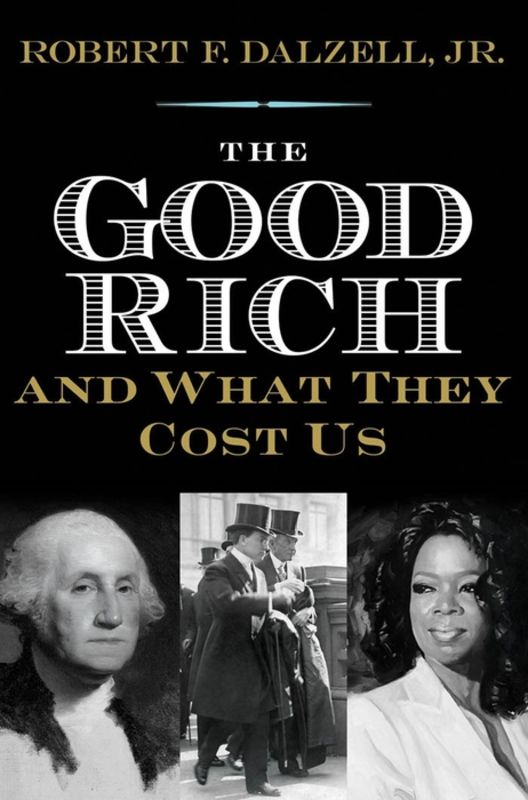
The Good Rich and What They Cost Us
This timely book holds up for scrutiny a great paradox at the core of the American Dream: a passionate belief in the principle of democracy combined with an equally passionate celebration of the creation of wealth. Americans treasure an open, equal society, yet we also admire those fortunate few who amass riches on a scale that undermines social equality. In today's era of \"vulture capitalist\" hedge fund managers, internet fortunes, and a growing concern over inequality in American life, should we cling to both parts of the paradox? Can we?
To understand the problems that vast individual fortunes pose for democratic values, Robert Dalzell turns to American history. He presents an intriguing cast of wealthy individuals from colonial times to the present, including George Washington, one of the richest Americans of his day, the \"robber baron\" John D. Rockefeller, and Oprah Winfrey, for whom extreme wealth is inextricably tied to social concerns. Dalzell uncovers the sources of contradictory attitudes toward the rich, how the very rich have sought to be perceived as \"good rich,\" and the facts behind the widespread notion that wealth and generosity go hand in hand. In a thoughtful and balanced conclusion, the author explores the cost of our longstanding attitudes toward the rich.
Among the case studies inAmerica's Good Rich:
Puritan merchant Robert Keayne
George Washington
Manufacturers Amos & Abbot Lawrence
Oil magnate John D. Rockefeller
Bill Gates
Warren Buffet
Steve Jobs
Oprah Winfrey
eBook

What self-made millionaires do that most people don't : 52 ways to create your own success
Confucius said that a thousand-mile journey begins with one step. The same principle applies to becoming a self-made millionaire except this journey consists of 52 common sense practices. Debt free or not, this book will assist you in recognizing that you are closer to becoming a self-made millionaire than you imagine. You will be astonished to see how anyone can achieve this status when you create the right mindset. You will learn how white-collar professionals, blue-collar workers, small business owners, even teenagers alike have joined this million dollar net worth rank by methodically and consistently putting into practice the self-made millionaire game plan revealed in this book.
Book

Rise of the Rich
\"The rise of the West\" has long been the accepted doctrine for framing analyses of world history. Privileging a Eurocentric approach, this traditional paradigm obscures the significance of the indigenous rich in non-Western regions and fails to recognize the contributions of the Orient. In this book, Peter Gran seeks to reframe current historical debates, presenting a model of analysis based on the rise of the rich. Gran outlines the structure of this new paradigm, building upon metanarrative concepts from Marxism to liberalism.
eBook

The last time I saw you : a novel
In the aftermath of her mother's murder, Dr. Kate English reaches out to her estranged best friend Blaire Barrington, a mystery author, who decides to investigate when Kate starts getting anonymous texts from the killer.
Book

Rich Indians
Long before lucrative tribal casinos sparked controversy, Native Americans amassed other wealth that provoked intense debate about the desirability, morality, and compatibility of Indian and non-Indian economic practices. Skillfully blending social, cultural, and economic history, Alexandra Harmon examines seven such instances of Indian affluence and the dilemmas they presented both for Native Americans and for Euro-Americans--dilemmas rooted in the colonial origins of the modern American economy.This wide-ranging book looks at controversies concerning Powhatan economic status and aims during the Virginia colony's first years; the ambitions of some bicultural eighteenth-century Creeks and Mohawks; prospering Indians of the Southeast in the early 1800s; inequality among removed tribes during the Gilded Age; the spending of oil-rich Osages in the Roaring Twenties; resurgent tribal communities from Alaska to Maine in the 1970s; and casinos that have drawn gamblers to Indian country across the United States since the 1990s. Harmon's study not only compels us to look beyond stereotypes of greedy whites and impoverished Indians, but also convincingly demonstrates that Indians deserve a prominent place in American economic history and in the history of American ideas.
eBook
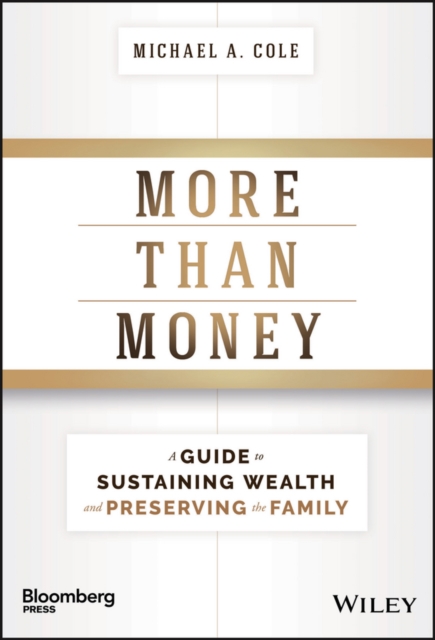
Strategic Family Wealth Management
A new, more comprehensive approach to long-term family wealth management More Than Money provides a high-level, integrated approach to preserving both financial resources and family harmony. Research has shown a failure rate of 70 percent in long-term multigenerational wealth management, and contrary to popular assumption, only five percent of that failure is due to bad investment, poor tax planning, or inadequate performance by legal and financial advisors. The number-one reason family wealth management fails is the family itself; poor communication, lack of trust, divergent visions, and a failure to prepare succeeding generations will tear down the resources the family has worked so hard to build. Traditional wealth management cannot fix this. Instead, this book offers a fresh approach that integrates strategic and tactical wealth management to align the family's assets with the family members. With helpful tools and advice drawn from a real-world understanding of family complexities, you'll improve your ability to preserve your family's resources over multiple generations. With an expert's perspective on the real forces behind successful family wealth management, this book provides a clear model and a practical roadmap for long-term financial preservation. Develop a shared family vision and mission Improve communication and trust among members Merge strategic and tactical planning Ensure the longevity of your family's wealth The wealth management sphere tends to focus on taxes, investments, banking, and estate planning, but little thought is given to the people themselves-this overlooks the fact that individual family members are the most critical factor in multigenerational wealth management, and fails to provide solutions. More Than Money merges traditional strategies with family dynamics, communication, governance, and preparation to help your resources last for generations to come.
eBook