
Catalogue Search | MBRL


Are you sure you want to remove the book from the shelf?

{{itemTitle}}
66
result(s) for
"Rings Fiction."
Sort by:

Judy Moody predicts the future
After Judy obtains a mood ring, she tries to convince herself and her third-grade classmates that she can predict the future.
Book

Lord of the Rings 1954-2004
The fiftieth anniversary of the first publication of The Lord of the Rings, the enormously popular and influential masterpiece of fantasy by J.R.R. Tolkien, is celebrated in these twenty papers presented at the Marquette University Tolkien conference of 21-23 October 2004. They are published in honor of the late Dr. Richard E. Blackwelder, who gave his important Tolkien collection to the Marquette University Libraries, long a major center for Tolkien research. Half of the papers in this book focus on The Lord of the Rings, while others investigate the larger body of Tolkien's achievements, as a writer of fiction, a maker of language, and one of the leading philologists of his day. The contributors to The Lord of the Rings, 1954-2004 include a \"who's who\" of scholars in Tolkien studies: Douglas A. Anderson, David Bratman, Marjorie Burns, Jane Chance, Michael D.C. Drout, Matthew A. Fisher, Verlyn Flieger, Mike Foster, John Garth, Wayne G. Hammond, Carl F. Hostetter, Sumner G. Hunnewell, John D. Rateliff, Christina Scull, T.A. Shippey, Arden R. Smith, Paul Edmund Thomas, Richard C. West, and Arne Zettersten. As preface, Charles B. Elston, former director of Special Collections and University Archives, provides a reminiscence of Dr. Blackwelder and his generosity to Marquette. Fans and students of Tolkien alike will find these essays informative and entertaining.
eBook

Bashir Boutros and the jewel of the Nile
\"Shy, eleven-year-old Bashir Boutros dreads going back to America after an amazing summer in Lebanon. He's always felt invisible back home, where he doesn't have any real friends. Then, Bashir makes a lucky discovery--a long-lost ring containing a jinn whose magical aura brings power to those who wield it. But the ring's untold power makes Bashir a target for monsters--including Ali Adin, the world's most dangerous demon. When Ali Adin kidnaps Bashir's parents, Bashir joins forces with an ancient society sworn to protect the world from supernatural beings. Together, they set off on a race to stop Ali Adin from conquering the world as Bashir attempts to harness the ring's abilities. But great power comes at what cost?\"-- Provided by publisher.
BOOK
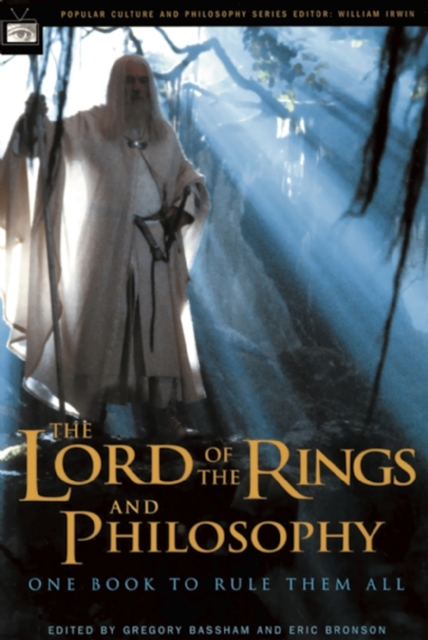
The Lord of the rings and philosophy : one book to rule them all
Can superhuman Power be used for good or does its exercise always addict the user and end badly? Will nature rise in revolt against technology? Would we find everlasting life a bore and a burden? These are among the disturbing questions raised by Tolkien's enthralling epic of adventure, The Lord of the Rings. Tolkien himself hoped that his stories would help his readers become better people, and he consciously drew upon some of the most troubling and challenging themes from mythology, religion, and philosophical thought. Professors Bassham and Bronson have recruited a Fellowship of scholars trained in philosophy and also steeped in the lore of Middle-earth, to delve into some of the fascinating issues raised by The Lord of the Rings. The writers' Quest was to steer clear of both \"the webs of wizards\" and \"the haste of fools,\" to arrive at a truer understanding of the most magnificent tale of our time.
eBook

Unsung heroes of the Lord of the rings : from the page to the screen
Most criticism of The Lord of the Rings trilogy emphasizes the most likely heroes in the tales: Aragorn, Frodo, Gandalf, and even Sam. From popular to scholarly literature, the women and smaller characters often go overlooked. But our notions of what makes a hero have altered since September 11, and sometimes the most unlikely people can come to embody all that we look up to and admire in a person. Here, Lynnette Porter examines what we mean when we talk about heroes, and for the first time illustrates the heroic qualities that can be found in the women and other beloved, though less-celebrated, characters in the The Lord of the Rings books and movies. She takes a critical look at the importance of literary and cinematic heroes in general, emphasizing the roles of Merry, Pippin, Galadriel, Eowyn, Arwen, Legolas, and Gimli, who can all be considered heroes despite their relatively smaller roles. She shows, ultimately, that our attraction to and celebration of heroes does not have to be limited to the leading man, but rather that women and youth often display essential characteristics of true heroes. Bringing together a discussion of both the books and the movies, Porter reveals for readers the heroic nature of several characters in The Lord of the Rings who have been ignored in terms of their status as heroes. Nevertheless, these female and youthful characters have received incredible popular acclaim and illustrate the shift in the way the Western movie-going public identifies and glorifies heroes. While other stars may have outshone the likes of Merry and Pippin, Arwen and Galadriel, Porter redirects the spotlight on these favorites of the books and movies to show us how the roles they play, the actions they take, and the behaviors they display are worthy of our praise and admiration. This unique and refreshing perspective adds dimension to our understanding of The Lord of the Rings phenomenon.
eBook

The House of the Black Ring
Fred Lewis Pattee, long regarded as the father of American literary study, also wrote fiction. Originally published in 1905 by Henry Holt, The House of the Black Ring was Pattee’s second novel—a local-color romance set in the mountains of Central Pennsylvania. The book’s plot is driven by family feud, forbidden love, and a touch of the supernatural. This new edition makes this novel accessible to new generations of modern-day readers. General readers will find in The House of the Black Ring a thriller that preserves details of rural life and language during the late nineteenth century. Scholars will read it as an expression of cultural anxiety and change in the decades after the Civil War. An introduction by poet and essayist Julia Spicher Kasdorf situates the novel within the context of social and literary history, as well as Pattee’s own biography, and provides a compelling argument for its importance, not only as a literary artifact or record of local customs, but also as a reflection of Pattee’s own story intertwined with the history of Penn State at the turn of the twentieth century. Joshua Brown draws on his expertise in Pennsylvania German ethno-linguistics to interpret the dialect writing and to give readers a clearer view of the customs and regionalisms depicted in the book.
eBook

There and Back Again
J.R.R. Tolkien’s fantasy is remarkable for its depth and groundedness, and this has established The Hobbit and The Lord of the Rings as classics, although their place is still being defined. Tolkien’s work continues to offer new pleasures as it is re-read. Things that give me special pleasure range from individual phrases to the intertextual engagement of Tolkien’s fantasy with older motifs: these idiosyncratic pleasures appear to derive from the text itself and its participation in a tradition of textual influence, so that, for me, the pleasure is independent of where one reads Tolkien. University teaching of English literature should equip students to cope with literature that is not of their own place and time. Within the South African academy, we should not be seduced into reading only contemporary literature from Africa, or reading only according to the tenets of postcolonialism. Twentieth-century fantasy should be accessible to students independently of their background, because it is inherently and deliberately different from ordinary reality. However, when I have had the pleasure and privilege of guiding students writing on Tolkien’s work, I have found that their responses to it are enriched if they are equipped to read works that are older or in some way other. Tolkien’s classic fantasy is a source of pleasure in many ways, and this delight and discovery is not and should not be limited to readers from certain backgrounds only.
Journal Article

The Analysis of J.R.R.Toliken’s Ecological Responsibility Consciousness in The Lord of the Rings
J.R.R.Tolkien, a distinguished Oxford University professor who specialized in the study of language development and early medieval literature. He has written famous books like The Hobbits and The Silmarillion, but his literary reputation mainly rests upon his fantasy-romance novel, The Lord of the Rings. Since its publication, the novel has got great popularity among western countries. It was even selected as “the most popular book in history” on line. As Hollywood director Peter Jackson’s film The Lord of the Rings was filmed, a zealous love for “the magic ring” has wiped throughout the world. No matter scholars or common enthusiasm readers both show great passion for this novel. Archetypal analysis and the origin of myth in Middle-earth, fantasy technique etc. have been widely used to review or interpret the text of this novel. Based on the intertextual interpretation of J.R.R.Tolkien’s life experience and the novel, and through the viewpoint of ecological responsibility consciousness this paper attempts to explore Tolkien’s seek of homeland, which reveals Tolkien’s country yearning and furthermore presents his ecological value.
Journal Article

The Sweet and the Bitter
In 1956, J. R. R. Tolkien famously stated that the real theme of The Lord of the Rings was \"Death and Immortality.\" The deaths that underscore so much of the subject matter of Tolkien's masterpiece have a great deal to teach us. From the heroic to the humble, Tolkien draws on medieval concepts of death and dying to explore the glory and sorrow of human mortality. Three great themes of death link medieval Northern European culture, The Lord of the Rings, and contemporary culture: the way in which we die, the need to remember the dead, and above all the lingering apprehension of what happens after death. Like our medieval ancestors, we still talk about what it means to die as a hero, a traitor, or a coward; we still make decisions about ways to honor and remember the departed; and we continue to seek to appease and contain the dead. These themes suggest a latent resonance between medieval and modern cultures and raise an issue not generally discussed in contemporary Western society: our deeply rooted belief that how one dies in some way matters.
While Tolkien, as a medieval scholar, naturally draws much of his inspiration from the literature, folklore, and legends of the Middle Ages, the popularity of his work affirms that modern audiences continue to find these tropes relevant and useful. From ideas of \"good\" and \"bad\" deaths to proper commemoration and disposal of the dead, and even to ghost stories, real people find comfort in the ideas about death and dying that Tolkien explores.
\"The Sweet and the Bitter\": Death and Dying in J. R. R. Tolkien's The Lord of the Rings examines the ways in which Tolkien's masterwork makes visible the connections between medieval and modern conceptions of dying and analyzes how contemporary readers use The Lord of the Rings as a tool for dealing with death.
eBook

The Ring and the Cross
The conversation, sometimes heated, about the influence of Christianity on the writings of J.R.R.Tolkien has a long history.What has been lacking is a forum for a civilized discussion about the topic, as well as a chronological overview of the major arguments and themes that have engaged scholars about the impact of Christianity on Tolkien's.
eBook