
Catalogue Search | MBRL


Are you sure you want to remove the book from the shelf?

{{itemTitle}}
41,005
result(s) for
"Risk History"
Sort by:
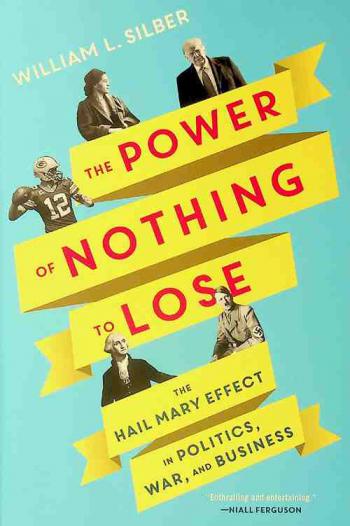
The power of nothing to lose : the Hail Mary effect in politics, war, and business
\"A quarterback like Green Bay's Aaron Rodgers gambles with a Hail Mary pass at the end of a football game when he has nothing to lose - the risky throw might turn defeat into victory, or end in a meaningless interception. Rodgers may not realize it, but he has much in common with figures such as George Washington, Rosa Parks, Woodrow Wilson, and Adolph Hitler, all of whom changed the modern world with their risk-loving decisions. In The Power of Nothing to Lose, award-winning economist William Silber explores the phenomenon in politics, war, and business, where situations with a big upside and limited downside trigger gambling behavior like with a Hail Mary. Silber describes in colorful detail how the American Revolution turned on such a gamble. The famous scene of Washington crossing the Delaware on Christmas night to attack the enemy may not look like a Hail Mary, but it was. Washington said days before his risky decision, \"If this fails I think the game will be pretty well up.\" Rosa Parks remained seated in the White section of an Alabama bus, defying local segregation laws, an act that sparked the modern civil rights movement in America. It was a life-threatening decision for her, but she said, \"I was not frightened. I just made up my mind that as long as we accepted that kind of treatment it would continue, so I had nothing to lose.\" The risky exploits of George Washington and Rosa Parks made the world a better place, but demagogues have also caused significant harm with Hail Marys. Toward the end of World War II, Adolf Hitler ordered a desperate counterattack, the Battle of the Bulge, to stem the Allied advance into Germany. He said, \"The outcome of the battle would spell either life or death for the German nation.\" Hitler failed to change the war's outcome, but his desperate gamble inflicted great collateral damage, including the worst wartime atrocity on American troops in Europe. Silber shares illuminating insights on these figures and more, from Woodrow Wilson to Donald Trump, from asylum seekers to terrorists and rogue traders. Collectively they illustrate that downside protection fosters risky undertakings, that is changes the world in ways we least expect\" -- Book jacket.

Freaks of fortune : the emerging world of capitalism and risk in America
Until the nineteenth century, \"risk\" was a specialized term: it was the commodity exchanged in a marine insurance contract. Freaks of Fortune tells how the modern concept of risk emerged in the United States. Born on the high seas, risk migrated inland and became essential to the financial management of an inherently uncertain capitalist future.
eBook


The Disaster Experts
In the wake of 9/11 and Hurricane Katrina, many are asking what, if anything, can be done to prevent large-scale disasters. How is it that we know more about the hazards of modern American life than ever before, yet the nation faces ever-increasing losses from such events? History shows that disasters are not simply random acts. Where is the logic in creating an elaborate set of fire codes for buildings, and then allowing structures like the Twin Towers-tall, impressive, and risky-to go up as design experiments? Why prepare for terrorist attacks above all else when floods, fires, and earthquakes pose far more consistent threats to American life and prosperity?The Disaster Expertstakes on these questions, offering historical context for understanding who the experts are that influence these decisions, how they became powerful, and why they are only slightly closer today than a decade ago to protecting the public from disasters. Tracing the intertwined development of disaster expertise, public policy, and urbanization over the past century, historian Scott Gabriel Knowles tells the fascinating story of how this diverse collection of professionals-insurance inspectors, engineers, scientists, journalists, public officials, civil defense planners, and emergency managers-emerged as the authorities on risk and disaster and, in the process, shaped modern America.
eBook

Deep risk : how history informs portfolio design
This booklet takes portfolio design beyond the familiar \"black box\" mean-variance framework. Most importantly, the short-term volatility of financial assets, commonly measured as standard deviation, is a highly imperfect measure of the actual long-horizon perils faced by real-world investors subject to the vagaries of financial and military history. These risks have names--inflation, deflation, confiscation, and devastation--and any useful discussion of portfolio design of necessity incorporates their probabilities, consequences, and costs of mitigation ... This booklet contains ... with luck, a framework within income and all-equity portfolios. This booklet contains ... with luck, a framework within which to think more clearly about risk. Note: the entire Investing for Adults series is not for beginners.
Book
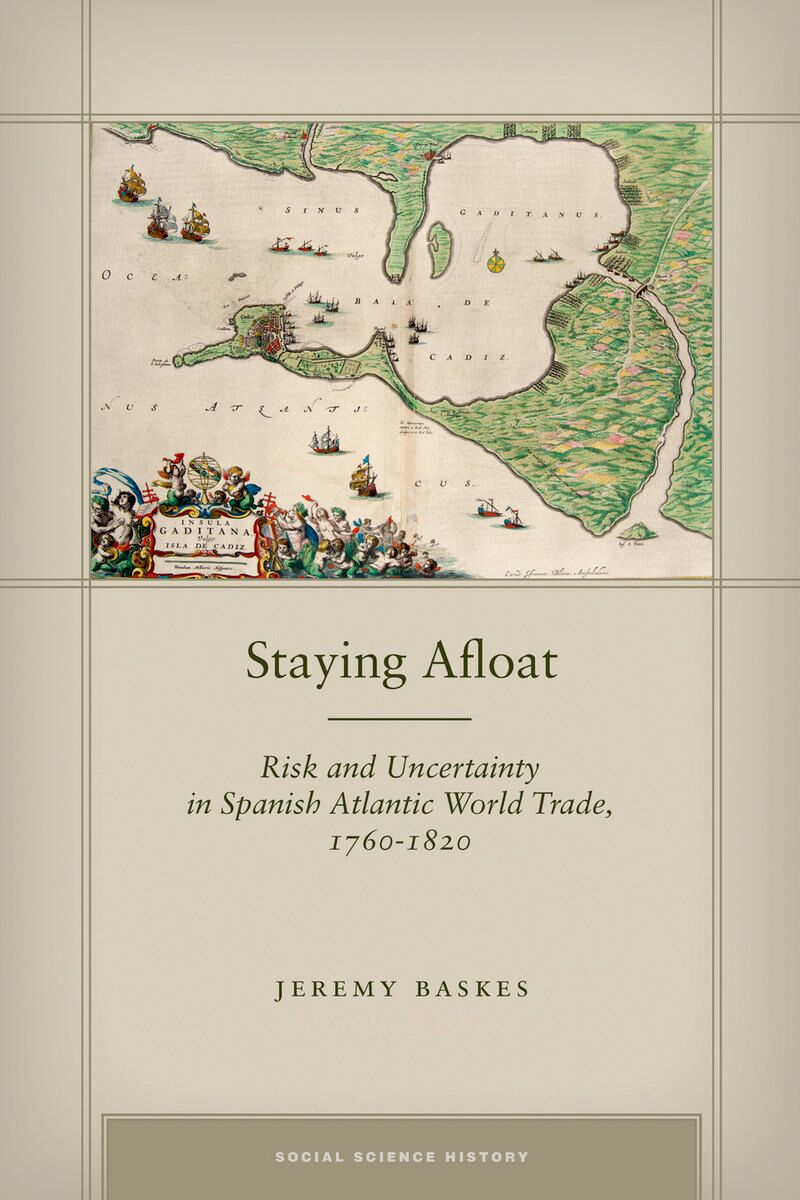
Staying Afloat
Early modern, long-distance trade was fraught with risk and uncertainty, driving merchants to seek means (that is, institutions) to reduce them. In the traditional historiography on Spanish colonial trade, the role of risk is largely ignored. Instead, the guild merchants are depicted as anti-competitive monopolists who manipulated markets and exploited colonial consumers. Jeremy Baskes argues that much of the commercial behavior interpreted by modern historians as predatory was instead designed to reduce the uncertainty and risk of Atlantic world trade.
This book discusses topics from the development and use of maritime insurance in eighteenth- century Spain to the commercial strategies of Spanish merchants; the traditionally misunderstood effects of the 1778 promulgation of \"comercio libre,\" and the financial chaos and bankruptcies that ensued; the economic rationale for the Spanish flotillas; and the impact of war and privateering on commerce and business decisions. By elevating risk to the center of focus, this multifaceted study makes a number of revisionist contributions to the late colonial economic history of the Spanish empire.
eBook

The unsteady state and inertia of chemical regulation under the US Toxic Substances Control Act
After 40 years, the 1976 US Toxic Substances Control Act (TSCA) was revised under the Frank R. Lautenberg Chemical Safety for the 21st Century Act. Its original goals of protecting the public from hazardous chemicals were hindered by complex and cumbersome administrative burdens, data limitations, vulnerabilities in risk assessments, and recurring corporate lawsuits. As a result, countless chemicals were entered into commercial use without toxicological information. Few chemicals of the many identified as potential public health threats were regulated or banned. This paper explores the factors that have worked against a comprehensive and rational policy for regulating toxic chemicals and discusses whether the TSCA revisions offer greater public protection against existing and new chemicals.
Journal Article

Cultivating success in the South : farm households in the postbellum era
\"This book explores changes in rural households of the Georgia Piedmont through the material culture of farmers as they transitioned from self-sufficiency to market dependence. The period between 1880 and 1910 was a time of dynamic change when Southern farmers struggled to reinvent their lives and livelihoods. Relying on primary documents, including probate inventories, tax lists, state and federal census data, and estate sale results, this study seeks to understand the variables that prompted farm households to assume greater risk in hopes of success as well as those factors that stood in the way of progress. While there are few projects of this type for the late nineteenth century, and fewer still for the New South, the findings challenge the notion of farmers as overly conservative consumers and call into question traditional views of conspicuous consumption as a key indicator of wealth and status\"-- Provided by publisher.
Book

History of Risk Assessments of the Organophosphate Pesticide Chlorpyrifos at the US Environmental Protection Agency, 1980‒2024
This article examines the history of risk assessments of the organophosphate pesticide chlorpyrifos at the US Environmental Protection Agency (EPA), especially after a ban on household uses in 2000. Federal funding enabled more noncorporate and place-based scientific investigations of this pesticide’s harms, including child-cohort epidemiology of populations impacted through environmental injustices. This article argues, first, that their findings challenged the thin knowledge base, mostly from corporate-sponsored toxicology, that originally justified chlorpyrifos’s continued use. Second, for decades, outside a court-induced interval in 2015–2016, EPA’s risk assessments favored “de-placed” toxicological modes and standards of knowledge—forged in the controlled environment of experimental laboratories—while marginalizing science gathered from the actual places and people EPA is supposed to protect. Third, agency officials stuck with a quantifiable, laboratory- and modeling-centered calculus for assessing health risks in part because a united front of corporate and corporate-consultant scientists harped on the uncertainties of newer findings. The article concludes that the agency needs to rethink its risk assessment practices and dependence, as well as more effectively account for financial conflicts of interest in evaluations of policy-relevant science. ( Am J Public Health. 2025;115(7):1074–1084. https://doi.org/10.2105/AJPH.2025.308073 )
Journal Article