
Catalogue Search | MBRL


Are you sure you want to remove the book from the shelf?

{{itemTitle}}
2,481,122
result(s) for
"Risk."
Sort by:
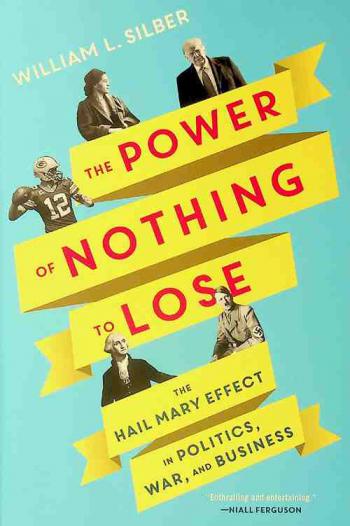
The power of nothing to lose : the Hail Mary effect in politics, war, and business
\"A quarterback like Green Bay's Aaron Rodgers gambles with a Hail Mary pass at the end of a football game when he has nothing to lose - the risky throw might turn defeat into victory, or end in a meaningless interception. Rodgers may not realize it, but he has much in common with figures such as George Washington, Rosa Parks, Woodrow Wilson, and Adolph Hitler, all of whom changed the modern world with their risk-loving decisions. In The Power of Nothing to Lose, award-winning economist William Silber explores the phenomenon in politics, war, and business, where situations with a big upside and limited downside trigger gambling behavior like with a Hail Mary. Silber describes in colorful detail how the American Revolution turned on such a gamble. The famous scene of Washington crossing the Delaware on Christmas night to attack the enemy may not look like a Hail Mary, but it was. Washington said days before his risky decision, \"If this fails I think the game will be pretty well up.\" Rosa Parks remained seated in the White section of an Alabama bus, defying local segregation laws, an act that sparked the modern civil rights movement in America. It was a life-threatening decision for her, but she said, \"I was not frightened. I just made up my mind that as long as we accepted that kind of treatment it would continue, so I had nothing to lose.\" The risky exploits of George Washington and Rosa Parks made the world a better place, but demagogues have also caused significant harm with Hail Marys. Toward the end of World War II, Adolf Hitler ordered a desperate counterattack, the Battle of the Bulge, to stem the Allied advance into Germany. He said, \"The outcome of the battle would spell either life or death for the German nation.\" Hitler failed to change the war's outcome, but his desperate gamble inflicted great collateral damage, including the worst wartime atrocity on American troops in Europe. Silber shares illuminating insights on these figures and more, from Woodrow Wilson to Donald Trump, from asylum seekers to terrorists and rogue traders. Collectively they illustrate that downside protection fosters risky undertakings, that is changes the world in ways we least expect\" -- Book jacket.

Global burden of disease and risk factors
This volume is a single up-to-date source on the entire global epidemiology of diseases, injuries and risk factors with a comprehensive statement of methods and a complete presentation of results. It includes refined methods to assess data, ensure epidemiological consistency, and summarize the disease burden. Global Burden of Disease and Risk Factors examines the comparative importance of diseases, injuries, and risk factors; it incorporates a range of new data sources to develop consistent estimates of incidence, prevalence, severity and duration, and mortality for 136 major diseases and injuries. Drawing from more than 8,500 data sources that include epidemiological studies, disease registers, and notifications systems, Global Burden of Disease and Risk Factors incorporates information from more than 10,000 datasets relating to population health and mortality, representing one of the largest syntheses of global information on population health to date.
eBook


Science and Decisions
Risk assessment has become a dominant public policy tool for making choices, based on limited resources, to protect public health and the environment. It has been instrumental to the mission of the U.S. Environmental Protection Agency (EPA) as well as other federal agencies in evaluating public health concerns, informing regulatory and technological decisions, prioritizing research needs and funding, and in developing approaches for cost-benefit analysis.
However, risk assessment is at a crossroads. Despite advances in the field, risk assessment faces a number of significant challenges including lengthy delays in making complex decisions; lack of data leading to significant uncertainty in risk assessments; and many chemicals in the marketplace that have not been evaluated and emerging agents requiring assessment.
Science and Decisions makes practical scientific and technical recommendations to address these challenges. This book is a complement to the widely used 1983 National Academies book, Risk Assessment in the Federal Government (also known as the Red Book). The earlier book established a framework for the concepts and conduct of risk assessment that has been adopted by numerous expert committees, regulatory agencies, and public health institutions. The new book embeds these concepts within a broader framework for risk-based decision-making. Together, these are essential references for those working in the regulatory and public health fields.
eBook


Health Risks from Exposure to Low Levels of Ionizing Radiation
BEIR VII develops the most up-to-date and comprehensive risk estimates for cancer and other health effects from exposure to low-level ionizing radiation. It is among the first reports of its kind to include detailed estimates for cancer incidence in addition to cancer mortality. In general, BEIR VII supports previously reported risk estimates for cancer and leukemia, but the availability of new and more extensive data have strengthened confidence in these estimates. A comprehensive review of available biological and biophysical data supports a \"linear-no-threshold\" (LNT) risk model-that the risk of cancer proceeds in a linear fashion at lower doses without a threshold and that the smallest dose has the potential to cause a small increase in risk to humans. The report is from the Board on Radiation Research Effects that is now part of the newly formed Nuclear and Radiation Studies Board.
eBook


Risk regulation and administrative constitutionalism
This book is a study of the interrelationship between risk regulation, public law, and theories of legitimate administrative governance.
eBook

Risk
\"Recent events from the economic downturn to climate change mean that there has never been a better time to be thinking about and trying to better understand the concept of risk. In this book, prominent and eminent speakers from fields as diverse as statistics to classics, neuroscience to criminology, politics to astronomy, as well as speakers embedded in the media and in government have put their ideas down on paper in a series of essays that broaden our understanding of the meaning of risk. After twenty-five years, the prestigious Darwin College Lectures are one of the most popular public lecture series at the University of Cambridge. The risk lectures in 2010 were amongst the most popular yet and, in essay form, they make for a lively and engaging read for specialists and non-specialists alike\"-- Provided by publisher.
Book

Improving Health in the United States
Factoring health and related costs into decision making is essential to confronting the nation's health problems and enhancing public well-being. Some policies and programs historically not recognized as relating to health are believed or known to have important health consequences. For example, public health has been linked to an array of policies that determine the quality and location of housing, availability of public transportation, land use and street connectivity, agricultural practices and the availability of various types of food, and development and location of businesses and industry.
Improving Health in the United States: The Role of Health Impact Assessment offers guidance to officials in the public and private sectors on conducting HIAs to evaluate public health consequences of proposed decisions-such as those to build a major roadway, plan a city's growth, or develop national agricultural policies-and suggests actions that could minimize adverse health impacts and optimize beneficial ones.
Several approaches could be used to incorporate aspects of health into decision making, but HIA holds particular promise because of its applicability to a broad array of programs, consideration of both adverse and beneficial health effects, ability to consider and incorporate various types of evidence, and engagement of communities and stakeholders in a deliberative process. The report notes that HIA should not be assumed to be the best approach to every health policy question but rather should be seen as part of a spectrum of public health and policy-oriented approaches.
The report presents a six-step framework for conducting HIA of proposed policies, programs, plans, and projects at federal, state, tribal, and local levels, including within the private sector. In addition, the report identifies several challenges to the successful use of HIA, such as balancing the need to provide timely information with the realities of varying data quality, producing quantitative estimates of health effects, and engaging stakeholders.
eBook