
Catalogue Search | MBRL


Are you sure you want to remove the book from the shelf?

{{itemTitle}}
7
result(s) for
"Rites and ceremonies -- China -- History -- To 1500"
Sort by:


Problems of Han Administration
China's early emperors must pay their respects to their predecessors in the correct form; the conduct of government and commercial practice depended on a generally accepted system of weights and measures; critics needed a secure means of expressing their views.
eBook

Problems of Han administration : ancestral rites, weights and measures, and the means of protest
\"Michael Loewe calls on literary and material evidence to examine three problems that arose in administering China's early empires. Religious rites due to an emperor's predecessors must both pay the correct services to his ancestors and demonstrate his right to succeed to the throne. In practical terms, tax collectors, merchants, farmers and townsmen required the establishment of a standard set of weights and measures that was universally operative and which they could trust. Those who saw reason to criticise the decisions taken by the emperor and his immediate advisors, whether on grounds of moral principles or political expediency, needed opportunities and the means of expressing their views, whether as remonstrants to the throne, by withdrawal from public life or as authors of private writings\"--Provided by publisher.
Book

Public Memory in Early China
In early imperial China, the dead were remembered by stereotyping them, by relating them to the existing public memory and not by vaunting what made each person individually distinct and extraordinary in his or her lifetime. Their posthumous names were chosen from a limited predetermined pool; their descriptors were derived from set phrases in the classical tradition; and their identities were explicitly categorized as being like this cultural hero or that sage official in antiquity. In other words, postmortem remembrance was a process of pouring new ancestors into prefabricated molds or stamping them with rigid cookie cutters. Public Memory in Early China is an examination of this pouring and stamping process. After surveying ways in which learning in the early imperial period relied upon memorization and recitation, K. E. Brashier treats three definitive parameters of identity—name, age, and kinship—as ways of negotiating a person’s relative position within the collective consciousness. He then examines both the tangible and intangible media responsible for keeping that defined identity welded into the infrastructure of Han public memory.
eBook

Design by the book : Chinese ritual objects and the Sanli tu
\"Today, China's classical antiquity is often studied through recovered artifacts, but before this practice became widespread, scholars instead reconstructed the distant past through classical texts and transmitted illustrations. Among the most important illustrated commentaries was the Sanli tu, or Illustrations to the Ritual Classics, whose origins are said to date back to the great commentator Zheng Xuan. Design by the Book, which accompanies an exhibition at Bard Graduate Center Gallery, discusses the history and cultural significance of the Sanli tu in medieval China. The Sanli tu survives in a version produced around 960 by Nie Chongyi, a professor at the court of the Later Zhou (951-960) and Northern Song (960-1127) dynasties. It is now mostly remembered--if at all--for its controversial entries and as a quaint predecessor of the more empirical antiquarian scholarship produced since the mid-eleventh century. But such criticism hides the fact that the book remained a standard resource for more than 150 years, playing a crucial role in the Song dynasty's perception of ancient ritual and construction of a Confucian state cult. Richly illustrated, Design by the Book brings renewed focus to one of China's most fascinating medieval works\"-- Provided by publisher.
Book

Entombed Epigraphy and Commemorative Culture \u2028in Early Medieval China
In Entombed Epigraphy and Commemorative Culture Timothy M. Davis presents a history of early muzhiming-the most versatile and persistent commemorative form employed in the elite burials of pre-modern China. While previous scholars have largely overlooked the contemporary religious, social, and cultural functions of these epigraphic objects, this study directly addresses these areas of concern, answering such basic questions as: Why were muzhiming buried in tombs? What distinguishes commemorative biography from dynastic history biography? And why did muzhiming develop into an essential commemorative genre esteemed by the upper classes? Furthermore, this study reveals how aspiring families used muzhiming to satisfy their obligations to deceased ancestors, establish a multi-generational sense of corporate identity, and strengthen their claims to elite status.
eBook
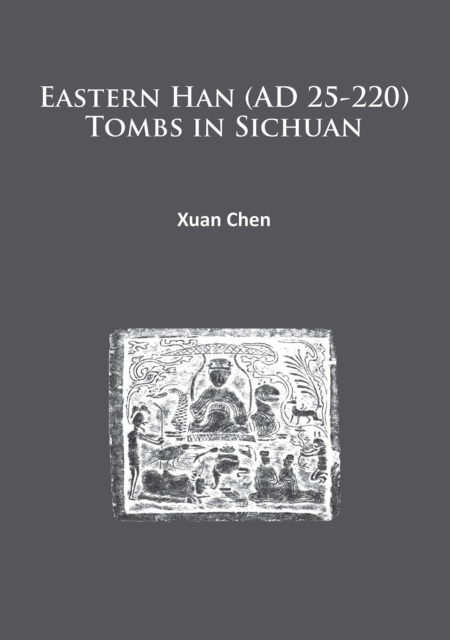
Eastern Han (AD 25-220) Tombs in Sichuan
This work explores the many factors underlying the extended popularity of the cliff tomb, a local burial form in the Sichuan Basin in China during the Eastern Han dynasty (AD 25-220). The development of the cliff tomb was linked to a complex set of connections involved with burial forms, and continued through associations with many other contemporary burial practices: brick chamber tombs, stone chamber tombs, and princely rock-cut tombs. These connections and links formed to a large extent through the incorporation of the Sichuan region within the Empire, which began in the fourth century BC. It was as part of this overall context that a series of factors contributed to the formation and popularity of the cliff tombs in Sichuan. The hilly topography and the soft sandstone, easy to cut, provided a natural resource for the development of cliff tombs. The present book, therefore, analyses the decisions behind the exploitation of this natural resource, which were also affected by many complexities rooted in the social background. The inherent nature of the cliff tomb structure is fully explored, followed by an investigation into the corresponding innovations involving pictorial carvings and burial objects. The meanings behind the seemingly continuous ‘family’ associated with the cliff tomb structure are also explored, as the construction of the tomb resulted from the continuous endeavours of many generations, and the physical appearance of the cliff tomb becomes a metaphor for family prosperity.
eBook