
Catalogue Search | MBRL


Are you sure you want to remove the book from the shelf?

{{itemTitle}}
3
result(s) for
"Rivergate Regionals Collection"
Sort by:
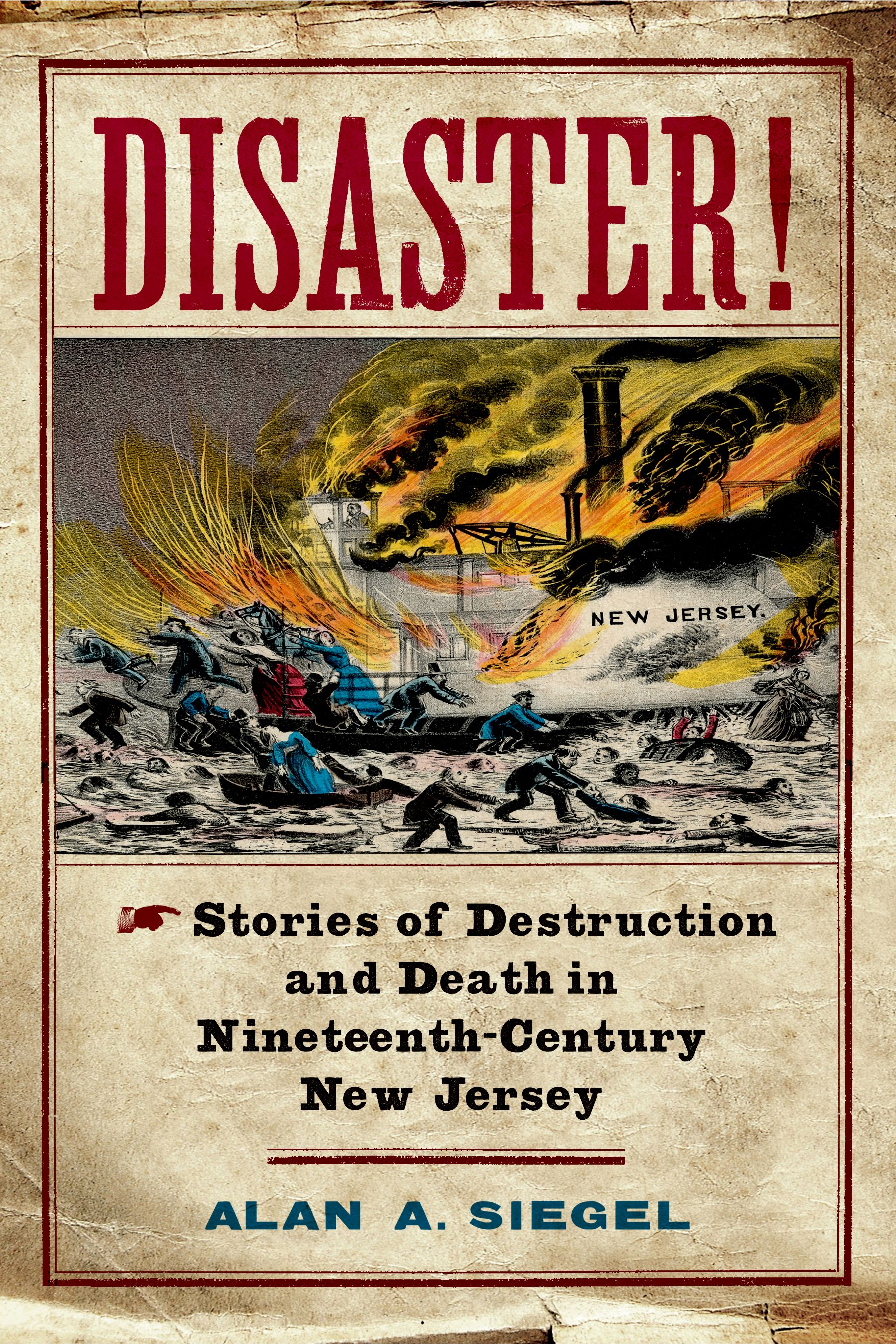
Disaster!
By every measure, Hurricane Sandy was a disaster of epic proportions. The deadliest storm to strike the East Coast since Hurricane Diane in 1955, Sandy killed thirty-seven people and caused more than $30 billion in damages in 2012 to New Jersey alone. But earlier centuries experienced their own catastrophes.
InDisaster!,Alan A. Siegel brings readers face-to-face with twenty-eight of the deadliest natural and human-caused calamities to strike New Jersey between 1821 and 1906, ranging from horrific transportation accidents to uncontrolled fires of a kind rarely seen today. As Siegel writes in his introduction, \"None of the stories end well-there are dead and injured by the thousands as well as millions in property lost.\" Accounts of these fires, steamboat explosions, shipwrecks, train wrecks, and storms are told in the words of the people who experienced the events firsthand, lending a sense of immediacy to each story.
Disasters bring out the worst as well as the best in people. Siegel focuses on the bravest individuals, including harbor pilot Thomas Freeborn who drowned while attempting to save fifty passengers and crew of a ship foundering on the Jersey Shore, and Warwicke Greene, a fourteen-year-old schoolboy who rescued the injured \"like the hero of an epic poem\" after a train wreck in the Hackensack Meadows. These and many other stories of forgotten acts of courage in the face of danger will makeDisaster!an unforgettable read.
Fires
Newark - October 27, 1836
Cape May City - September 5, 1856
Cape May City - August 31, 1869
Cape May City - November 9, 1878
Newton - September 22, 1873
Caven Point, Jersey City Refinery Fire - May 10, 1883
The Standard Oil Fire, Bayonne - July 5, 1900Steamboat Disasters
New Jersey, Camden - March 15, 1856
Isaac Newton, Fort Lee - December 5, 1863Train Wrecks
Burlington - August 29, 1855
Hackensack Meadows - January 15, 1894
May's Landing - August 11, 1880
Absecon Island - July 30, 1896
Bordentown - February 21, 1901
The Thoroughfare - October 28, 1906Shipwrecks
John Minturn, South of Mantoloking - February 15, 1846
Powhattan, Beach Haven - April 15, 1854
New Era, Deal Beach - November 13, 1854
New York, North of Barnegat Inlet - December 20, 1856
Vizcaya andCornelius Hargraves, Off Barnegat Bay - October 30, 1890
Delaware, Barnegat Bay - July 8, 1898Natural Disasters
Blizzard of '88 - March 11-14, 1888
The Great September Gale - September 3, 1821
Statewide Hurricane - September 10, 1889
New Brunswick Tornado - June 19, 1835
Camden Tornado - July 26, 1860
Camden Tornado - August 3, 1885
Cherry Hill Tornado - July 13, 1895
eBook

American Dictators
One man was tongue-tied and awkward around women, in many ways a mama's boy at heart, although his reputation for thuggery was well earned. The other was a playboy, full of easy charm and ready jokes, his appetite for high living a matter of public record. One man tolerated gangsters and bootleggers as long as they paid their dues to his organization. The other was effectively a gangster himself, so crooked that he hosted a national gathering of America's most ruthless killers. One man never drank alcohol. The other, from all evidence, seldom drank anything else.American Dictatorsis the dual biography of two of America's greatest political bosses: Frank Hague and Enoch \"Nucky\" Johnson. Packed with compelling information and written in an informal, sometimes humorous style, the book shows Hague and Johnson at the peak of their power and the strength of their political machines during the years of Prohibition and the Great Depression. Steven Hart compares how both men used their influence to benefit and punish the local citizenry, amass huge personal fortunes, and sometimes collaborate to trounce their enemies.
Similar in their ruthlessness, both men were very different in appearance and temperament. Hague, the mayor of Jersey City, intimidated presidents and wielded unchallenged power for three decades. He never drank and was happily married to his wife for decades. He also allowed gangsters to run bootlegging and illegal gambling operations as long as they paid protection money. Johnson, the political boss of Atlantic City, and the inspiration for the hit HBO seriesBoardwalk Empire, presided over corruption as well, but for a shorter period of time. He was notorious for his decadent lifestyle. Essentially a gangster himself, Johnson hosted the infamous Atlantic City conference that fostered the growth of organized crime.
Both Hague and Johnson shrewdly integrated otherwise disenfranchised groups into their machines and gave them a stake in political power. Yet each failed to adapt to changing demographics and circumstances. InAmerican Dictators, Hart paints a balanced portrait of their accomplishments and their failures.
eBook

New Brunswick, New Jersey
While many older American cities struggle to remain vibrant, New Brunswick has transformed itself, adapting to new forms of commerce and a changing population, and enjoying a renaissance that has led many experts to cite this New Jersey city as a model for urban redevelopment. Featuring more than 100 remarkable photographs and many maps,New Brunswick, New Jerseyexplores the history of the city since the seventeenth century, with an emphasis on the dramatic changes of the past few decades.
Using oral histories, archival materials, census data, and surveys, authors David Listokin, Dorothea Berkhout, and James W. Hughes illuminate the decision-making and planning process that led to New Brunswick's dramatic revitalization, describing the major redevelopment projects that demonstrate the city's success in capitalizing on funding opportunities. These projects include the momentous decision of Johnson & Johnson to build its world headquarters in the city, the growth of a theater district, the expansion of Rutgers University into the downtown area, and the destruction and rebuilding of public housing. But while the authors highlight the positive effects of the transformation, they also explore the often heated controversies about demolishing older neighborhoods and ask whether new building benefits residents. Shining a light on both the successes and failures in downtown revitalization, they underscore the lessons to be learned for national urban policy, highlighting the value of partnerships, unwavering commitment, and local leadership.
Today, New Brunswick's skyline has been dramatically altered by new office buildings, residential towers, medical complexes, and popular cultural centers. This engaging volume explores the challenges facing urban America, while also providing a specific case study of a city's quest to raise its economic fortunes and retool its economy to changing needs.
eBook