
Catalogue Search | MBRL


Are you sure you want to remove the book from the shelf?

{{itemTitle}}
11,323
result(s) for
"Rivers in art."
Sort by:


Ancient objects and sacred realms : interpretations of Mississippian iconography
A major reconstruction of the rituals, cosmology, ideology, and political structures of the prehistoric native peoples of the Mississippi River Valley and Southeastern United States.
eBook


Rivers and the power of ancient Rome
Figuring in myth, religion, law, the military, commerce, and transportation, rivers were at the heart of Rome's increasing exploitation of the environment of the Mediterranean world. In Rivers and the Power of Ancient Rome, Brian Campbell explores the role and influence of rivers and their surrounding landscape on the society and culture of the Roman Empire.
Examining artistic representations of rivers, related architecture, and the work of ancient geographers and topographers, as well as writers who describe rivers, Campbell reveals how Romans defined the geographical areas they conquered and how geography and natural surroundings related to their society and activities. In addition, he illuminates the prominence and value of rivers in the control and expansion of the Roman Empire — through the legal regulation of riverine activities, the exploitation of rivers in military tactics, and the use of rivers as routes of communication and movement. Campbell shows how a technological understanding of — and even mastery over — the forces of the river helped Rome rise to its central place in the ancient world.
eBook


Water in a dry land : place-learning through art and story
Water in a Dry Land is a story of research about water as a source of personal and cultural meaning. The site of this exploration is the iconic river system which forms the networks of natural and human landscapes of the Murray-Darling Basin, Australia. In the current geological era of human induced climate change, the desperate plight of the system of waterways has become an international phenomenon, a symbol of the unsustainable ways we relate to water globally. The Murray-Darling Basin extends west of the Great Dividing Range that separates the densely populated east coast of Australia from the sparsely populated inland. Aboriginal peoples continue to inhabit the waterways of the great artesian basin and pass on their cultural stories and practices of water, albeit in changing forms. A key question informing the book is: What can we learn about water from the oldest continuing culture inhabiting the world's driest continent? In the process of responding to this question a team of Indigenous and non-Indigenous researchers formed to work together in a contact zone of cultural difference within an emergent arts-based ethnography. Photo essays of the artworks and their landscapes offer a visual accompaniment to the text on the Routledge Innovative Ethnography This book is perfect for courses in environmental sociology, environmental anthropology, and qualitative methods.
eBook
Croatian Sacred Waters. From Fairies and Healing Water in the Imaginarium to Contemporary Water/River Art
This article broadly surveys the role of water in Croatian ethnic tradition. Beginning with pre-Christian perceptions of healing (babas or hags) and fairies associated with watery sites, the essay offers a summary of previous works on Croatian water lore. Moving into the present, this article considers water traditions of the Slavic folklore, how these have endured and been renegotiated over time and how they now find expression in contemporary water and river art.
Journal Article
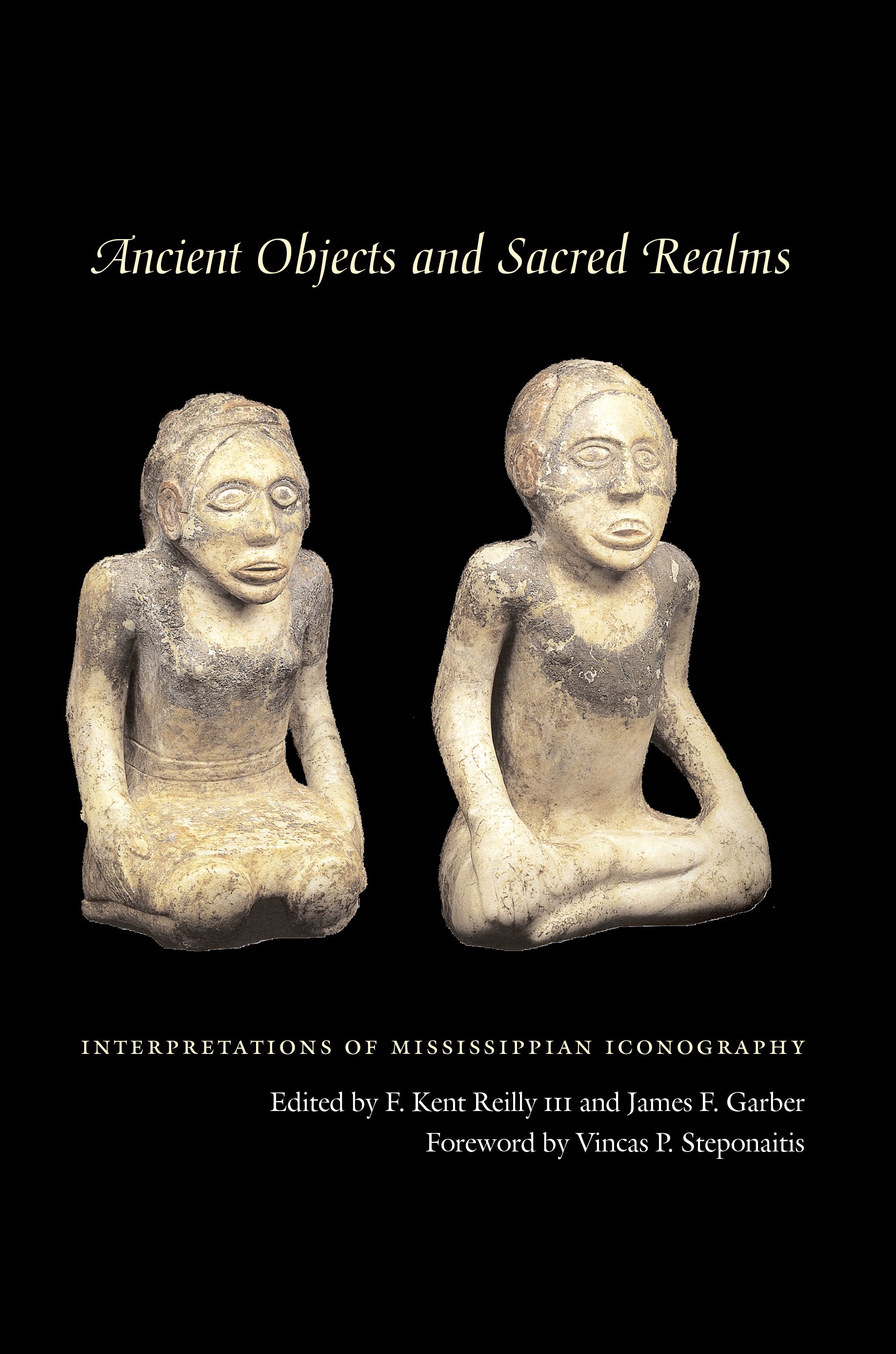
Ancient Objects and Sacred Realms
Between AD 900-1600, the native peoples of the Mississippi River Valley and other areas of the Eastern Woodlands of the United States conceived and executed one of the greatest artistic traditions of the Precolumbian Americas. Created in the media of copper, shell, stone, clay, and wood, and incised or carved with a complex set of symbols and motifs, this seven-hundred-year-old artistic tradition functioned within a multiethnic landscape centered on communities dominated by earthen mounds and plazas. Previous researchers have referred to this material as the Southeastern Ceremonial Complex (SECC). This groundbreaking volume brings together ten essays by leading anthropologists, archaeologists, and art historians, who analyze the iconography of Mississippian art in order to reconstruct the ritual activities, cosmological vision, and ideology of these ancient precursors to several groups of contemporary Native Americans. Significantly, the authors correlate archaeological, ethnographic, and art historical data that illustrate the stylistic differences within Mississippian art as well as the numerous changes that occur through time. The research also demonstrates the inadequacy of the SECC label, since Mississippian art is not limited to the Southeast and reflects stylistic changes over time among several linked but distinct religious traditions. The term Mississippian Iconographic Interaction Sphere (MIIS) more adequately describes the corpus of this Mississippian art. Most important, the authors illustrate the overarching nature of the ancient Native American religious system, as a creation unique to the native American cultures of the eastern United States.
eBook

Sanctified Landscape
The Hudson River Valley was the first iconic American landscape. Beginning as early as the 1820s, artists and writers found new ways of thinking about the human relationship with the natural world along the Hudson. Here, amid the most dramatic river and mountain scenery in the eastern United States, Washington Irving and James Fenimore Cooper created a distinctly American literature, grounded in folklore and history, that contributed to the emergence of a sense of place in the valley. Painters, led by Thomas Cole, founded the Hudson River School, widely recognized as the first truly national style of art. As the century advanced and as landscape and history became increasingly intertwined in the national consciousness, an aesthetic identity took shape in the region through literature, art, memory, and folklore-even gardens and domestic architecture. InSanctified Landscape, David Schuyler recounts this story of America's idealization of the Hudson Valley during the nineteenth and early twentieth centuries.
Schuyler's story unfolds during a time of great change in American history. At the very moment when artists and writers were exploring the aesthetic potential of the Hudson Valley, the transportation revolution and the rise of industrial capitalism were transforming the region. The first generation of American tourists traveled from New York City to Cozzens Hotel and the Catskill Mountain House in search of the picturesque. Those who could afford to live some distance from jobs in the city built suburban homes or country estates. Given these momentous changes, it is not surprising that historic preservation emerged in the Hudson Valley: the first building in the United States preserved for its historic significance is Washington's Headquarters in Newburgh. Schuyler also finds the seeds of the modern environmental movement in the transformation of the Hudson Valley landscape.
Richly illustrated and compellingly written,Sanctified Landscapemakes for rewarding reading. Schuyler expertly ties local history to national developments, revealing why the Hudson River Valley was so important to nineteenth-century Americans-and why it is still beloved today.
eBook

Art Effects
In Art Effects Carlos Fausto explores the interplay
between indigenous material culture and ontology in ritual
contexts, interpreting the agency of artifacts and indigenous
presences and addressing major themes in anthropological theory and
art history to study ritual images in the widest sense. Fausto
delves into analyses of the body, aerophones, ritual masks, and
anthropomorphic effigies while making a broad comparison between
Amerindian visual regimes and the Christian imagistic
tradition.
Drawing on his extensive fieldwork in Amazonia, Fausto offers a
rich tapestry of inductive theorizing in understanding
anthropology's most complex subjects of analysis, such as praxis
and materiality, ontology and belief, the power of images and
mimesis, anthropomorphism and zoomorphism, and animism and
posthumanism. Art Effects also brims with suggestive,
hemispheric comparisons of South American and North American
indigenous masks. In this tantalizing interdisciplinary work with
echoes of Franz Boas, Pierre Clastres, and Claude Lévi-Strauss,
among others, Fausto asks: how do objects and ritual images acquire
their efficacy and affect human beings?
eBook