
Catalogue Search | MBRL


Are you sure you want to remove the book from the shelf?

{{itemTitle}}
151
result(s) for
"Roadside improvement"
Sort by:

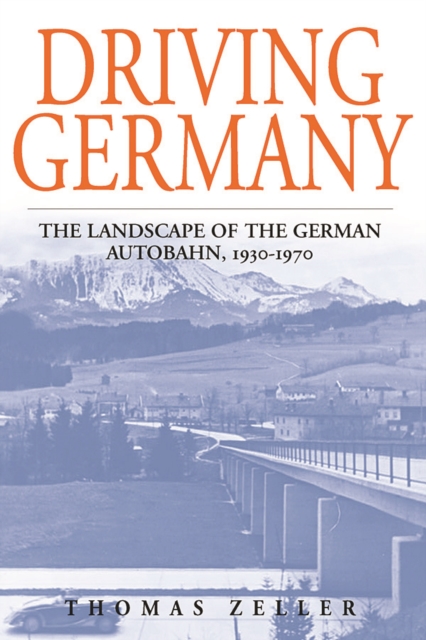
Driving Germany
Published in Association with the German Historical Institute, Washington, D.C.
Hitler's autobahn was more than just the pet project of an infrastructure-friendly dictator. It was supposed to revolutionize the transportation sector in Germany, connect the metropoles with the countryside, and encourage motorization. The propaganda machinery of the Third Reich turned the autobahn into a hyped-up icon of the dictatorship. One of the claims was that the roads would reconcile nature and technology. Rather than destroying the environment, they would embellish the landscape. Many historians have taken this claim at face value and concluded that the Nazi regime harbored an inbred love of nature. In this book, the author argues that such conclusions are misleading. Based on rich archival research, the book provides the first scholarly account of the landscape of the autobahn.
eBook


Study on the Correlation Mechanism between the Living Vegetation Volume of Urban Road Plantings and PMsub.2.5 Concentrations
What are the main finding? * The living vegetation volumes of the eight sample areas varied from 2038.73 m[sup.3] to 15,032.55 m[sup.3] . * Affected by different plant configurations, the living vegetation volumes in the sample areas showed obvious differences with an order of S7 > S2 > S3 > S1 > S5 > S6 > S8 > S4. The living vegetation volumes of the eight sample areas varied from 2038.73 m[sup.3] to 15,032.55 m[sup.3] . Affected by different plant configurations, the living vegetation volumes in the sample areas showed obvious differences with an order of S7 > S2 > S3 > S1 > S5 > S6 > S8 > S4. What is the implication of the main finding? * The fitting relationship between living vegetation volumes and PM[sub.2.5] concentrations in different road green space is different owing to different compositions of plantings. The fitting relationship between living vegetation volumes and PM[sub.2.5] concentrations in different road green space is different owing to different compositions of plantings. To study the effects of species diversity of different urban road green space on PM[sub.2.5] reduction, and to provide a theoretical basis for the optimal design of urban road plantings. Different combinations of road plantings in Xianlin Avenue of Nanjing were used as sample areas, and 3–6 PM[sub.2.5] monitoring points were set up in each sample area. The monitoring points were setup at 10, 20, 30, 40, 50, and 60 m from the roadbed for detecting PM[sub.2.5] concentrations in different sample areas. Moreover, the living vegetation volume of each sample area was calculated. The coupling relationship between the living vegetation volumes and PM[sub.2.5] concentrations in different sample areas was evaluated by regression fitting and other methods. PM[sub.2.5] concentrations among different sample areas were significantly different. PM[sub.2.5] concentrations were higher in the morning than in the afternoon, while the differences were not significant. The living vegetation volumes of the eight sample areas varied from 2038.73 m[sup.3] to 15,032.55 m[sup.3] . Affected by different plant configurations, the living vegetation volumes in the sample areas showed obvious differences. The S2 and S6 sample area, which was consisted a large number of shrubshave better PM[sub.2.5] reduction capability. The fitting curve of living vegetation volumes and PM[sub.2.5] concentrations in sample areas of S1 and S3–S8 can explain 76.4% of the change in PM[sub.2.5] concentrations, which showed significant fitting. The fitting relationship between living vegetation volumes and PM[sub.2.5] concentrations in different road green space is different owing to different compositions of plantings. With the increase in living vegetation volumes, their fitting functions first increase and then decrease in a certain range. It is speculated that only when the living vegetation volume exceeds a certain range, it will promote PM[sub.2.5] reduction.
Journal Article
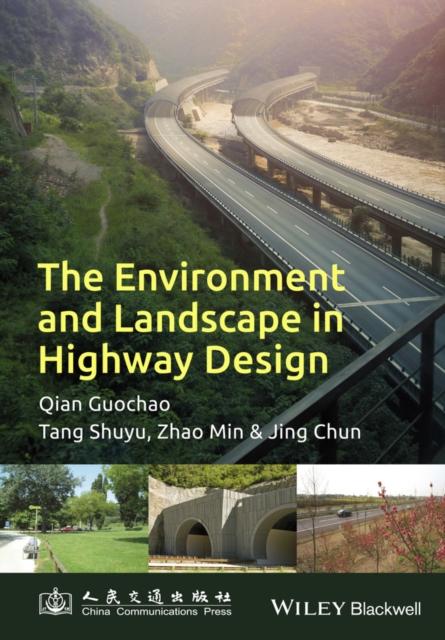
The Environment and Landscape in Motorway Design
The construction and operation of highways has a significant impact on the environment.While such impact is impossible to avoid, modern highways are constructed and landscaped to minimise these impacts as far as possible. Good landscaping minimises the impact on those living or working close to the highway, while at the same time regenerating.
eBook
The Impact of Anthropopressure on the Health Condition of Ancient Roadside Trees for a Sustainable City: Example of the Silver Maples
This pilot study aims to evaluate the state of the natural environment in the Silver Maples Alley (SMA) in Łódź, Poland, by using interdisciplinary research methods combining landscape architecture and environmental microbiology. The research focuses on the ecological condition of the trees in SMA, a historical monument consisting of about 100 century-old silver maples (Acer saccharinum L.). As part of the analysis, the study examines the area’s soil properties, microbiological composition, and air quality, providing a comprehensive approach to assessing environmental quality. Microbial analyses were conducted to determine soil pH, the presence of polycyclic aromatic hydrocarbons (PAHs), and the activity of Bacillus bacteria that produce biosurfactants for pollutant degradation. The results were compared with control sites with different Air Quality Index (AQI) values, including a park, a rural area, and a revitalized urban space. The findings support the hypothesis that environmental cleanliness correlates with the presence of pollutant-degrading microorganisms, particularly in areas with better air quality. This research contributes to understanding the role of green infrastructure, particularly old tree alleys, in urban ecosystems and public health. It also provides valuable insights into future management practices for historical green spaces. It highlights the need for interdisciplinary collaboration between landscape architecture, microbiology, and environmental sciences to address pressing sustainable development challenges.
Journal Article

Road lighting density and brightness linked with increased cycling rates after-dark
Cycling has a range of benefits as is recognised by national and international policies aiming to increase cycling rates. Darkness acts as a barrier to people cycling, with fewer people cycling after-dark when seasonal and time-of-day factors are accounted for. This paper explores whether road lighting can reduce the negative impact of darkness on cycling rates. Changes in cycling rates between daylight and after-dark were quantified for 48 locations in Birmingham, United Kingdom, by calculating an odds ratio. These odds ratios were compared against two measures of road lighting at each location: 1) Density of road lighting lanterns; 2) Relative brightness as estimated from night-time aerial images. Locations with no road lighting showed a significantly greater reduction in cycling after-dark compared with locations that had some lighting. A nonlinear relationship was found between relative brightness at a location at night and the reduction in cyclists after-dark. Small initial increases in brightness resulted in large reductions in the difference between cyclist numbers in daylight and after-dark, but this effect reached a plateau as brightness increased. These results suggest only a minimal amount of lighting can promote cycling after-dark, making it an attractive mode of transport year-round.
Journal Article
Distribution of Presumably Contaminating Elements (PCEs) in Roadside Agricultural Soils and Associated Health Risks Across Industrial, Peri-Urban, and Research Areas of Bangladesh
Agricultural soils near roadways are increasingly contaminated with presumably contaminating elements (PCEs), raising concerns for food safety and health risks in Bangladesh. This study quantified Mn, As, Co, Cr, Zn, Ni, Cu, Cd and Pb in roadside agricultural farm soils at three depths (0–5, 5–10, 10–15 cm) across industrial, peri-urban, and research areas using ICP-MS. The average mass fractions ranked as Mn > Zn > Cr > Ni > Cu > Pb > Co > As > Cd with peri-urban soils exhibiting the elevated levels of Cr (80.48 mg.kg−1 and Ni (65.81 mg.kg−1). Contamination indices indicated Cd (Contamination Factor: 2.01–2.53) and Ni (Contamination Factor: up to 2.27) as the most enriched elements, with all sites showing a Pollution Load Index (PLI) >1 (1.07–1.66), reflecting cumulative soil deterioration. Cd posed moderate ecological risk (Er: 60.3–75.9), whereas other PCEs were low risk. Health risk assessment showed elevated non-carcinogenic hazard indices (HI: 7.87–10.5 for children; 3.72–4.78 for adults), with Mn, Cr, and Co as major contributors. Cumulative carcinogenic risk (CCR) values were dominated by Cr, reaching 7.22 × 10⁻⁴ in industrial areas and 3.98 × 10⁻⁴ in peri-urban areas, exceeding the acceptable range (10−6–10−4). Metal mass fractions were consistently higher in surface soils (0–5 cm) than at deeper layers, indicating anthropogenic deposition from traffic and industry. Multivariate analysis distinguished geogenic (Cr-Ni-Cu; Mn-Co-As) from anthropogenic (Cd-Pb-Zn) sources. These findings identify Cd and Cr as priority pollutants, highlighting the need for soil management and pollution control near roadways in Bangladesh.
Journal Article
Effectiveness of Road Cool Pavements, Greenery, and Canopies to Reduce the Urban Heat Island Effects
The ongoing climate change is manifesting itself through the increasing expansion of Urban Heat Island (UHI) effects. This paper evaluates the microclimate benefits due to cool road pavements, greenery, and photovoltaic canopies in a parking lot in Fondi (Italy), identifying the best strategy to counteract the negative effects of UHIs. The ENVI-met software allowed a microclimatic analysis of the examined area in July 2022 through the comparison of the thermal performances between the current asphalt pavement and ten alternative scenarios. The proposed layouts were investigated in terms of air temperature (AT), surface temperature (ST), mean radiant temperature (MRT), and predicted mean vote (PMV). The results showed that the existing asphalt pavement is the worst one, while the cool pavement integrated with vegetation provides appreciable benefits. Compared to the current layout, a new scenario characterized by light porous concrete for carriageable pavements and sidewalks, concrete grass grid pavers for parking stalls, a 2-m-high border hedge, and 15-m-high trees implies reductions of AT above 3 °C, ST above 30 °C, MRT above 20 °C, and a maximum PMV value equal to 2.2.
Journal Article
