
Catalogue Search | MBRL


Are you sure you want to remove the book from the shelf?

{{itemTitle}}
2,787
result(s) for
"Robbery History."
Sort by:

Daring heists : real tales of sensational robberies and robbers
Where did the paintings stolen from the Isabella Stewart Gardner Museum end up? Will plane hijacker D.B. Cooper ever be found? How do thieves gets away with their crimes? Daring Heists tells of five true tales of thievery, from New York City crime in the 1800's to a thrilling train robbery in twentieth-century England. Includes maps and photographs for reference.
Book
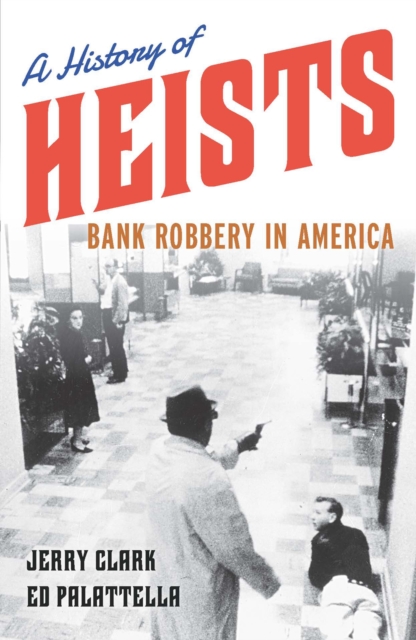
A history of heists
As long as the United States has banks, robbers will try to steal from them. A History of Heists details trends in bank robbery, including how advances in law enforcement and security have foiled many bandits. The ostensible goal of every bank robbery is to get the money, but it is a crime that often has a strong hold on the popular imagination.
eBook

Deadliest Outlaws
In the late nineteenth century Tom Ketchum and his brother Sam formed the Ketchum Gang with other outlaws and became successful train robbers. This book presents the definitive truth about Ketchum and numerous other outlaws, including Will Carver and Butch Cassidy.
eBook

Unlucky to the End
In Unlucky to the End Richard Pound provides a detailed and thought-provoking examination of the circumstances of the robbery, the subsequent flight of the suspects and murder of the policeman, as well as the hostage scene that led to the death of one of the robbers. He uses transcripts from the Calgary trial to explore Gamble's conviction and details the efforts that, after fourteen years in the desolate Kingston Prison for Women, finally led to her parole.
eBook

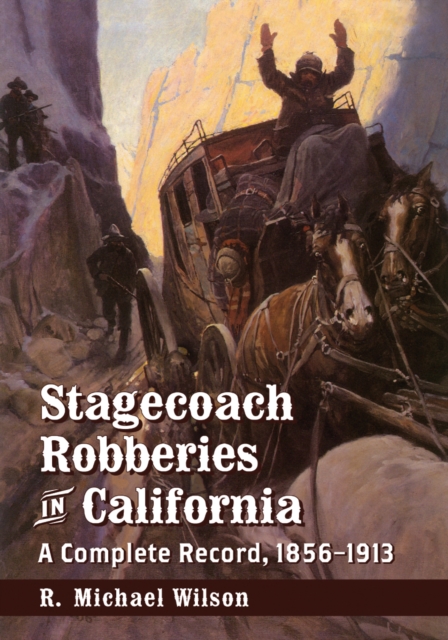
Stagecoach Robberies in California
California was the mining center of the West for half a century.Wherever precious minerals were found, road agents appeared to \"mine the roads\" of treasure being shipped out and payrolls being shipped in.The first recorded robbery of a stagecoach occurred in 1856, and the last in 1913.
eBook

What have we learned from the time trend of mass shootings in the U.S.?
Little is known regarding the time trend of mass shootings and associated risk factors. In the current study, we intended to explore the time trend and relevant risk factors for mass shootings in the U.S. We attempted to identify factors associated with incidence rates of mass shootings at the population level. We evaluated if state-level gun ownership rate, serious mental illness rate, poverty percentage, and gun law permissiveness could predict the state-level mass shooting rate, using the Bayesian zero-inflated Poisson regression model. We also tested if the nationwide incidence rate of mass shootings increased over the past three decades using the non-homogenous Poisson regression model. We further examined if the frequency of online media coverage and online search interest levels correlated with the interval between two consecutive incidents. The results suggest an increasing trend of mass shooting incidences over time (p < 0.001). However, none of the state-level variables could predict the mass shooting rate. Interestingly, we have found inverse correlations between the interval between consecutive shootings and the frequency of on-line related reports as well as on-line search interests, respectively (p < 0.001). Therefore, our findings suggest that online media might correlate with the increasing incidence rate of mass shootings. Future research is warranted to continue monitoring if the incidence rates of mass shootings change with any population-level factors in order to inform us of possible prevention strategies.
Journal Article


The spirit of the laws
Pertinent to contemporary demands for reparations from Turkey is the relationship between law and property in connection with the Armenian Genocide. This book examines the confiscation of Armenian properties during the genocide and subsequent attempts to retain seized Armenian wealth. Through the close analysis of laws and treaties, it reveals that decrees issued during the genocide constitute central pillars of the Turkish system of property rights, retaining their legal validity, and although Turkey has acceded through international agreements to return Armenian properties, it continues to refuse to do so. The book demonstrates that genocides do not depend on the abolition of the legal system and elimination of rights, but that, on the contrary, the perpetrators of genocide manipulate the legal system to facilitate their plans.
eBook

Punishment's place: the local concentration of mass incarceration
The crime rate is measured by the Uniform Crime Reports (ucr) \"index\" offenses (aggravated assault, forcible rape, murder, robbery, arson, burglary, larceny-theft, and motor vehicle theft) per 100,000 persons in Chicago. Concentrated incarceration may have the unintended consequence of increasing crime rates through its negative impact on the labor market and social-capital prospects of former prisoners.20 What is more, evidence shows that neighborhood context plays a major role in the recidivism rates of ex-prisoners.21 The integration of prisoner release programs and efforts to build community capacity are important steps for policy.22 Along with policy reform, efforts to destigmatize and achieve justice for communities are crucial to overcoming the vicious cycle of crime production, victimization, incapacitation, and disadvantage.
Journal Article