
Catalogue Search | MBRL


Are you sure you want to remove the book from the shelf?

{{itemTitle}}
744
result(s) for
"Robert Hooke"
Sort by:
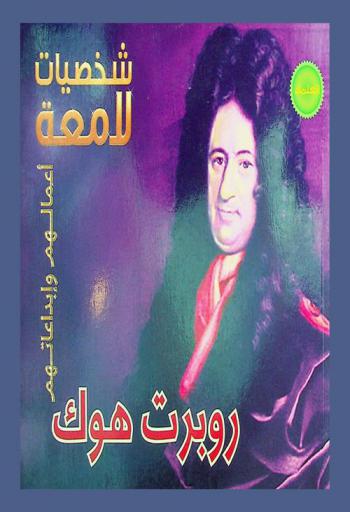
روبرت هوك 1635-1703
روبرت هوك فيلسوف طبيعي ومعماري وعالم موسوعي إنجليزي وعضو الجمعية الملكية وفي وقت واحد شغل منصب أمين تجارب الجمعية الملكية وعضو مجلسها وأستاذ الهندسة في غريشام ومساح لمدينة لندن بعد حريق لندن الكبير حيث أجرى أكثر من نصف عمليات مسح لندن بعد الحريق كما كان أيضا من المعماريين البارزين في عصره وكان له دور أساسي في وضع مجموعة من الضوابط في تخطيط لندن لا زال لها أثرها إلى اليوم.
BOOK

The Emergence of Texture
Crucial to accounts of complexity is the history of the concept of emergence. Pride of place is generally given to G. E. Lewes, who in 1879 offered a theory of \"emergents,\" of the unpredictable and incommensurate effects which follow from the crossing of causes. This essay recovers an earlier tradition; it focuses on experiments in seventeenth-century materials science, which explain emergent properties through an appeal to microstructural \"texture.\" A full appreciation of the modern turn to complexity, of our own ecological embeddeness and the interrelationship of things, requires therefore a return to the warp and weft of seventeenth-century artisanal practice.
Journal Article


Out of the Shadow of a Giant
What if Newton had never lived? A compelling dual biography argues that Robert Hooke and Edmond Halley easily could have filled the giant's shoes-and deserve credit for the birth of modern science. Robert Hooke and Edmond Halley, whose place in history has been overshadowed by the giant figure of Newton, were pioneering scientists within their own right, and instrumental in establishing the Royal Society. Although Newton is widely regarded as one of the greatest scientists of all time and the father of the English scientific revolution, John and Mary Gribbin uncover the fascinating story of Robert Hooke and Edmond Halley, whose scientific achievements neatly embrace the hundred years or so during which science as we know it became established. They argue persuasively that, even without Newton, science would have made a great leap forward in the second half of the seventeenth century, headed by two extraordinary figures, Hooke and Halley.
eBook

The hunt for Earth gravity : a history of gravity measurement from Galileo to the 21st century
\"The author of this history of mankind's increasingly successful attempts to understand, to measure and to map the Earth's gravity field (commonly known as 'little g' or just 'g') has been following in the footsteps of pioneers, intermittently and with a variety of objectives, for more than fifty years. It is a story that begins with Galileo's early experiments with pendulums and falling bodies, progresses through the conflicts between Hooke and Newton and culminates in the measurements that are now being made from aircraft and satellites. The spectacular increases in accuracy that have been achieved during this period provide the context, but the main focus is on the people, many of whom were notable eccentrics. Also covered are the reasons WHY these people thought their measurements would be useful, with emphasis in later chapters on the place of 'g' in today's applied geology, and on the ways in which it is providing new and spectacular visions of our planet. It is also, in part, a personal memoir that explores the parallels between the way fieldwork is being done now and the difficulties that accompanied its execution in the past. Selected topics in the mathematics of 'g' are discussed in a series of short Codas.\" -- back cover of work
Book

Philosophy of Experiment in Early Modern England: The Case of Bacon, Boyle and Hooke
Serious philosophical reflection on the nature of experiment began in earnest in the seventeenth century. This paper expounds the most influential philosophy of experiment in seventeenth-century England, the Bacon-Boyle-Hooke view of experiment. It is argued that this can only be understood in the context of the new experimental philosophy practised according to the Baconian theory of natural history. The distinctive typology of experiments of this view is discussed, as well as its account of the relation between experiment and theory. This leads into an assessment of other recent discussions of early modern experiment, namely, those of David Gooding, Thomas Kuhn, J.E. Tiles and Peter Dear.
Journal Article

Learn about Robert Hooke and his discoveries with microscopes
A video on the scientist Robert Hooke and his discoveries. Cell theory.
Streaming Video

The poison machine : a Hunt & Hooke novel
\"London, 1679 - A year has passed since the sensational attempt to murder King Charles II, but London is still a viper's nest of rumored Catholic conspiracies, and of plots against them in turn. When Harry Hunt - estranged from his mentor Robert Hooke - is summoned to the remote and windswept marshes of Norfolk, he is at first relieved to get away from the place. But in Norfolk, he finds that some Royal workers shoring up a riverbank have made a grim discovery - the skeleton of a dwarf. Harry is able to confirm that the skeleton is that of Captain Jeffrey Hudson, a prominent member of the court once famously given to the Queen in a pie. Except no one knew Hudson was dead, because another man had been impersonating him. The hunt for the impersonator, clearly working as a spy, will take Harry to Paris, another city bedeviled by conspiracies and intrigues, and back, with encounters along the way with a flying man and a cross-dressing swordswoman - and to the uncovering of a plot to kill the Queen and all the Catholic members of her court. But where? When?\"--Book jacket flap.
Book

Robert Hooke, 1635-1703
Robert Hooke was a polymath whose expertise during the 17th century spanned many different scientific areas. As a schoolboy on the Isle of Wight he was obsessed with the possibility of human flight and later became equally absorbed in cosmology and planetary motion. His skills as an artist were put to good use both as an architect following the Great Fire of London and before that in Micrographia. Although that book is best known for demonstrating the power of Hooke's microscope, Micrographia describes distant planetary bodies, the wave theory of light, the organic origin of fossils, and various other philosophical and scientific interests of its author. The following thumbnail sketches of Hooke reveal him to be a man of enormous energy and imagination whose ideas were often pirated or under-rated.
Journal Article