
Catalogue Search | MBRL


Are you sure you want to remove the book from the shelf?

{{itemTitle}}
2,821
result(s) for
"Robotique."
Sort by:

Robots in space
\"Robots don't need to breathe, eat, or sleep. This makes them perfectly suited for work in the vacuum of space. Rovers on Mars have given humanity a wealth of knowledge about this planet, and machines that repair shuttles and other equipment are invaluable to astronauts. In this exciting STEM exploration, readers learn about space robots. Intriguing sidebars explore the ways science fiction has influenced the creation of real robots, and informative fact boxes and accessible main text discuss robots of the past, present, and future. Full-color photographs and a list of critical-thinking questions keep readers engaged as they learn\"-- Provided by publisher.
Book
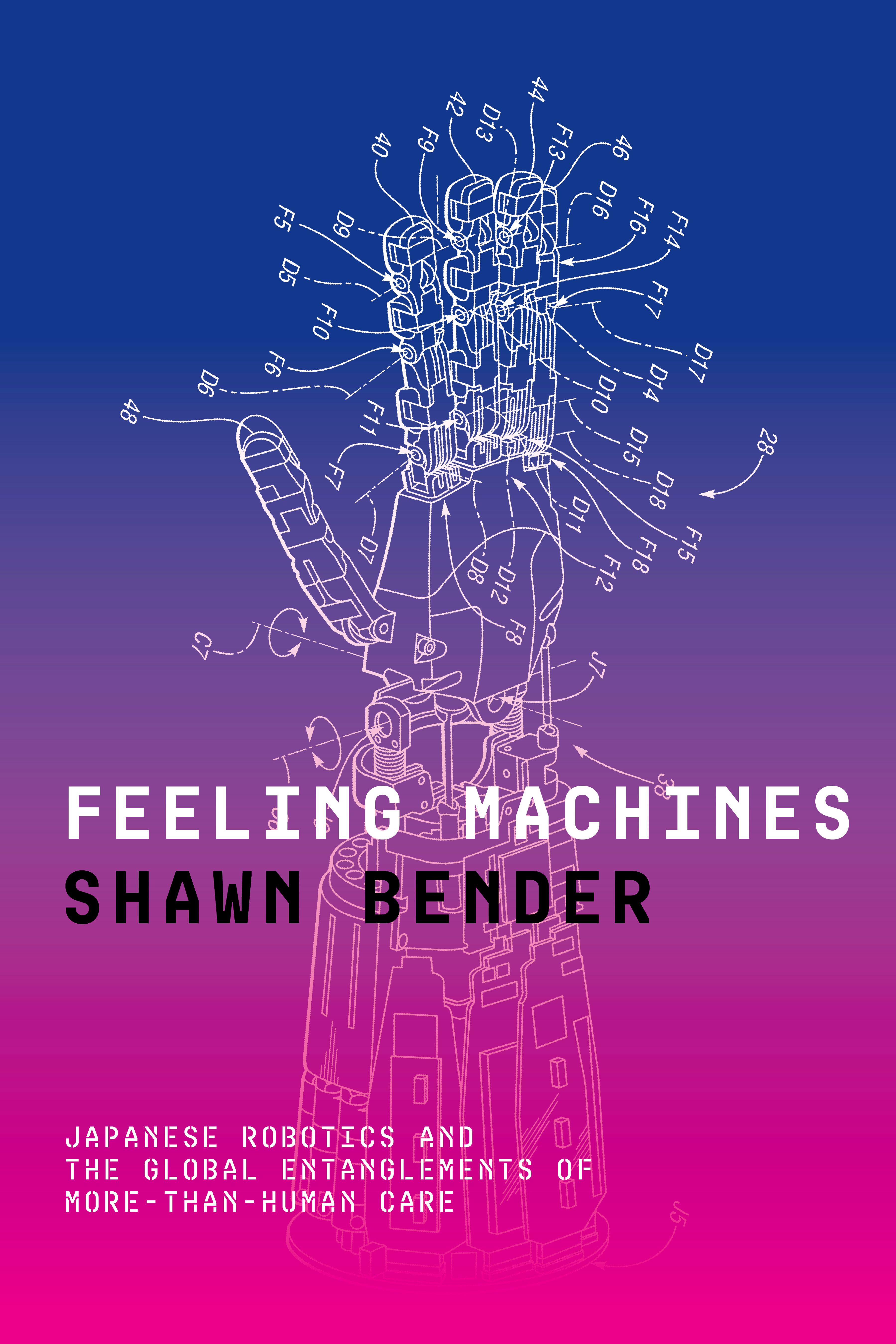
Feeling machines : Japanese robotics and the global entanglements of more-than-human care
In recent years, debates over healthcare have accompanied rapid advances in technology, from the expansion of telehealth services to artificial intelligence driven diagnostics. In this book, Shawn Bender delves into the world of Japanese robots engineered for care. Care robots (kaigo robotto) emerged early in the 21st century, when roboticists began converting assembly line technologies into responsive machines for older adults and people with disabilities. These robots are meant to be felt and programmed to feel. While some greet them with enthusiasm, others fear that they might replace a fundamentally human task. Based on fieldwork in Japan, Denmark, and Germany, Bender traces the emergence of care robots in Japan and examines their impact on therapeutic practice around the world.
Social science scholarship on robotics tends to be either speculative—imagining life together with robots—or experimental—observing robot-human interaction in laboratories or through short-term field studies. Instead, Bender follows roboticists developing technologies in Japan, and travels with the robots themselves into everyday sites of care, tracking the integration of robots into institutional care and the connection of care practice to robotics development. By exploring the application of Japanese robotics across the globe, Feeling Machines highlights the entanglements of therapeutic practice and technological innovation in an age of more-than-human care.
eBook


Integrating nanorobotics with biophysics for cancer treatment
In this book, the authors explore the pros and cons of combining biophysics with micro and nanorobots for cancer treatment. This book offers the most recent findings on employing nano/microrobots in biophysics for cancer treatment. Insightful analysis and commentary from the authors complement a comprehensive survey of recent advances and ground-breaking research in the field. Chapters are followed by examples that illustrate the key points or applications of the material covered in that chapter, bridging the gap between the theoretical framework presented here and the rigorous investigation into the subject matter that awaits the reader, once they have mastered the material presented in the book. Part of Biophysical Society-IOP series.
eBook

New trends in medical and service robotics : MESROB 2023
This volume contains the papers of the 8th International Workshop on Medical and Service Robots (MESROB) which was held in Craiova, Romania, on June 7-10, 2023. The main topics include: design of medical devices, kinematics and dynamics for medical robotics, exoskeletons and prostheses, anthropomorphic hands, therapeutic robots and rehabilitation, cognitive robots, humanoid and service robots, assistive robots and elderly assistance, surgical robots, human-robot interfaces, haptic devices, medical treatments, medical lasers, and surgical planning and navigation. The contributions, which were selected by means of a rigorous international peer-review process, highlight numerous exciting ideas that will spur novel research directions and foster multidisciplinary collaboration among different specialists, demonstrating that medical and service robotics will drive the technological and societal change in the coming decades.
BOOK
Optimization and Robotic Applications
Optimization is the process of obtaining the most appropriate solution by providing certain constraints for the given purpose or purposes. Mathematically, optimization can be briefly defined as minimizing or maximizing a function. In short, optimization is to look for the best. The best found is called \"optimum. Optimization is used to accelerate decision-making processes and to solve real-life problems in an effective, accurate and real-time manner. In addition to the economic benefits, optimization is also used as an effective method to include the preferences and constraints of customers, employers and employees in the decision process and to improve the quality of the resources in the system. The purpose of optimization is to achieve the best result, the best goal. Improvements can be made to the current situation or situations to achieve the best result. One of the major shortcomings in optimization and robotic is the transformation of theoretical knowledge into practice. The purpose of the book is to introduce students, teachers, researchers, and practitioners to new advances in this area. The book content includes theoretical and practical studies prepared with the academic contributions of scientists working in different fields. It was decided to publish each chapter in the book after being examined by the scientific board. As an editor, my duty is to ensure breadth, while the chapter authors treat the delegated chapters with depth. The book is designed for practitioners or researchers of all levels of expertise from novice to expert. Each of the book's individual topics could be considered as a compact, self-contained mini-book right under its title. The approach is to provide a framework and a set of techniques for evaluating and improving optimization and robotic. It presents a specific set of solutions, mostly obtained from real world projects and experimental studies, for routine applications. It further highlights promising emerging techniques for research and exploration opportunities. The development team of this book wants to thank their colleagues who made contributions to this book by providing continuous encouragements and thorough reviews of the chapters of the book.
eBook

Metareasoning for robots : adapting in dynamic and uncertain environments
This book is a state of the art resource that robotics researchers and engineers can use to make their robots and autonomous vehicles smarter. Readers will be able to describe metareasoning, select an appropriate metareasoning approach, and synthesize metareasoning policies. Metareasoning for Robots adopts a systems engineering perspective in which metareasoning is an approach that can improve the overall robot or autonomous system, not just one component or subsystem. This book introduces key concepts, discusses design options for metareasoning approaches and policies, and presents approaches for testing and evaluation of metareasoning policies. After considering the conceptual design phase, it discusses how to implement metareasoning in the robot's software architecture and how to synthesize metareasoning policies. Every chapter has references to valuable works on robotics and metareasoning, and the book uses examples from the author's own research and from other research groups to illustrate these ideas. In addition, this book provides links to books and papers for readers who wish to investigate these topics further.
BOOK

Handbook of Artificial Intelligence and Robotic Process Automation
On the commercial side, artificial intelligence applications are powering many sectors. Globally, governments are exploring how to comprehend, incorporate, apply, and use artificial intelligence technologies. The scope of government use of artificial intelligence technology goes beyond that of commercial organizations and is far more complex.
In government, the challenges will be as follows: (1) How can governments use artificial intelligence technology to improve their efficiencies? (2) How can governments become more citizen-centric, service based, accessible, and responsive? (3) How can governments protect their citizens from the misuse of artificial intelligence (e.g., alleged Russian bots’ interference in US elections)? (4) How can governments use artificial intelligence technology to make better policy decisions and avoid wrong decisions (economic, social, etc.)? (5) How can governments develop new standards to govern and manage the deployment of artificial intelligence technologies (e.g., autonomous cars, financial markets and trading, healthcare bots)? (6) How will the legislative bodies respond to the rise of intelligent machines? (7) How will the use of artificial intelligence in the military change the arms race? (8) What roles will governments need to play in developing global standards related to artificial intelligence (United Nations)? (9) How can governments improve their countries’ productivity with artificial intelligence? (10) How can governments handle the upcoming unemployment that would result from AI automation?
All the above questions are at an early stage of exploration and many have not been addressed comprehensively. This book deals with all the above issues and provides the first guide to governments and policy makers of the world on artificial intelligence.
eBook

Society 5.0 : industry of the future, technologies, methods and tools
Following the rapid development of connected technologies, which are now highly sophisticated and spread across the globe, Society 5.0 has emerged and brought with it a dramatic societal shift. In 1998, Kodak, the world leader in photographic film, had 170,000 employees. It thus seemed unthinkable that just 3 years later, the majority of people would stop taking photographs to paper film and that Kodak would have disappeared. These are the stakes of this new society that is taking shape. This book, which does not seek to critique current politics, management or marketing literature, aims to fight against the excesses of this often-misunderstood Society 5.0 and to present the ideas and associated technologies that comprise it, all working towards societal improvement. Among these technologies, artificial intelligence, robotics, digital platforms and 3D printing are undoubtedly the most important, and thus receive the greatest focus.
eBook