
Catalogue Search | MBRL


Are you sure you want to remove the book from the shelf?

{{itemTitle}}
25
result(s) for
"Robots Congresses."
Sort by:


Sociable Robots and the Future of Social Relations
The robotics industry is growing rapidly, and to a large extent the development of this market sector is due to the area of social robotics - the production of robots that are designed to enter the space of human social interaction, both physically and semantically.
eBook


Drugs in Palliative Care
While palliative care has adopted a holistic approach to treatment, medication driven symptom management ostensibly forms the critical aspect of care. Pharmacological therapy can be extremely complex because these patients often have co-existing medical conditions in addition to symptoms caused by their terminal disease. The resulting polypharmacy can be daunting for professionals and can negatively impact on effectiveness of care.The practitioner requires a simple, easy to navigate reference source that provides succinct and pertinent drug information. This detailed yet concise handbook will appeal to a variety of healthcare professionals involved in the provision of palliative care and medicines information. It begins with an overview of pharmacology and prescribing advice then contains over 100 entries of palliative care drugs, in an easy to use A-Z format.
eBook

Information Control Problems in Manufacturing Technology 1992
These proceedings contain more than 80 of the best papers presented at the INCOM '92 Symposium, and relate to the vast changes which are occurring worldwide in manufacturing technology.
eBook

Simulation and Modeling Related to Computational Science and Robotics Technology
Simulation and modeling contribute to a broad range of applications in computational science and robotics technology, often addressing important design and control problems.This book presents a selection of papers from the International Workshop on Simulation and Modeling related to Computational Science and Robotics Technology (SiMCTR 2011), held at Kobe University, Japan, in November 2011.The workshop provided a forum for discussing recent developments in the growing field of engineering science and mathematical sciences, and brought together a diverse group of researchers in these areas to share and compare the different approaches to simulation and modeling in computational science and robotics technology. The workshop was also aimed at establishing collaborative links between engineering researchers of information and robotics technology (IRT) and applied mathematicians working in modeling and computational methods for design and control.
eBook

Robotic Navigation and Mapping with Radar
Focusing on autonomous robotic applications, this cutting-edge resource offers you a practical treatment of short-range radar processing for reliable object detection at the ground level. This unique book demonstrates probabilistic radar models and detection algorithms specifically for robotic land vehicles. It examines grid based robotic mapping with radar based on measurement likelihood estimation. You find detailed coverage of simultaneous localization and Map Building (SLAM) - an area referred to as the Holy Grailù of autonomous robotic research. The book derives an extended Kalman Filter SLAM algorithm which exploits the penetrating ability of radar. This algorithm allows for the observation of visually occluded objects, as well as the usual directly observed objects, which contributes to a robot 's position and the map state update. Moreover, you discover how the Random Finite Set (RFS) provides a more appropriate approach for representing radar based maps than conventional frameworks.
eBook

An autonomous vision-based shelf-reader robot using faster R-CNN
PurposeThe purpose of this study is to design, program and implement an intelligent robot for shelf-reading. an essential task in library maintenance is shelf-reading, which refers to the process of checking the disciplines of books based on their call numbers to ensure that they are correctly shelved. Shelf-reading is a routine yet challenging task for librarians, as it involves controlling call numbers on the scale of thousands of books promptly.Design/methodology/approachLeveraging the strength of autonomous robots in handling repetitive tasks, this paper introduces a novel vision-based shelf-reader robot, called Pars and demonstrate its effectiveness in accomplishing shelf-reading tasks. Also, this paper proposes a novel supervised approach to power the vision system of Pars, allowing it to handle motion blur on images captured while it moves. An approach based on Faster R-CNN is also incorporated into the vision system, allowing the robot to efficiently detect the region of interest for retrieving a book’s information.FindingsThis paper evaluated the robot’s performance in a library with $120,000 books and discovered problems such as missing and misplaced books. Besides, this paper introduces a new challenging data set of blurred barcodes free publicly available for similar research studies.Originality/valueThe robot is equipped with six parallel cameras, which enable it to check books and decide moving paths. Through its vision-based system, it is also capable of routing and tracking paths between bookcases in a library and it can also turn around bends. Moreover, Pars addresses the blurred barcodes, which may appear because of its motion.
Journal Article

What Social Robots Can and Should Do
Social robotics drives a technological revolution of possibly unprecedented disruptive potential, both at the socio-economic and the socio-cultural level.The rapid development of the robotics market calls for a concerted effort across a wide spectrum of academic disciplines to understand the transformative potential of human-robot interaction.
eBook
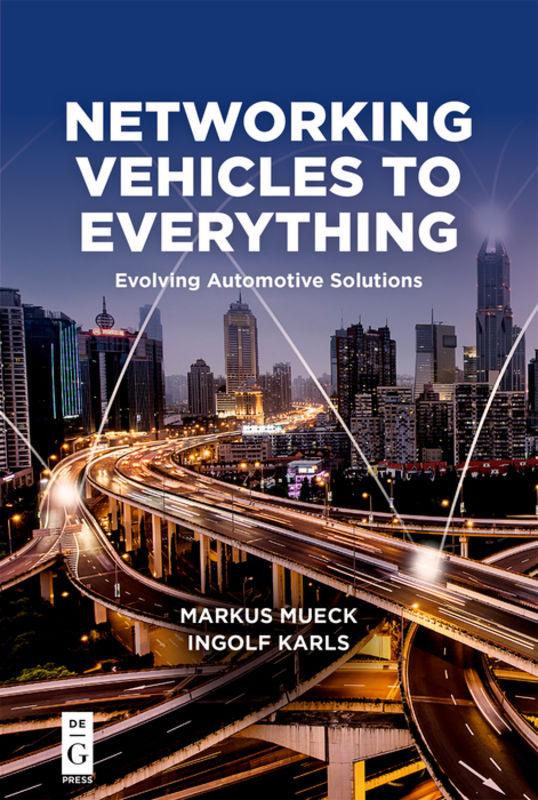
Networking Vehicles to Everything
Communication between vehicles and infrastructure will enable an entirely new way of managing and accommodating traffic, pedestrians, and the surrounding environment, changing the nature of travel going forward. Networking Vehicles to Everything provides those seriously interested in vehicular automation with a state of the art resource for a deep understanding of the many competing technologies that will be united to enable the technology in years to come. This in-depth account covers challenges, case considerations, current activities in standards, product implementation, and upcoming trends such as software reconfiguration, mmWave technology and advanced control theory tools. Readers will gain in-depth understanding of the main bodies and institutions developing and regulating the technology, current technological battles including in particular IEEE 802.11p and 3GPP LTE V2X technologies which compete for the top-spot in a multi-billion market. Readers will become aware of the many currently open technological questions and trends in terms of applications, markets and some of the possibilities that the future may hold for any type of vehicle.
eBook