
Catalogue Search | MBRL


Are you sure you want to remove the book from the shelf?

{{itemTitle}}
20,321
result(s) for
"Roman History "
Sort by:

Unbound from Rome : art and craft in a fluid landscape, ca. 650-250 BCE
Roman art and architecture is typically understood as being bound in some ways to a political event or as a series of aesthetic choices and experiences stemming from a centre in Rome itself. Moving beyond the misleading catchall label 'Roman', John North Hopkins aims to untangle the many peoples whose diverse cultures and traditions contributed to Rome's visual culture over a four-hundred-year time span across the first millennium BCE. Hopkins carefully reconsiders some of the period's most iconic works by way of the many practices and peoples bound up with them. Some of these include the extraordinary and complex effort to build the Temple of Jupiter; the creative actions and diverse encounters tied to luxury objects like the Ficoroni Cista; and the important meanings held by sacred temple sculpture and votive offerings through their making and subsequent practices of devotion.
BOOK

Materia Magica
This exciting new study draws on objects excavated or discovered in the late nineteenth or early twentieth century at three Mediterranean sites. Through the three case studies,Materia Magicaidentifies specific forms of magic that may be otherwise unknown. It isolates the practitioners of magic and examines whether magic could be used as a form of countercultural resistance. Andrew T. Wilburn discovers magic in the objects of ancient daily life, suggesting that individuals frequently turned to magic, particularly in crises. Local forms of magic may have differed, and Wilburn proposes that the only way we can find small-town sorcerers is through careful examination of the archaeological evidence.
Studying the remains of spells enacted by practitioners, Wilburn's work unites the analysis of the words written on artifacts and the physical form of these objects. He situates these items within their contexts, to study how and why they were used.Materia Magicaapproaches magic as a material endeavor, in which spoken spells, ritual actions, and physical objects all played vital roles in the performance of a rite.
Materia Magicadevelops a new method for identifying and interpreting the material remains of magical practice by assessing artifacts within their archaeological contexts. Wilburn suggests that excavations undertaken in recent centuries can yield important lessons about the past, and he articulates the ways in which we can approach problematic data.
eBook


Households in Context
Households in Context shifts
the focus from monumental temples, tombs, and elite material and
visual culture to households and domestic life to provide a crucial
new perspective on everyday dwelling practices and the interactions
of families and individuals with larger social and cultural
structures. A focus on households reveals the power of the
everyday: the critical role of quotidian experiences, objects, and
images in creating the worlds of the people who live with them.
The contributors to this book share contemporary research on
houses and households in both Ptolemaic and Roman Egypt to reshape
the ways we think about ancient people's lived experiences of
family, community, and society. Households in Context
places the archaeology and history of Greco-Roman Egypt in dialogue
with research on dwelling, daily practice, and materiality to
reveal how ancient households functioned as laboratories for
social, political, economic, and religious change.
Contributors: Youssri Abdelwahed, Richard Alston, Anna Lucille
Boozer, Paola Davoli, David Frankfurter, Jennifer Gates-Foster,
Melanie Godsey, Darlene L. Brooks Hedstrom, Sabine R. Huebner,
Gregory Marouard, Miriam Müller, Lisa Nevett, Bérangère Redon,
Bethany Simpson, Ross I. Thomas, Dorothy J. Thompson
eBook

The Ruin of Roman Britain
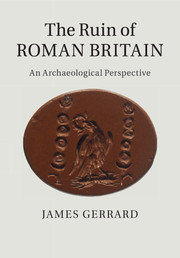
How did Roman Britain end? This new study draws on fresh archaeological discoveries to argue that the end of Roman Britain was not the product of either a violent cataclysm or an economic collapse. Instead, the structure of late antique society, based on the civilian ideology of paideia, was forced to change by the disappearance of the Roman state. By the fifth century elite power had shifted to the warband and the edges of their swords. In this book Dr Gerrard describes and explains that process of transformation and explores the role of the 'Anglo-Saxons' in this time of change. This profound ideological shift returned Britain to a series of 'small worlds', the existence of which had been hidden by the globalizing structures of Roman imperialism. Highly illustrated, the book includes two appendices, which detail Roman cemetery sites and weapon trauma, and pottery assemblages from the period.
eBook

The Holy Roman Empire : a very short introduction
\"Joachim Whaley outlines the fascinating thousand-year history of the Holy Roman Empire. Throughout its lifetime, the empire's growth and history was shaped by the major developments in Europe, from the Reformation, to the Thirty Years War, to the French revolutionary wars, which led to Napoleon destroying the empire in 1806. Joachim Whaley analyzes the empire's crucial impact and role in the history of European power and politics, and shows that there has never been a more durable political system in German history.\"-- Publisher's description.
Book

The Emperor's Old Clothes
For many years, scholars struggled to write the history of the constitution and political structure of the Holy Roman Empire. This book argues that this was because the political and social order could not be understood without considering the rituals and symbols that held the Empire together. What determined the rules (and whether they were followed) depended on complex symbolic-ritual actions. By examining key moments in the political history of the Empire, the author shows that it was a vocabulary of symbols, not the actual written laws, that formed a political language indispensable in maintaining the common order.
eBook

From Caesar to Augustus (c. 49 BC-AD 14) : using coins as sources
\"This unique book provides the student of Roman history with an accessible and detailed introduction to Roman and provincial coinage in the Late Republic and Early Empire in the context of current historical themes and debates. Almost two hundred different coins are illustrated at double life size, with each described in detail, and technical Latin and numismatic terms are explained. Chapters are arranged chronologically, allowing students quickly to identify material relevant to Julius Caesar, the second triumvirate, the relationship between Antony and Cleopatra, and the Principate of Augustus. Iconography, archaeological contexts, and the economy are clearly presented. A diverse array of material is brought together in a single volume to challenge and enhance our understanding of the transition from Republic to Empire\"-- Provided by publisher.
Book

The customs law of Asia
The Roman Empire was based on law, and it was vital for rulers and ruled that laws should be understood. They were often given permanent form in stone or bronze. This book transcribes, translates, and fully illustrates with photographs, the inscription (more than 155 lines, in its damaged state) that carries the regulations drawn up over nearly two centuries for the customs dues of the rich province of Asia (western Turkey). The regulations, taken from Roman archives, were set up in Greek in Ephesus, and the book provides a rendering of the text back into Latin. The damaged text is hard to restore and to interpret. Six scholars offer line-by-line commentary, and five essays bring out its significance, from the Gracchi to Nero, for Rome's government and changing attitudes towards provincial subjects, for the historical geography of the Empire, for its economic history, and for the social life of Roman officials.
eBook