
Catalogue Search | MBRL


Are you sure you want to remove the book from the shelf?

{{itemTitle}}
1,010
result(s) for
"Roman Republic"
Sort by:

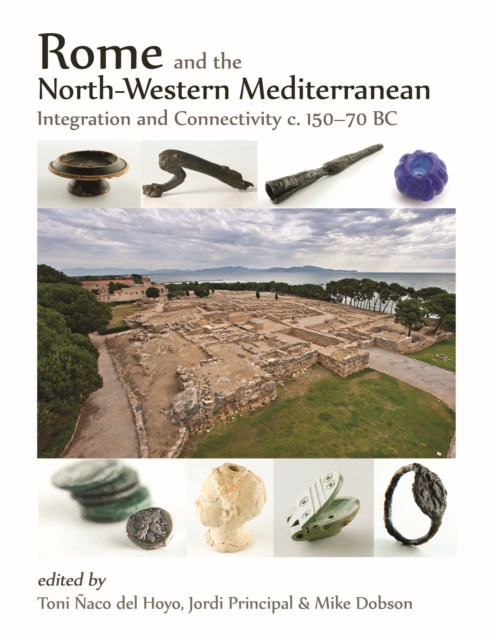
Rome and the north-western Mediterranean
To date, Rome’s intervention to the West from the mid-second century BC has not really been looked at with any sense of overview. Instead, there has been an unconnected series of micro-regional studies looking at particular areas, from the river Ebro in Spain round to Italy on the land front, and from the Balearic Islands to Corsica, Sardinia and even Sicily as regards the seaborne aspect. In contrast, the aim of this volume is to push the historical and archaeological debates about Rome’s expansion beyond these traditional geographical boundaries and the discipline-based previous research. The entire north-western Mediterranean is treated as a micro-region and is addressed using various interdisciplinary approaches. The result is to provide an innovative and comprehensive overview of the north-western Mediterranean in a period of historical crossroads, aided particularly by focusing on the connectivity and integration within this region as two interrelated issues. While Republican Rome enforced itself as an expansive power towards the West, all sorts of polities, military operations and individuals also played a significant role in creating interconnectivity and integration of the north-western Mediterranean into a new hybrid reality. In order to uncover such processes of hybridisation, contributors to this volume were encouraged to focus on the historical, archaeological and numismatic material from several areas within the region, and to incorporate aspects of interdisciplinary methodologies in order to address the region’s military, political, social and economic interconnections with Italy, Rome and each other within the overall period.
eBook


El Commentariolum Petitionis de Quinto Cicerón y los adulescentes nobiles: los barbatuli iuvenes. Sobre el “conflicto intergeneracional” en la República tardía
Este trabajo, que comienza con un estado de la cuestión sobre el estudio de la juventud en la República tardía, analiza las menciones hechas a los jóvenes en general y a los jóvenes nobles en particular, en esa obrita tan peculiar que compuso el hermano del Arpinate y que conocemos como el Manual del Candidato al objeto de preguntarnos, entre otras cuestiones, quién ese grupo de jóvenes que se menciona en ella. Nuestra propuesta es que los jóvenes a los que hace referencia Quinto Cicerón en su opúsculo pueden identificarse con los barbatuli iuvenesque su hermano menciona en sendas cartas dirigidas a Ático fechadas en la primera mitad de 61. Asimismo, y en íntima relación con esta primera cuestión pensamos que, en contra de lo que han sugerido algunos autores en los últimos años, los hechos acontecidos en la década de los 60 en la Urbs no deben verse en absoluto como un conflicto intergeneracional, situación que en nuestra opinión no se produjo, al menos en esa coyuntura. La interpretación errónea de esos hechos como conflicto entre generaciones deriva de una definición incorrecta de este término fundamental.
Journal Article


A writer’s guide to Ancient Rome
How do you create a fictional story out of an historical period? What do you need to know about the people, the places, the events? What’s the better inspiration: historical scholarship or popular knowledge? A writer’s guide to Ancient Rome serves as inspiration and a guide to the Roman population, economy, laws, leisure, and religion for the author, student, general reader seeking an introduction to what made the Romans tick. The Guide considers trends and themes from roughly 200 BCE to 200 CE with the occasional foray into the antecedents and legacy on either side of the period. Each chapter explicates its main themes with examples from the original sources. Throughout are suggestions for resources to mine for the subject at hand and particular bits affected by scholarly debate and changing interpretation based on new discoveries or reinterpretation of written and material remains. It’s up to you whether or not you will produce a work of careful verisimilitude or anachronistic silliness (or one of the flavours in between). That’s your call as creator. This little guide is but a brief survey of a vast quantity of resources, sources, and scholarship on the Classical world that is available for reflection, evaluation, interpretation, and creativity. It is intended to open doors for further reading and consideration as you construct your own Roman world – it’s a welcome mat inviting you in to listen to the stories of the Romans and to contribute tales of your own.
eBook

Magistracy and the historiography of the Roman republic : politics in prose
\"The study of Roman republican magistracy has traditionally been the preserve of historians posing constitutional and prosopographical questions. As a result, one fundamental aspect of our most detailed contemporary and near-contemporary sources about magistracy has remained largely neglected: their literariness. This book takes a new approach to the representation of magistrates and shows how the rhetorical and formal features of prose texts - principally Livy's history but also works by Cicero and Sallust - shape our understanding of magistracy. Applying to the texts an expanded concept of exemplarity, Haimson Lushkov shows how a rich body of anecdotes concerning the behaviour and speech of magistrates reflects on the values and tensions that defined the republic. A variety of contexts - familial, military, and electoral, among others - flesh out the experience of being, becoming, and encountering a Roman magistrate, and the political and ethical problems highlighted and negotiated in such circumstances\"-- Provided by publisher.
Book

The Idea of Rome in Late Antiquity
This book approaches the manifestation and evolution of the idea of Rome as an expression of Roman patriotism and as an (urban) archetype of utopia in late Roman thought in a period extending from AD 357 to 417. Within this period of about a human lifetime, the concepts of Rome and Romanitas were reshaped and used for various ideological causes. This monograph unfolds through a selection of sources that represent the patterns and diversity of this ideological process. The theme of Rome as a personified and anthropomorphic figure and as an epitomized notion 'applied' on the urban landscape would become part of the identity of the Romans of Rome highlighting a sense of cultural uniqueness in an era when their city's privileged status was challenged. Towards the end of the chronological limits set in this thesis various versions of Romanitas would emerge indicating new physical and spiritual potentials.
eBook

Consuls and res publica : holding high office in the Roman Republic
\"The consulate was the focal point of Roman politics. Both the ruling class and the ordinary citizens fixed their gaze on the republic's highest office--to be sure, from different perspectives and with differing expectations. While the former aspired to the consulate as the defining magistracy of their social status, the latter perceived it as the embodiment of the Roman state. Holding high office was thus not merely a political exercise. The consulate prefigured all aspects of public life, with consuls taking care of almost every aspect of the administration of the Roman state. This multifaceted character of the consulate invites a holistic investigation. The scope of this book is therefore not limited to political or constitutional questions. Instead, it investigates the predominant role of the consulate in, and its impact on, the political culture of the Roman republic\"-- Provided by publisher.
Book

Rome and environs
This superb guide brings the work of Filippo Coarelli, one of the most widely published and well-known scholars of Roman topography, archeology and art, to a broad English-language audience. Conveniently organized by walking tours and illustrated throughout with clear maps, drawings, and plans, Rome and Environs: An Archaeological Guide covers all of the major, and an unparalleled number of minor, ancient sites in the city, and, unlike most other guides of Rome, includes major and many minor sites within easy reach of the city, such as Ostia Antica, Palestrina, Tivoli, and the many areas of interest along the ancient Roman roads. An essential resource for tourists interested in a deeper understanding of Rome's classical remains, it is also the ideal book for students and scholars approaching the ancient history of one of the world's most fascinating cities. • Covers all the major sites including the Capitoline, the Roman Forum, the Imperial Fora, the Palatine Hill, the Valley of the Colosseum, the Esquiline, the Caelian, the Quirinal, and the Campus Martius. • Discusses important clusters of sites-one on the area surrounding Circus Maximus and the other in the vicinity of the Trastevere, including the Aventine and the Vatican. • Covers the history and development of the city walls and aqueducts. • Follows major highways leading outside of the city to important and fascinating sites in the periphery of Rome. • Features 189 maps, drawings, and diagrams, and an appendix on building materials and techniques. • Includes an updated and expanded bibliography for students and scholars of Ancient Rome.
eBook