
Catalogue Search | MBRL


Are you sure you want to remove the book from the shelf?

{{itemTitle}}
4,549
result(s) for
"Roman philosophy"
Sort by:

Method of medicine
\"Galen of Pergamum (129-?199/216), physician to the court of the emperor Marcus Aurelius, was a philosopher, scientist, and medical historian, a theoretician and practitioner, who wrote forcefully and prolifically on an astonishing range of subjects and whose impact on later eras rivaled that of Aristotle. Galen synthesized the entirety of Greek medicine as a basis for his own doctrines and practice, which comprehensively embraced theory, practical knowledge, experiment, logic, and a deep understanding of human life and society. Method of Medicine, a systematic and comprehensive account of the principles of treating injury and disease and one of Galen's greatest and most influential works. Enlivening the detailed case studies are many theoretical and polemical discussions, acute social commentary, and personal reflections. The Loeb Method of medicine is in three volumes.\"--Book jacket.
BOOK

Philosophy and dietetics in the Hippocratic on regimen : a delicate balance of health
This book offers the first extended study published in English on the Hippocratic treatise On Regimen, one of the most important pre-Platonic documents of the discussion of human nature and other topics at the intersection of ancient medicine and philosophy.
eBook

Ornament and figure in Graeco-Roman art : rethinking visual ontologies in classical antiquity
\"This edited collection explores the relationship between 'ornament' and 'figure' in Graeco-Roman antiquity. Through a series of specially commissioned chapters, contributors examine a range of ancient materials and texts: combining theoretical discussion and close analytical interpretations, the book interrogates shifting ideas of the image in both antiquity and the ensuing western art critical tradition\"-- Provided by publisher.
Book

Aristotle's discovery of the human : piety and politics in the Nicomachean ethics
Aristotle's Discovery of the Human offers a fresh, illuminating, and accessible analysis of one of the Western philosophical tradition's most important texts.
In Aristotle's Discovery of the Human, noted political theorist Mary P. Nichols explores the ways in which Aristotle brings the gods and the divine into his \"philosophizing about human affairs\" in his Nicomachean Ethics. Her analysis shows that, for Aristotle, both piety and politics are central to a flourishing human life. Aristotle argues that piety provides us not only an awareness of our kinship to the divine, and hence elevates human life, but also an awareness of a divinity that we cannot entirely assimilate or fathom. Piety therefore supports a politics that strives for excellence at the same time that it checks excess through a recognition of human limitation.
Proceeding through each of the ten books of the Ethics, Nichols shows that this prequel to Aristotle's Politics is as theoretical as it is practical. Its goal of improving political life and educating citizens and statesmen is inseparable from its pursuit of the truth about human beings and their relation to the divine. In the final chapter, which turns to contemporary political debate, Nichols's suggestion of the possibility of supplementing and deepening liberalism on Aristotelian grounds is supported by the account of human nature, virtue, friendship, and community developed throughout her study of the Ethics.
eBook

Galen and the world of knowledge
\"This volume of new essays is based on a conference with the same title held at the University of Exeter in 2005. All those speaking on that occasion have written chapters in this volume, along with Riccardo Chiaradonna whose chapter has been specially prepared for the volume. The aim of this volume, like the conference on which it is based, is to contribute to the upsurge of new research on Galen by focusing on a topic that bridges the interests of specialists in ancient medical history and Classicists and philosophers more generally. The conference also represents the convergence of two current focuses of research in the Department of Classics and Ancient History at Exeter, on ancient medicine especially Galen and on Hellenistic and Imperial Greek culture more generally\"--Provided by publisher.
Book
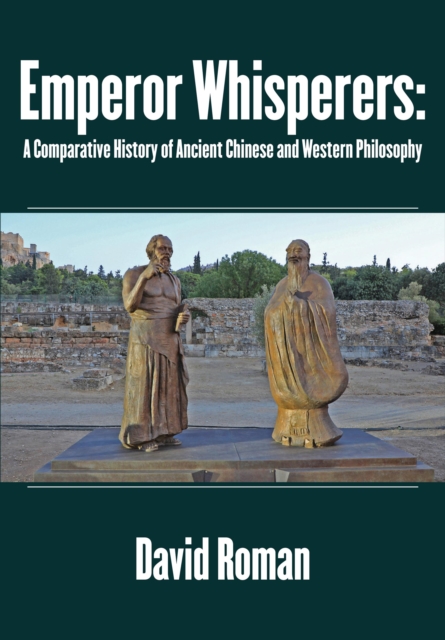
Emperor Whisperers
Emperor Whisperers charts a comparative history of the two largest strains of ancient philosophy, from the first millennium BC to around AD 500. The book examines how
philosophy arose from atheism in both China and Greece but entered a cul de sac when atheism spread from the elites to the middle classes. China's philosophy evolved to oppose law with morals, which created a mandarin class of \"emperor whisperers, \" while Western philosophy was complicated by competing political systems that were only harmonized by the triumph of the Roman Empire. As antiquity came to an end, imported new religions – Buddhism and Christianity – reintroduced faith into elite thought and kickstarted the Middle Ages.
eBook


Spectacles of Truth in Classical Greek Philosophy
In fourth-century Greece (BCE), the debate over the nature of philosophy generated a novel claim: that the highest form of wisdom is theoria, the rational 'vision' of metaphysical truths (the 'spectator theory of knowledge'). This 2004 book offers an original analysis of the construction of 'theoretical' philosophy in fourth-century Greece. In the effort to conceptualise and legitimise theoretical philosophy, the philosophers turned to a venerable cultural practice: theoria (state pilgrimage). In this practice, an individual journeyed abroad as an official witness of sacralized spectacles. This book examines the philosophic appropriation and transformation of theoria, and analyses the competing conceptions of theoretical wisdom in fourth-century philosophy. By tracing the link between traditional and philosophic theoria, this book locates the creation of theoretical philosophy in its historical context, analysing theoria as a cultural and an intellectual practice. It develops a new, interdisciplinary approach, drawing on philosophy, history and literary studies.
eBook


The Mechanical Hypothesis in Ancient Greek Natural Philosophy
It has long been thought that the ancient Greeks did not take mechanics seriously as part of the workings of nature, and that therefore their natural philosophy was both primitive and marginal. In this book Sylvia Berryman challenges that assumption, arguing that the idea that the world works 'like a machine' can be found in ancient Greek thought, predating the early modern philosophy with which it is most closely associated. Her discussion ranges over topics including balancing and equilibrium, lifting water, sphere-making and models of the heavens, and ancient Greek pneumatic theory, with detailed analysis of thinkers such as Aristotle, Archimedes, and Hero of Alexandria. Her book shows scholars of ancient Greek philosophy why it is necessary to pay attention to mechanics, and shows historians of science why the differences between ancient and modern reactions to mechanics are not as great as was generally thought.
eBook