
Catalogue Search | MBRL


Are you sure you want to remove the book from the shelf?

{{itemTitle}}
28
result(s) for
"Romanies -- Europe -- Economic conditions"
Sort by:

Mapping the invisible : Eu-Roma Gypsies
\"Mapping the Invisible: EU-Roma Gypsies takes the reader on a visual journey across Europe with a focus on its fastest-growing ethnic minority: the Roma. This publication is the result of a unique partnership called EU-ROMA, formed by a group of architects, designers and artists wishing to raise awareness of the diversity and richness of the Roma people. The book shows us the EU-ROMA projects conducted together with the gypsy communities in Romania, Greece, Italy and the UK\"--Pub. website.
BOOK

Romani politics in contemporary Europe : poverty, ethnic mobilization, and the neoliberal order
This book examines experiences of Romani political participation in eastern and western Europe, providing an understanding of the emerging political space that over 8 million Romani citizens occupy within the EU, and addressing issues related to the socio-political circumstances of Romani communities within European countries.
eBook


Roma and the transition in Central and Eastern Europe : trends and challenges
Poverty among the Roma minority is one of the most challenging development issues facing the countries of Central and Eastern Europe. Conditions have deteriorated more severely for Roma than for others, and Roma have been poorly positioned to take advantage of emerging economic and civic opportunities. Poverty among Roma is multi-dimensional and related to a broad range of factors, including poor health and educational status, and limited chances in the labor market, as well as discrimination and unique aspects of the social organization of Roma society, which together contribute to their exclusion. Addressing the challenges facing the Roma is central to the success of economic transition and is an integral part of the process of building cohesive and inclusive societies in the region. In particular, the European Union accession process is focusing attention on the conditions of the Roma and increasing international involvement, providing an unprecedented window of opportunity for tackling issues through programs and projects. This report represents the World Bank ' s first significant contribution to Roma issues. It was written in the context of a broader study of poverty in the transitional countries and brings together the existing data to develop a picture of the poverty and human development challenges facing the Roma. It also draws upon new qualitative studies of Roma communities to bring the experiences and perspectives of Roma themselves into the discussion.
eBook

Being fair, faring better
Many Roma are among the poorest and most vulnerable Europeans, facing poverty, exclusion, and discrimination. In European Union member countries in Central and Eastern Europe (CEE) with substantial Roma populations, inequalities between Roma and non-Roma start early and are striking. Some of these inequalities reflect hard-wired family circumstances. For example, a Roma child is much more likely to grow up in a household at the very bottom of the income distribution, or have parents with little or no education. Other inequalities reflect limited opportunities such as access to basic goods and services (e.g., quality education and adequate living conditions), which are necessary not only for realizing ones potential in life, but also for living with dignity. This book focuses on identifying pathways to promote fair chances for disadvantaged Roma in CEE countries. Investing early, by promoting good nutrition, cognitive child development, and access to quality education is a policy with recognized high returns, especially for disadvantaged children.
eBook

Roma in an expanding Europe : breaking the poverty cycle
Roma are the largest minority group in Europe and are the major poverty risk group in Central and Eastern Europe. Poverty rates from recent World Bank poverty studies are striking. In Bulgaria, Roma were found to be ten times more likely to be poor than ethnic Bulgarians. Roma also comprise an increasing share of the population in ECA countries, because of higher birth rates. These dynamics have gained international attention, and the European Union accession process, in particular, has focused attention on the issue. Governments and international institutions have been eager to support initiatives to address the needs of Roma. However, the lack of credible information on the actual living conditions of Roma and the absence of program evaluations have provided substantial obstacles.This book brings together original sociological research, evaluations of programs, and the first comparative cross-country household survey on ethnicity and poverty. It finds that Roma poverty is multi-faceted and can only be addressed by a comprehensive policy approach that attends to all dimensions of Roma social exclusion. It proposes an inclusive policy approach which would expand and promote Roma involvement and participation in mainstream society, while maintaining cultural and social identity and autonomy. Policy mechanisms include those which make existing policies more accessible to Roma and identifying areas where targeted initiatives are needed.
eBook

Being fair, faring better : promoting equality of opportunity for marginalized Roma
Many Roma are among the poorest and most vulnerable Europeans, facing poverty, exclusion, and discrimination. In European Union member countries in Central and Eastern Europe (CEE) with substantial Roma populations, inequalities between Roma and non-Roma start early and are striking. Some of these inequalities reflect hard-wired family circumstances. For example, a Roma child is much more likely to grow up in a household at the very bottom of the income distribution, or have parents with little or no education. Other inequalities reflect limited opportunities such as access to basic goods and services (e.g., quality education and adequate living conditions), which are necessary not only for realizing ones potential in life, but also for living with dignity. This book focuses on identifying pathways to promote fair chances for disadvantaged Roma in CEE countries. Investing early, by promoting good nutrition, cognitive child development, and access to quality education is a policy with recognized high returns, especially for disadvantaged children
Book

Materializing difference : consumer culture, politics, and ethnicity among Romanian Roma
How do objects mediate human relationships, and possess their own social and political agency? What role does material culture – such as prestige consumption as well as commodity aesthetics, biographies, and ownership histories – play in the production of social and political identities, differences, and hierarchies? How do (informal) consumer subcultures of collectors organize and manage themselves? Drawing on theories from anthropology and sociology, specifically material culture, consumption, museum, ethnicity, and post-socialist studies, Materializing Difference addresses these questions via analysis of the practices and ideologies connected to Gabor Roma beakers and roofed tankards made of antique silver. The consumer subculture organized around these objects – defined as ethnicized and gendered prestige goods by the Gabor Roma living in Romania – is a contemporary, second-hand culture based on patina-oriented consumption.
Materializing Difference reveals the inner dynamics of the complex relationships and interactions between objects (silver beakers and roofed tankards) and subjects (Romanian Roma) and investigates how these relationships and interactions contribute to the construction, materialization, and reformulation of social, economic, and political identities, boundaries, and differences. It also discusses how, after 1989, the political transformation in Romania led to the emergence of a new, post-socialist consumer sensitivity among the Gabor Roma, and how this sensitivity reshaped the pre-regime-change patterns, meanings, and value preferences of prestige consumption.
eBook
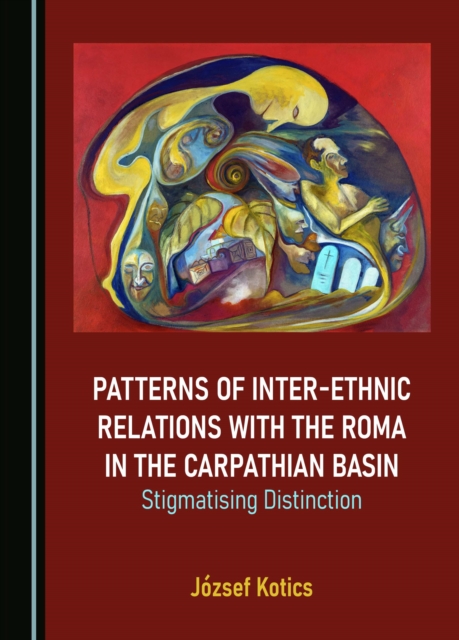
Patterns of Inter-Ethnic Relations with the Roma in the Carpathian Basin
Almost three decades of anthropological fieldwork on ethnic coexistence situations, completed by the author of the present volume, have revealed that in the multi-ethnic local communities of the Carpathian Basin, Roma-non-Roma coexistence practices are always based on opposition, regardless of whether the latter are Romanians, Saxons, Slovaks, Ukrainians or Hungarians. After presenting the theoretical-methodological framework and historical processes, this book presents patterns of Roma-non-Roma coexistence that emerge through case studies, which can be directly applied in the fight against the exclusion and stigmatisation of the Roma today. Thus, the book discusses two applied anthropology projects where research results have been used in urban regeneration and development projects. It interprets cannibalism charges against Gypsies as a typical type of chimerical prejudice. Through the case studies, it contributes to existing research by interpreting the coexistence of different ethnicities in the local socio-historical context, in the local embeddedness of inter-ethnic relations, as a constantly evolving and changing phenomenon, focusing on the performativity, dynamic interaction and functional role of relations.
eBook

Association of socioeconomic disadvantage and ethnicity with perinatal neonatal, and infant mortality in Slovakia
Background
Infant mortality rates are reliable indices of the child and general population health status and health care delivery. The most critical factors affecting infant mortality are socioeconomic status and ethnicity. The aim of this study was to assess the association between socioeconomic disadvantage, ethnicity, and perinatal, neonatal, and infant mortality in Slovakia before and during the COVID-19 pandemic.
Methods
The associations between socioeconomic disadvantage (educational level, long-term unemployment rate), ethnicity (the proportion of the Roma population) and mortality (perinatal, neonatal, and infant) in the period 2017–2022 were explored, using linear regression models.
Results
The higher proportion of people with only elementary education and long-term unemployed, as well as the higher proportion of the Roma population, increases mortality rates. The proportion of the Roma population had the most significant impact on mortality in the selected period between 2017 and 2022, especially during the COVID-19 pandemic (2020–2022).
Conclusions
Life in segregated Roma settlements is connected with the accumulation of socioeconomic disadvantage. Persistent inequities between Roma and the majority population in Slovakia exposed by mortality rates in children point to the vulnerabilities and exposures which should be adequately addressed by health and social policies.
Journal Article