
Catalogue Search | MBRL


Are you sure you want to remove the book from the shelf?

{{itemTitle}}
23,898
result(s) for
"Romanies."
Sort by:

Another darkness, another dawn : a history of Gypsies, Roma and Travellers
'Another Darkness, Another Dawn' charts the history of Gypsies, Roma and Travellers - some of the most marginalised and vilified people in society - through time and place, from 15th century India to modern-day Europe.
Book

Materializing difference : consumer culture, politics, and ethnicity among Romanian Roma
How do objects mediate human relationships, and possess their own social and political agency? What role does material culture – such as prestige consumption as well as commodity aesthetics, biographies, and ownership histories – play in the production of social and political identities, differences, and hierarchies? How do (informal) consumer subcultures of collectors organize and manage themselves? Drawing on theories from anthropology and sociology, specifically material culture, consumption, museum, ethnicity, and post-socialist studies, Materializing Difference addresses these questions via analysis of the practices and ideologies connected to Gabor Roma beakers and roofed tankards made of antique silver. The consumer subculture organized around these objects – defined as ethnicized and gendered prestige goods by the Gabor Roma living in Romania – is a contemporary, second-hand culture based on patina-oriented consumption.
Materializing Difference reveals the inner dynamics of the complex relationships and interactions between objects (silver beakers and roofed tankards) and subjects (Romanian Roma) and investigates how these relationships and interactions contribute to the construction, materialization, and reformulation of social, economic, and political identities, boundaries, and differences. It also discusses how, after 1989, the political transformation in Romania led to the emergence of a new, post-socialist consumer sensitivity among the Gabor Roma, and how this sensitivity reshaped the pre-regime-change patterns, meanings, and value preferences of prestige consumption.
eBook


Roma-Gypsy Presence in the Polish-Lithuanian Commonwealth
This is an analysis of 166 original and previously unpublished documents dating from the very first mention of a Gypsy in 1401 up to the year 1 765. These documents range from royal decrees thru lawsuits to entries in municipal records. Some were written in Polish but many are in Latin, German or Ruthenian. They tell the story of not only the Gypsies living in Poland, but also of those who now live in Belarus, Lithuania, Latvia and Ukraine. Though Poland has not traditionally had a large Roma population, the author leads the reader through an eventful history of a people living on the margins of contemporary Europe. The historic documents illustrate a marked contrast to present stereotypes and popular media images and shows how the position of Roma/Gypsies shifted gradually from respected, wealthy and partly settled citizens of the early modern times, towards criminalized vagrants of the 18 th century. This is a careful interpretation and re-interpretation of documents pertaining to the Roma's past that will provide an enlightening historical perspective towards the re-evaluation and self-definition of the Romani people in contemporary Europe.
eBook

Mapping the invisible : Eu-Roma Gypsies
\"Mapping the Invisible: EU-Roma Gypsies takes the reader on a visual journey across Europe with a focus on its fastest-growing ethnic minority: the Roma. This publication is the result of a unique partnership called EU-ROMA, formed by a group of architects, designers and artists wishing to raise awareness of the diversity and richness of the Roma people. The book shows us the EU-ROMA projects conducted together with the gypsy communities in Romania, Greece, Italy and the UK\"--Pub. website.
BOOK

Home-land : Romanian Roma, domestic spaces and the state
In contemporary society, passport checks at nation-state borders are accepted. But what if these checks were happening in our own home? This book is the first intimate ethnography of these governing encounters in the home space between Romanian Roma migrants and local frontline workers. Focusing on how the nation-state is reproduced within the home, the book considers what it is like to have your legal status and your right to ‘belong’ judged from your everyday domestic life. In essence this book is about the divide between state and family, home-land and home and what it means for the new rules of citizenship.
eBook


ROMANI (IMMOBILITY, BETWEEN CAMPS, EVICTIONS AND AMBIVALENT REPRESENTATIONS OF 'NOMADS' IN THE ETERNAL CITY
This paper explores the trajectories of Bosnian Romani families who migrated to Rome between 1970 and 2000. These families were involved in the Italian and Roman authorities' attempts to govern 'Gypsies/Roma/ Nomads' through different combinations of inclusion and exclusion, and forced to face the radicalisation of xenophobic and anti-Gypsy discourses within Italian society. This paper unravels the complex relations between Romani practices and ideological elaborations of mobility and stability; different and ambiguous ideas of 'Nomads' as constructed and deployed by the Roman authorities; and the consequent sedentarisation and nomadisation processes of the Romani population living in the Eternal City.
Journal Article

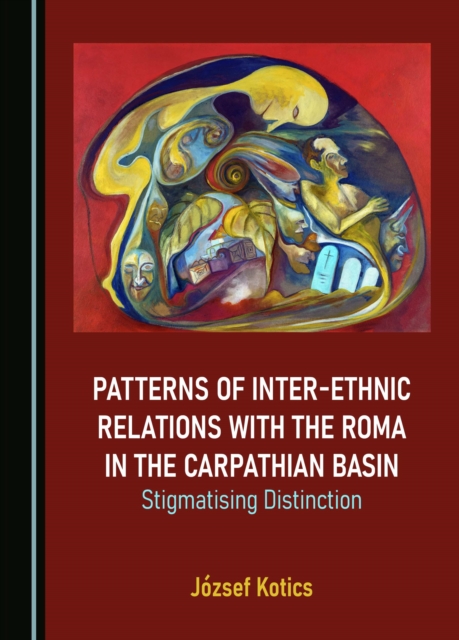
Patterns of Inter-Ethnic Relations with the Roma in the Carpathian Basin
Almost three decades of anthropological fieldwork on ethnic coexistence situations, completed by the author of the present volume, have revealed that in the multi-ethnic local communities of the Carpathian Basin, Roma-non-Roma coexistence practices are always based on opposition, regardless of whether the latter are Romanians, Saxons, Slovaks, Ukrainians or Hungarians. After presenting the theoretical-methodological framework and historical processes, this book presents patterns of Roma-non-Roma coexistence that emerge through case studies, which can be directly applied in the fight against the exclusion and stigmatisation of the Roma today. Thus, the book discusses two applied anthropology projects where research results have been used in urban regeneration and development projects. It interprets cannibalism charges against Gypsies as a typical type of chimerical prejudice. Through the case studies, it contributes to existing research by interpreting the coexistence of different ethnicities in the local socio-historical context, in the local embeddedness of inter-ethnic relations, as a constantly evolving and changing phenomenon, focusing on the performativity, dynamic interaction and functional role of relations.
eBook