
Catalogue Search | MBRL


Are you sure you want to remove the book from the shelf?

{{itemTitle}}
460
result(s) for
"Romans Great Britain"
Sort by:

Artefacts in Roman Britain : their purpose and use
\"Roman Britain has given us an enormous number of artefacts. Yet few books available today deal with its whole material culture as represented by these artefacts. This introduction, aimed primarily at students and general readers, begins by explaining the process of identifying objects of any period or material. A series of themed chapters, written by experts in their particular area of interest, then discusses artefacts from the point of view of their use. The contributors' premise is that every object was designed for a particular purpose, which may have been to satisfy a general need or the specific need of an individual. If the latter, the maker, the owner and the end user may have been one and the same person; if the former, the manufacturer had to provide objects that others would wish to purchase or exchange. Understanding this reveals a fascinating picture of life in Roman Britain\"-- Provided by publisher.
Book
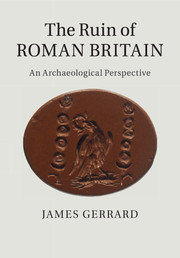
The Ruin of Roman Britain
How did Roman Britain end? This new study draws on fresh archaeological discoveries to argue that the end of Roman Britain was not the product of either a violent cataclysm or an economic collapse. Instead, the structure of late antique society, based on the civilian ideology of paideia, was forced to change by the disappearance of the Roman state. By the fifth century elite power had shifted to the warband and the edges of their swords. In this book Dr Gerrard describes and explains that process of transformation and explores the role of the 'Anglo-Saxons' in this time of change. This profound ideological shift returned Britain to a series of 'small worlds', the existence of which had been hidden by the globalizing structures of Roman imperialism. Highly illustrated, the book includes two appendices, which detail Roman cemetery sites and weapon trauma, and pottery assemblages from the period.
eBook

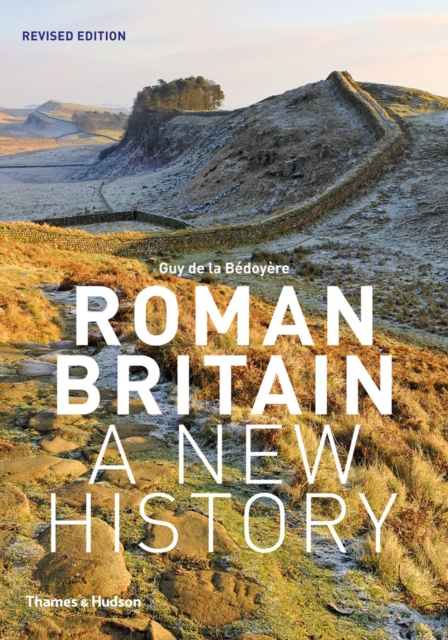
Roman Britain
Superbly illustrated throughout, this illuminating account of Britain as a Roman province includes dramatic aerial views of Roman remains, reconstruction drawings and images of Roman villas, mosaics, coins, pottery and sculpture. The text has been updated to incorporate the latest research and recent discoveries.
eBook
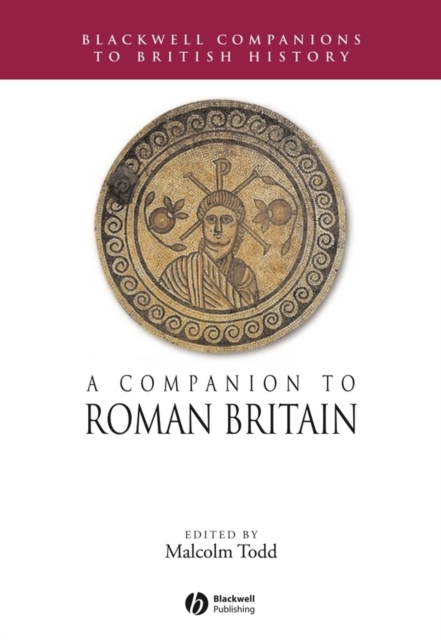
A companion to Roman Britain
This major survey of the history and culture of Roman Britain spans the period from the first century BC to the fifth century AD.Major survey of the history and culture of Roman Britain Brings together specialists to provide an overview of recent debates about this period Exceptionally broad coverage, embracing political, economic, cultural and.
eBook

Late Roman towns in Britain : rethinking change and decline
\"This book is a reassessment of the changes that occurred in the towns of Britain in the later Roman period, around the late third, fourth and early fifth centuries A.D. It is commonly argued that these changes represent decline in the later Roman Empire but this book suggests alterniative ways of interpreting late Roman towns and demonstrates that there are more positive ways of understanding late Roman archaeology. This is a much needed reanalysis bringing new understanding to this crucial period of history\"--Provided by publisher.
Book

Hadrian's Wall and the End of Empire
There is no synthetic or comprehensive treatment of any late Roman frontier in the English language to date, despite the political and economic significance of the frontiers in the late antique period. Examining Hadrian's Wall and the Roman frontier of northern England from the fourth century into the Early Medieval period, this book investigates a late frontier in transition from an imperial border zone to incorporation into Anglo-Saxon kingdoms, using both archaeological and documentary evidence. With an emphasis on the late Roman occupation and Roman military, it places the frontier in the broader imperial context.
In contrast to other works, Hadrian's Wall and the End of Empire challenges existing ideas of decline, collapse, and transformation in the Roman period, as well as its impact on local frontier communities. Author Rob Collins analyzes in detail the limitanei, the frontier soldiers of the late empire essential for the successful maintenance of the frontiers, and the relationship between imperial authorities and local frontier dynamics. Finally, the impact of the end of the Roman period in Britain is assessed, as well as the influence that the frontier had on the development of the Anglian kingdom of Northumbria.
eBook

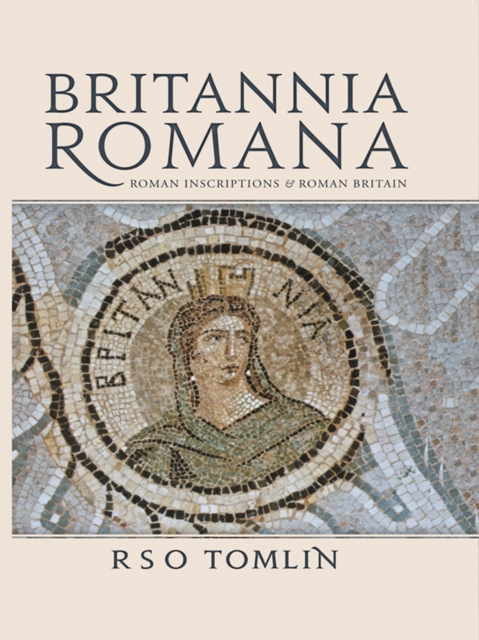
Britannia Romana
Britannia Romana: Roman Inscriptions and Roman Britain is based on the author’s 40 years’ experience of the epigraphy of Roman Britain. It collects 487 inscriptions (mostly on stone, but also on metal, wood, tile and ceramic), the majority from Britain but many from other Roman provinces and Italy, so as to illustrate the history and character of Roman Britain (AD 43–410). Each inscription is presented in the original (in Latin, except for eight in Greek), followed by a translation and informal commentary; they are linked by the narrative which they illustrate, and more than half (236) are accompanied by photographs. All Latin terms in the narrative and commentary are translated and explained. The authordemonstrates his unrivalled ability to read and understand Roman inscriptions and their importance as a source of historical knowledge. They are treated by chronology or theme in 14 chapters. The first eight take the narrative from Claudius’ invasion (AD 43) to the death of the last emperor to attempt the conquest of Britain, Septimius Severus (AD 211). The next four cover the general themes of soldier and civilian, economy and society, government, religion. The last two continue the narrative to the death of the last emperor to rule Roman Britain, Constantine III (AD 411).
eBook