
Catalogue Search | MBRL


Are you sure you want to remove the book from the shelf?

{{itemTitle}}
6
result(s) for
"Rome (Italy) Social life and customs Congresses."
Sort by:

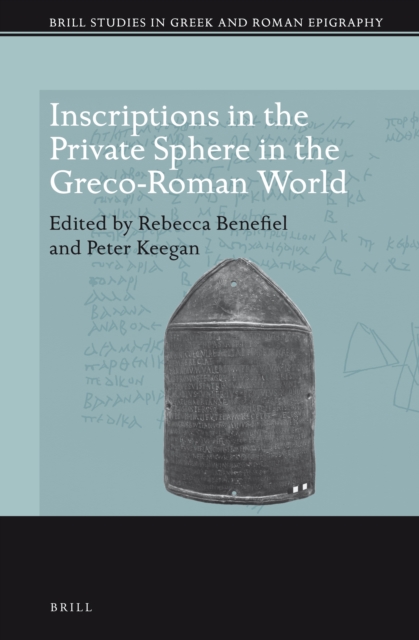
Inscriptions in the Private Sphere in the Greco-Roman World
From ancient Spain to Italy to Dura Europus, Inscriptions in the Private Sphere in the Greco-Roman World provides a series of case studies illustrating the variety and importance of writing in private spaces in antiquity.
eBook
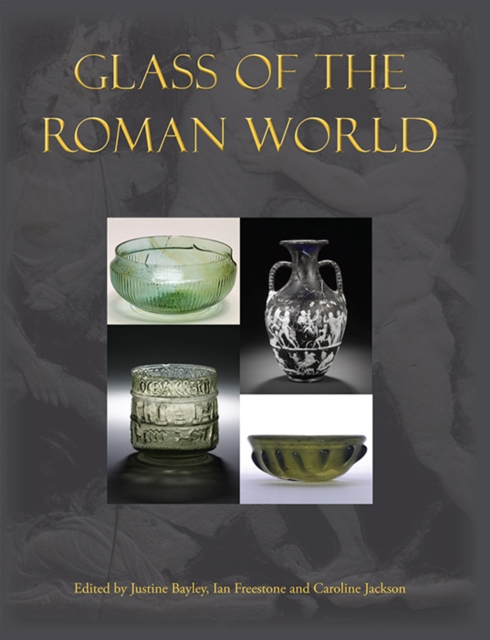
Glass of the Roman World
Glass of the Roman World illustrates the arrival of new cultural systems, mechanisms of trade and an expanded economic base in the early 1st millennium AD which, in combination, allowed the further development of the existing glass industry. Glass became something which encompassed more than simply a novel and highly decorative material. Glass production grew and its consumption increased until it was assimilated into all levels of society, used for display and luxury items but equally for utilitarian containers, windows and even tools. These 18 papers by renowned international scholars include studies of glass from Europe and the Near East. The authors write on a variety of topics where their work is at the forefront of new approaches to the subject. They both extend and consolidate aspects of our understanding of how glass was produced, traded and used throughout the Empire and the wider world drawing on chronology, typology, patterns of distribution, and other methodologies, including the incorporation of new scientific methods. Though focusing on a single material the papers are firmly based in its archaeological context in the wider economy of the Roman world, and consider glass as part of a complex material culture controlled by the expansion and contraction of the Empire. The volume is presented in honor of Jenny Price, a foremost scholar of Roman glass.
eBook
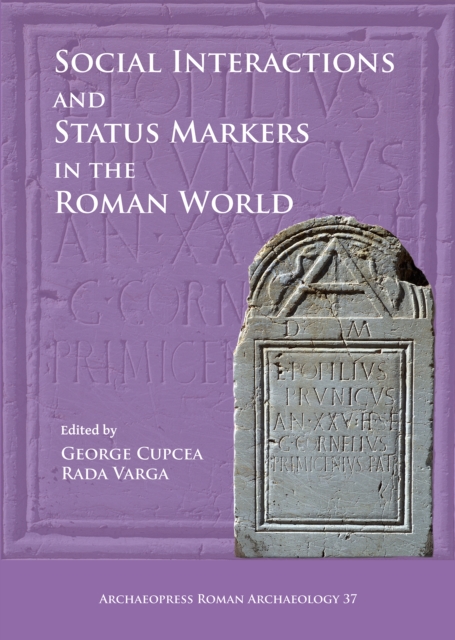
Social Interactions and Status Markers in the Roman World
Proceedings from the 'People of the Ancient World' conference held in Cluj-Napoca, Romania in 2016. Ten papers encompass diverse approaches to Roman provincial populations and the corresponding case-studies highlight the multi-faceted character of Roman society.
eBook


The Roman family in the empire : Rome, Italy, and beyond
This book examines family life in the Roman empire and Italy, focusing on the influence of Rome on provincial family structure and attitudes towards family life as well as regional differences in family structure, forms of marriage, and kinship patterns. The chapters cover Roman Egypt, Judaea, Spain, Gaul, North Africa, and Pannonia, and make use of both conventional textual sources and epigraphic evidence, as well as material that is less frequently treated, such as the medical writers and the Justinianic receipts. Notions surrounding the family are explored in the abstract and in reality, such as the idea of family as used in the forensic works of Cicero as a touchstone for elite morality, especially for men, and how the social family norms of pietas and affection informed the identity of the Roman nobility. A discussion of family portrait groups on Republican and early imperial funerary commemoration takes up the same set of attitudes toward family life and shows how the emerging urban middle class of Italy, former slaves in Rome and citizens of mixed origins in Cisalpine Gaul, used family imagery to position themselves in the mainstream culture. There is also a chapter on the harder side of ancient family life in a survey of diseases and treatments of illnesses, thus retrieving a sobering dimension of ancient experience which is radically different from the modern. The remaining chapters look at family life in the Roman world outside Italy in a systematic way focusing on specific regions.
eBook