
Catalogue Search | MBRL


Are you sure you want to remove the book from the shelf?

{{itemTitle}}
55
result(s) for
"Rome Intellectual life."
Sort by:


Valorizing the Barbarians : enemy speeches in Roman historiography
Comparing and contrasting speeches attributed to barbarian leaders by ancient Roman historians, this book offers a systematic examination of the ways in which those historians valorized foreigners and presented criticisms of their own society.
eBook


Intertextuality and the Reading of Roman Poetry
How can we explain the process by which a literary text refers to another text? For the past decade and a half, intertextuality has been a central concern of scholars and readers of Roman poetry. In Intertextuality and the Reading of Roman Poetry, Lowell Edmunds proceeds from such fundamental concepts as author, text, and reader, which he then applies to passages from Vergil, Horace, Ovid, and Catullus. Edmunds combines close readings of poems with analysis of recent theoretical models to argue that allusion has no linguistic or semiotic basis: there is nothing in addition to the alluding words that causes the allusion or the reference to be made. Intertextuality is a matter of reading.
eBook

Populus : living and dying in ancient Rome
\"Living in ancient Rome was one of the most intense experiences in human history. It was also superbly and vividly recorded by Rome's historians and poets, who were acutely aware of the seething and voluptuous nature of the city that ruled the known world. Populus takes the reader on a compelling journey through the landscape of politics, crime, domestic life, faith, sex, entertainment, cuisine, disease, and inequality experienced daily by Roman people of all social strata. Revealing what it meant to eke out an existence in servitude, live in luxury in the imperial palaces, enjoy a day at the races, riot in the streets, make do in a tenement block, plot to assassinate an emperor, worship any one of a multitude of gods, witness an imperial triumph, and commemorate the dead, this powerful story of the people of ancient Rome is Guy de la Bédoyère's homage to a civilization that has fascinated him for half a century\"-- Provided by publisher.
Book
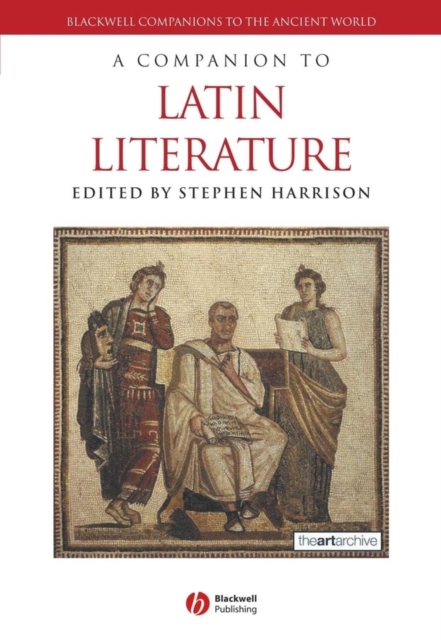
A Companion to Latin Literature
A Companion to Latin Literature gives an authoritative account of Latin literature from its beginnings in the third century BC through to the end of the second century AD. Provides expert overview of the main periods of Latin literary history, major genres, and key themes Covers all the major Latin works of prose and poetry, from Ennius to Augustine, including Lucretius, Cicero, Catullus, Livy, Vergil, Seneca, and Apuleius Includes invaluable reference material - dictionary entries on authors, chronological chart of political and literary history, and an annotated bibliography Serves as both a discursive literary history and a general reference book
eBook


A Companion to Early Modern Rome, 1492-1692
Winner of the 2020 Bainton Prize for Reference Works A Companion to Early Modern Rome, 1492-1692, edited by Pamela M. Jones, Barbara Wisch, and Simon Ditchfield, is a unique multidisciplinary study offering innovative analyses of a wide range of topics. The 30 chapters critique past and recent scholarship and identify new avenues for research.
eBook


Sallust and the Fall of the Republic
This book offers a new interpretation of the Roman historian Sallust: it reads his works as complex and engaged contributions to the intellectual life of his period, offering a coherent and contemporary perspective on the end of the Roman Republic.
eBook