
Catalogue Search | MBRL


Are you sure you want to remove the book from the shelf?

{{itemTitle}}
1,142
result(s) for
"Roofs Design and construction."
Sort by:

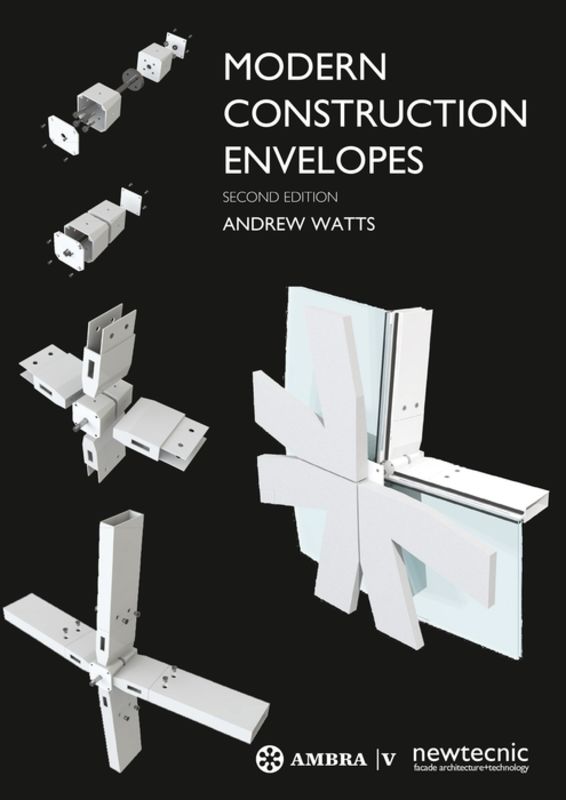
Modern Construction Envelopes
The second edition of Modern Construction Envelopes was originally based on the two books by Andrew Watts, Modern Construction Roofs and Modern Construction Facades.Both volumes were gathered into one single volume and consolidated in terms of content, which permits the consideration of facades and roofs as envelopes.
eBook

Green Roof Retrofit
A deep understanding of the implications of green roof retrofit is required amongst students and practitioners to make the decisions and take the actions needed to mitigate climate changes. Green Roof Retrofit: building urban resilience illustrates the processes undertaken to develop this new knowledge and thereby embed a deeper level of understanding in readers.Illustrative case studies and exemplars are drawn from countries outside of the core researched areas to demonstrate the application of the knowledge more broadly. Examples are used from the Americas (North and South and Canada), Oceania, Asia and other European countries.The book describes the multiple criteria which inform decision making and how this provides a way forward for making better decisions about green roof retrofit in different countries and climates.
eBook


Roof construction manual : pitched roofs
The Roof Construction Manual is a comprehensive reference work on the construction of pitched roofs, containing over 1800 plans and 220 photographs. Thirteen fundamental roof types and the relevant materials including thatch, wood, slate, tile, concrete, fibrous cement, bitumen, glass, metal, membranes, and synthetic materials are documented in detail.
eBook
Roof watching
The aim of the Watching series is to draw attention to some of the very interesting items around us, things that perhaps we don't notice as much as we might. The first was Bridge Watching, and when this was put \"on the Net\" it produced, to the surprise of the author, such a pleasant flood of e-mail that another was written, called Water Watching. This, too, was kindly received. So it was tempting to continue with the theme. Roof Watching is an invitation to look at the top covering of buildings! Our eyes are set in our faces so that they look horizontally. Hence, in the ordinary way, people mostly look straight ahead, and don't look up as much as they might. If they did this too much they might not see objects at ground level, and so bump into things, of course; on the other hand, there is a good deal above eye level that is worth seeing. It is not only the outside of a roof that is of interest. Inside they're all sorts of intriguing things. If you hadn't thought much about it before, you may be surprised at what goes on inside the roof space, and what holds it all up. So, inside and outside, the roof is worth some attention, not only when complete, but during its construction, too. A building site can be worth a visit at any stage of the construction. It is particularly so when the roof is being built. The variety of shapes, textures, and colours of the covering provides a fascinating display to delight the eye and enchant the enquiring mind. Knowing something of the \"why\" and the \"how\" can add much to the absorbing pastime of just looking at roofs.
eBook

Energy Efficiency in Biophilic Architecture: A Systematic Literature Review and Visual Analysis Using CiteSpace and VOSviewer
The advent and application of biophilic architecture bring numerous environmental, economic, and energy-efficiency benefits, playing a crucial role in advancing low-carbon, energy-saving, healthy, comfortable, and sustainable development within the construction industry. Thanks to its many advantages—such as aesthetic enhancement, improved microclimates, and negative carbon potential—biophilic architecture has been widely adopted in building design, particularly as a response to the escalating environmental crisis. Integrating plants with various architectural forms can optimize building performance, especially by reducing operational energy consumption. This study uses knowledge mapping tools like CiteSpace 6.1.R3 and VOSviewer 1.6.19 to analyze 2309 research papers from the Web of Science (WoS) published over the past decade on the topic of “energy efficiency in biophilic architecture”. It conducts visual analyses of publication trends, collaborative networks, and key themes. The research categorizes plant–architecture integration methods, focusing on three primary areas: green roofs, vertical green systems, and green photovoltaic systems. Additionally, it reviews the ways in which biophilic architecture contributes to energy savings, the research methodologies employed, energy-saving rates, and the factors influencing these outcomes. Finally, a SWOT framework is constructed to assess the strengths, weaknesses, opportunities, and potential threats of biophilic architecture, as well as its future development prospects. The findings indicate that integrating plants with building roofs is an effective energy-saving strategy, achieving energy savings of up to 70%. Furthermore, combining biophilic elements with photovoltaic systems can enhance the efficiency of solar energy generation. This study offers valuable insights for architects and researchers in designing more energy-efficient and sustainable buildings.
Journal Article

Criteria development for sustainable construction manufacturing in Construction Industry 4.0
PurposeThis paper aims to present the sustainable performance criteria for 3D printing practices, while reporting the primarily computations and lab experimentations. The potential advantages for integrating three-dimensional (3D) printing into house construction are significant in Construction Industry 4.0; these include the capacity for mass customisation of designs and parameters for functional and aesthetic purposes, reduction in construction waste from highly precise material placement and the use of recycled waste products in layer deposition materials. With the ultimate goal of improving construction efficiency and decreasing building costs, applying Strand7 Finite Element Analysis software, a numerical model was designed specifically for 3D printing in a cement mix incorporated with recycled waste product high-density polyethylene (HDPE) and found that construction of an arched truss-like roof was structurally feasible without the need for steel reinforcements.Design/methodology/approachThe research method consists of three key steps: design a prototype of possible structural layouts for the 3DSBP, create 24 laboratory samples using a brittle material to identify operation challenges and analyse the correlation between time and scale size and synthesising the numerical analysis and laboratory observations to develop the evaluation criteria for 3DSBP products. The selected house consists of layouts that resemble existing house such as living room, bed rooms and garages.FindingsSome criteria for sustainable construction using 3DP were developed. The Strand7 model results suggested that under the different load combinations as stated in AS1700, the maximum tensile stress experienced is 1.70 MPa and maximum compressive stress experienced is 3.06 MPa. The cement mix of the house is incorporated with rHDPE, which result in a tensile strength of 3 MPa and compressive strength of 26 MPa. That means the house is structurally feasible without the help of any reinforcements. Investigations had also been performed on comparing a flat and arch and found the maximum tensile stress within a flat roof would cause the concrete to fail. Whereas an arch roof had reduced the maximum tensile stress to an acceptable range for concrete to withstand loadings. Currently, there are a few 3D printing techniques that can be adopted for this purpose, and more advanced technology in the future could eliminate the current limitation on 3D printing and bring forth this idea as a common practice in house construction.Originality/valueThis study provides some novel criteria for evaluating a 3D printing performance and discusses challenges of 3D utilisation from design and managerial perspectives. The criteria are relied on maximum utility and minimum impact pillars which can be used by scholars and practitioners to measure their performance. The criteria and the results of the computation and experimentation can be considered as critical benchmarks for future practices.
Journal Article

The influence of a green roof drainage layer on retention capacity and leakage quality
The aim of the research was to determine the influence of the substrate and different drainage materials on retention capacity and runoff water quality from three green roof containers. Phosphates were chosen as the water quality indicator based on their potential adverse impact on water quality in urban rainwater collectors. The field experiment was conducted at the Warsaw University of Life Sciences Water Center meteorological station in years 2013–2015. In terms of precipitation, the monitoring period covered a wet (+147.1 mm), average (+42.7 mm) and dry (− 66.3 mm) year. Leakage from the containers was recorded when the substrate moisture exceeded 20% and precipitation exceeded 3.5 mm/d for washed gravel, or 5.0 mm/d for a polypropylene mat and expanded clay. Phosphates were observed in leachates from all containers, with higher values observed in the second year of monitoring. As the result of this study, it can be concluded that the polypropylene mat and aggregates create different conditions for the formation of the leachate, in both volumes and its chemistry. The drainage layer made from a polypropylene mat is the most effective in terms of rainwater retention capacity and the resulting leachate quality.
Journal Article