
Catalogue Search | MBRL


Are you sure you want to remove the book from the shelf?

{{itemTitle}}
4,341
result(s) for
"Rosso"
Sort by:
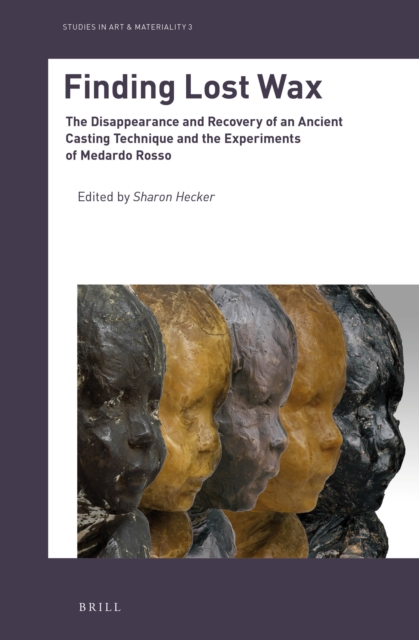
Finding Lost Wax
This book is the first scholarly account of how lost wax casting was forgotten and rediscovered around the world thanks to transmission of know-how by Italian founders in the late nineteenth century. Against this backdrop, Medardo Rosso, an Italian sculptor living in Paris, overturned rules of the technique through creative approaches to serial reproduction. His unusual casts prefigured experiments in casting in the modern era. The volume includes art-historical essays by distinguished scholars on the revival of lost wax casting in different countries and a case study of Rosso's Bambino ebreo series, including scientific analysis and conservation studies.Podcast interview with Sharon Hecker about this book: #HumanitiesMatter - Remodeling a Lost Wax Technique: The Methods of Medardo Rosso (brill.com).
eBook

Application of an Ovate Leaf Shape Model to Evaluate Leaf Bilateral Asymmetry and Calculate Lamina Centroid Location
Leaf shape is an important leaf trait, with ovate leaves common in many floras. Recently, a new leaf shape model (referred to as the MLRF equation) derived from temperature-dependent bacterial growth was proposed and demonstrated to be valid in describing leaf boundaries of many species with ovate leaf shape. The MLRF model’s parameters can provide valuable information of leaf shape, including the ratio of lamina width to length and the lamina centroid location on the lamina length axis. However, the model wasn’t tested on a large sample of a single species, thereby limiting its overall evaluation for describing leaf boundaries, for evaluating lamina bilateral asymmetry and for calculating lamina centroid location. In this study, we further test the model using data from two Lauraceae species, Cinnamomum camphora and Machilus leptophylla , with >290 leaves for each species. The equation was found to be credible for describing those shapes, with all adjusted root-mean-square errors (RMSE) smaller than 0.05, indicating that the mean absolute deviation is smaller than 5% of the radius of an assumed circle whose area equals lamina area. It was also found that the larger the extent of lamina asymmetry, the larger the adjusted RMSE, with approximately 50% of unexplained variation by the model accounted for by the lamina asymmetry, implying that this model can help to quantify the leaf bilateral asymmetry in future studies. In addition, there was a significant difference between the two species in their centroid ratio, i.e., the distance from leaf petiole to the point on the lamina length axis associated with leaf maximum width to the leaf maximum length. It was found that a higher centroid ratio does not necessarily lead to a greater investment of mass to leaf petiole relative to lamina, which might depend on the petiole pattern.
Journal Article

Dengue 1 outbreak in Rosso, northern Senegal, October 2021: entomologic investigations
Senegal has experienced periodic epidemics of dengue in urban areas with increased incidence in recent years. However, few data are available on the local ecology of the epidemic vectors. In October 2021, a dengue outbreak was reported in northern Senegal to the Institute Pasteur de Dakar. Entomologic investigations then were undertaken to identify the areas at risk of transmission and to identify the vector(s). Adult mosquitoes were collected indoors and outdoors at selected households, while containers with water were inspected for mosquito larvae. All the Aedes aegypti (L.) collected were tested for dengue virus NS1 protein using a rapid diagnostic test (RDT), and positive samples were confirmed by real-time RT–PCR. The qRT–PCR positive samples were subjected to whole genome sequencing using Nanopore technology. The majority of the larvae-positive containers (83.1%) were used for water storage. The Breteau and Container indices exceeded the WHO-recommended thresholds for the risk of dengue virus transmission except at 2 localities. Ae. aegypti, the only reputed dengue vector, was collected resting indoors as well as outdoors and biting during the day and night. The NS1 protein was detected in 22 mosquito pools, including one pool of females emerging from field-collected larvae. All NS1-positive results were confirmed by RT-PCR. Virus serotyping showed that the outbreak was caused by DENV-1. This study demonstrates the need for continuous control of adult and aquatic stages of Ae. aegypti to prevent future dengue epidemics in Senegal. RDTs appear to be a promising tool for dengue diagnostics and surveillance. Graphical Abstract
Journal Article

Giovanni Rosso e i suoi fratelli. Due nuovi documenti su una famiglia di stampatori a Venezia tra Quattro e Cinquecento
On the basis of two documents in the State Archives in Venice, it has been possible to trace the genealogy of the Viani family from Lessona, active as printers from the fifteenth to the sixteenth century. After the death of Albertino, his brothers Giovanni Rosso and Bernardino “vercellese” granted various credits held by Albertino’s firm to booksellers and traders in Venice and other towns and cities, including Perugia, Ferrara, Padua, and Bergamo.
Journal Article

Response of Two Local Common Bean Ecotypes of “Fagioli di Sarconi” PGI (Phaseolus vulgaris L.) to Seed-Borne Pathogens and Environmental Change
Among foods protected by the European Union with the PGI (Protected Geographical Indication) mark, several ecotypes of “Fagioli di Sarconi” common beans, typical legumes of Basilicata Region, are included. This work aimed to conduct a survey of seed-borne pathogens isolated from “Ciuoto” and “Cannellino rosso”, ecotypes of “Fagioli di Sarconi” common beans, in two years and cultivation areas of the National Park of the Agri Valley, for identifying resistant and climatic changes well-adapted genotypes. Three validated methods were used for the seed-borne pathogens screening. Eighteen fungi were differently found for ecotype and year of observation by the washing test. Saprophyte contaminants pathogens isolated and detected by the blotter test were strongly reduced by 1% sodium hypochlorite treatment. Using the between paper test, specific for detecting Colletotrichum lindemuthianum, the presence of this pathogen for both ecotypes, years and cultivation areas, and also some bacteria were individuated. Therefore, area-, environment- and ecotype-dependent differences were revealed, probably also caused by a different polyphenolic content and thickness of integument of two ecotypes. This study represents a baseline information for further studies, development of forecasting models and management of seed-borne diseases associated with common beans.
Journal Article

Mineralogical, Petrographic, and Isotopic Analysis of Colored Stones and White Marble from Ancient and Modern Quarries in Mani Peninsula, Southern Greece
This study examines the marble resources of the Mani peninsula, southern Greece, a region that has long been known for its white, gray-black (bigio antico), green (cipollino verde Tenario), and particularly red (rosso antico or lapis Taenarium) and dark (nero antico) marbles. Based on extensive fieldwork, more than 90 quarrying sites were documented, several of which were recorded for the first time. This study provides a systematic characterization of these stones through combined mineralogical, petrographic, and stable isotopic (δ18O, δ13C) analyses of 27 representative samples. The results confirm the presence of calcitic marbles, which vary in color due to hematite in the red varieties, graphite and organic matter in the gray-black and black types, and chlorite in the green marbles. The isotopic results demonstrate a generally high degree of homogeneity, although the red marbles display greater variability, complicating their distinction from analogous stones in Asia Minor, such as those from Iasos and Milas. Quarrying of Mani marbles began in the Bronze Age and reached its peak during Roman times. It continued into the Byzantine period, with renewed exploitation in the 19th and 20th centuries. This study highlights the significant role of Mani in the ancient marble trade and contributes to ongoing debates about the provenance of famous red, white, and black marbles across the Mediterranean. Furthermore, it establishes a strong reference framework, integrating new analytical results with the existing literature, providing an updated mineralogical, petrographic, and isotopic database for provenance studies of marble artifacts.
Journal Article

Analysis of a dengue virus outbreak in Rosso, Senegal 2021
Senegal is hyperendemic for dengue. Since 2017, outbreaks have been noticed annually in many regions around the country, marked by the co-circulation of DENV1-3. On 8 October 2021, a Dengue virus outbreak in the Rosso health post (sentinel site of the syndromic surveillance network) located in the north of the country was notified to the WHO Collaborating Center for arboviruses and hemorrhagic fever viruses at Institut Pasteur de Dakar. A multidisciplinary team was then sent for epidemiological and virologic investigations. This study describes the results from investigations during an outbreak in Senegal using a rapid diagnostic test (RDT) for the combined detection of dengue virus non-structural protein 1 (NS1) and IgM/IgG. For confirmation, samples were also tested by real-time RT-PCR and IgM ELISA at the reference lab in Dakar. qRT-PCR positive samples were subjected to whole genome sequencing using nanopore technology. Virologic analysis scored 102 positives cases (RT-PCR, NS1 antigen detection and/or IgM) out of 173 enrolled patients; interestingly, virus serotyping showed that the outbreak was caused by the DENV-1, a serotype different from DENV-2 involved during the outbreak in Rosso three years earlier, indicating a serotype replacement. Nearly all field-tested NS1 positives samples were confirmed by qRT-PCR with a concordance of 92.3%. Whole genome sequencing and phylogenetic analysis of strains suggested a re-introduction in Rosso of a DENV-1 strain different to the one responsible for the outbreak in the Louga area five years before. Findings call for improved dengue virus surveillance in Senegal, with a wide deployment of DENV antigenic tests, which allow easy on-site diagnosis of suspected cases and early detection of outbreaks. This work highlights the need for continuous monitoring of circulating serotypes which is crucial for a better understanding of viral epidemiology around the country.
Journal Article
Effects of Biodynamic Production on Growth and Essential Oil Content in Basil
The effects of a biodynamic sowing calendar on the growth (plant height, fresh herb yield, nodes number) and quality (percentage of leaf mass, essential oil content) of three basil species,
L.,
×
and
L., represented by the cultivars ‘Rosso’ and ‘Eco Genovese’, were tested. Statistical analyses showed that the species had greater impact on the observed parameters than either the sowing date or the species and sowing date in combination. The species showed a significant influence on all five tested parameters, while sowing date and interaction of both factors significantly influenced plant height, leaf percentage and essential oil content. The best yield per plant was obtained for
. ×
and
.
‘Eco Genovese’. The lowest species
. ×
produced the highest amount of essential oil. »Nodes number« parameter most clearly separated the species, but not the cultivars. Even though
gave the tallest plants, it did not yield either the highest amount of fresh herb or essential oil. This species’ height was most consistent, considering the significant impact of biodynamic rhythm. Sowing date was not crucial for basil fresh yield; however if there is a need for taller plants with a higher percentage of leaf mass and more essential oil, sowing date needs to be controlled.
Journal Article
The afterlife of sculptures: posthumous casts and the case of Medardo Rosso (1858–1928)
Many public institutions and private collectors own casts by Rosso that are now considered to be posthumous. There is no scholarly or institutional consensus about how to label these casts, or whether to display them or circulate them in exhibitions. Rosso's posthumous casts are frequently traded on the art market through intermediaries such as auction houses. Their attribution as 'authentic' works by Rosso is at times avoided, at times questioned, leaving buyers with an uncertain sense of their status and value. This situation persists because Rosso's materials, casting processes, and his ideas about his legacy are not fully understood. Whereas the art market and the law demand from experts a clear answer to the question of authenticity and attribution, I believe that Rosso's case cannot be limited to a binary question, 'whether a work is genuine or fake, either by the artist in question or not by him'.4 A more nuanced approach is necessary.
Journal Article

Milena Auretta Rosso first female Italian neurosurgeon
Although the representation of women in the field of surgery is on the rise, significant challenges remain in achieving gender equality, particularly in neurosurgery, a domain that has historically been dominated by men until relatively recently. The advancements made in this area owe much to trailblazing women like Milena Auretta Rosso, who holds the distinction of being Italy’s first female neurosurgeon. It is crucial to acknowledge their contributions, careers, and the adversities they faced in pursuit of their ambitions. Born in 1943 in Genoa, Italy, Rosso graduated with honors in General Medicine from Sapienza University in Rome in 1969. After completing her medical education at the same institution in 1972, she became the first female neurosurgeon in Italy. Throughout her academic journey, she encountered numerous instances of hostility and misogyny. In 1974, an accident resulted in a broken finger on her right hand, which ultimately ended her neurosurgical career. This pivotal moment led her to redirect her professional path while remaining in the medical field, as she pursued studies in iridology. Currently, she practices in Rome, where she also engages in various conferences and has authored a book.
Journal Article