
Catalogue Search | MBRL


Are you sure you want to remove the book from the shelf?

{{itemTitle}}
292
result(s) for
"Royal Institution"
Sort by:

THE ROLE OF PATRONAGE IN EARLY NINETEENTH-CENTURY SCIENCE, AS EVIDENCED IN LETTERS FROM HUMPHRY DAVY TO JOSEPH BANKS
The recently published Collected edition of Davy's letters throws new light on the importance and modus operandi of Banksian patronage as a means of organizing and promoting science. It demonstrates how dependent on, and manipulative of, Banks's favour Davy's careerism was, despite his later fame as an original genius. Here, I select from the edition some examples that offer new perspectives on how the patronage relationship worked—how Davy fashioned himself to be patronized, as well as how Banks operated as patron. Discussing Davy's activities at the Royal Institution, at the Royal Society and for the Board of Agriculture, I show that his public success allowed him to shift the power balance in this relationship, so that he was able to call upon Banks's support over issues of his choice, and, during the safety lamp affair (1815–18), to cause Banks to take the rare step of entering a scientific controversy in the newspapers. This shift to a highly public medium heralded a significant change: in a new era of widespread industrialization, in which engineers operating outside scientific institutions had increasing scope to put their inventions into production, priority—and the general reputation of scientific knowledge—increasingly needed demonstration before a wider court of public opinion than hitherto. Davy pulled Banks into a new, exposed, position in an expanded and oppositional public sphere. After Banks died, and Davy was no longer a protégé of a powerful patron but was himself in a position to distribute patronage—Banks's successor as President of the Royal Society and Commissioner of the Board of Longitude—the letters reveal the strengths and limitations of Banksian governance in an era in which science was specializing and was increasingly discussed in the national press. Davy rejected some of his predecessor's policies but essentially retained Banks's method of directing science by privately exerting influence and controlling patronage. I suggest that this method was relatively successful at the Royal Society, where Davy managed (uneasily) to incorporate a generation of mathematical savants excluded by Banks; at the Board of Longitude it failed: Davy's efforts to emulate Banks as the promoter of exploration fell foul of institutional intransigence that he had neither power nor influence enough to shift.
Journal Article

Library profile: The Royal Institution of Chartered Surveyors
Fiona Fogden has spent much of her career in law firm libraries, but she has recently taken on the role of Knowledge & Information Service Manager at RICS – the Royal Institution of Chartered Surveyors. So, who better to give LIM an overview of the RICS Knowledge & Information service, describe what the collections contain, and also tell us how the service would be of interest to legal information professionals.
Journal Article
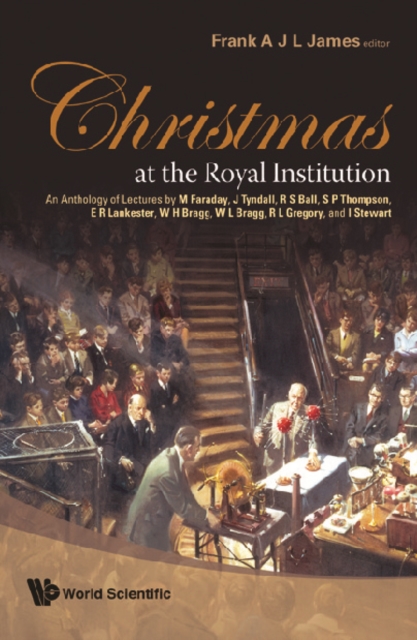
Christmas At The Royal Institution
Since the mid-1820s, a series of lectures has been delivered each year over the Christmas period in the world-famous Faraday Lecture Theatre at The Royal Institution of Great Britain by prominent scientists, addressed specifically to an audience of children. Initially made accessible in book form, the lectures have been nationally televised throughout the UK and distributed worldwide since the 1960s, making them accessible to an even larger audience. The importance of these lectures in promoting science to a broad audience is perhaps best gauged by the fact that an image of one of Faraday's lectures appeared on the Bank of England £20 note in the 1990s.This anthology brings together, for the first time, a carefully chosen selection of 11 lectures from the 1860s to the 1990s. The selection includes lectures by Michael Faraday, arguably the most important and influential 19th-century physicist, and Lawrence Bragg, the youngest ever winner of the Nobel Prize. Through this work, readers will come to grips with the changing nature of popular science lectures over the past 140 years.Sample Chapter(s)Introduction (7,804 KB)Chapter 1: The Correlation of the Physical Forces (957 KB)Chapter 2: Carbon or Charcoal-Coal Gas-Respiration and Its Analogy to the Burning of a Candle-Conclusion (345 KB)Chapter 3: The Forms of Water in Clouds and Rivers, Ice and Glaciers (422 KB)Chapter 4: Lessons in Electricity (781 KB)Contents:The Correlation of the Physical Forces (M Faraday)Carbon or Charcoal - Coal Gas - Respiration and Its Analogy to the Burning of a Candle - Conclusion (M Faraday)The Forms of Water in Clouds and Rivers, Ice and Glaciers (J Tyndall)Lessons in Electricity (J Tyndall)Stars (R S Ball)Röntgen Light (S P Thompson)The Great Extinct Reptiles - Dinosaurs from the Oolites - The Pariasaurus and Inostransevia from the Trias of North Russia and South Africa - Marine Reptiles (E R Lankester)The Atoms of Which Things Are Made (W H Bragg)Our Electrical Supply (W L Bragg)Objects and Pictures (R L Gregory)Gallery of Monsters (I Stewart)Readership: Scientists with an interest in communicating science; historians with an interest in the development of science communication; general public interested in science.
eBook

NEGATIVE GEOLOGY
This paper discusses Humphry Davy’s geological interests and the formation of the Royal Institution’s mineral collection during the early nineteenth century. Compared to other aspects of Davy and the Royal Institution, both these topics have been comparatively neglected in historical studies. The evidence supports the argument that applying scientific knowledge and method to practical problems was very difficult at the time. This suggests, despite the hopes entertained for it, that geology and mineralogy did not then contribute to the process of industrialisation, except in a negative manner. This failure may explain why the Royal Institution did not develop its mineral collection following initial enthusiasm.
Journal Article
THE IMPORTANCE OF PICKING PORTER
This paper examines the cultural reasons why in 1964 the Royal Institution (RI) selected George Porter, who became the only person so far to have been Director of the Royal Institution (1966–85), President of the Royal Society (1985–90) and President of the British Association (1985–86) at the same time, to succeed William Lawrence Bragg as the institution's scientific director and resident professor. Porter was established as first choice by an inner group of RI Managers before the formal selection process began. In this article I argue that Porter won their favour by presenting himself, during his tenure as the RI's Professor of Chemistry (1963–66), as a candidate who fitted well with the Managers' ideas about the future role of the RI—ideas that were deeply influenced by the prevailing technocratic visions of 'science and society', particularly C. P. Snow's writings on the 'two cultures'.
Journal Article

An analysis of early career training requirements for quantity surveying professionals
Early career experience can play a significant part in lifelong professional capability and the support and knowledge gained during the early years of graduate employment can influence future career direction and success. Whilst there are prescribed models of graduate development relative to the surveying professions, for example, those relating to the APC utilised by the RICS, there has been little evaluation in terms of their relative contribution to career success. Through the use of a questionnaire survey, the issue of learning and development for new graduates in their early career, the extent to which new graduates perceive themselves to be competent in various major quantity surveying activities and, the range of graduate training provided by the employer were explored. The main conclusions drawn from the study are that: new graduates exhibit a high level of self-doubt in professional competence; task competence is influenced by frequency of application, years of postgraduate experience and the mode of study taken by graduates in entering the QS profession. There is a difference between training received by graduates working for consultant and contracting employers. Graduates from full time study mode tend to receive more training from their employers compared to part time graduates.
Journal Article

Educating the Chartered Surveyor : Looking Back to Look Forward
Purpose
The aim of this paper is to consider perennial issues in the education of chartered surveyors and to use the debates and experiences of the past to inform the present and future, particular the question of the balance between academic and practical training.
Design/methodology/approach
Primary and secondary sources were used to establish a history of the growth of the profession and the development of formal education and assessment from the nineteenth century and to consider current issues with reference to wider theories of education.
Findings
The profession grew from vocational roots and did not enjoy the centuries of professional acceptance of, say, the law. The nineteenth century saw an increasing technicalisation and professionalisation of surveying, with developments in various strands of the discipline, from the rural land agents to construction and public housing specialists. The muted reception from the universities in recognising the discipline is instructive and looking at the relationship between classroom education and apprenticeship, and what is needed in the preliminary education and assessment of surveyors holds contemporary lessons as, among other things, increasing university fees has prompted renewed review of the most economical ways of training, whilst maintaining professional standards.
Originality/value
Whilst there have been histories of surveying and of the Royal Institution of Chartered Surveyors, this paper relates the past to the present and is of value in highlighting the tension between the practical and academic allowing current debates to benefit from earlier discussions and longitudinal experience of different models of education and paving the way for a wider consideration of experiential learning theory to be applied to a fundamental review of surveying education.
Journal Article
Christmas at the Royal Institution
Since the mid-1820s, a series of lectures has been delivered each year over the Christmas period in the world-famous Faraday Lecture Theatre at The Royal Institution of Great Britain by prominent scientists, addressed specifically to an audience of children.
eBook
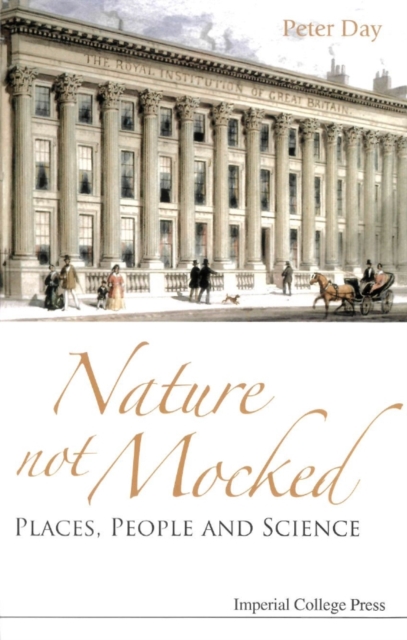
Nature not mocked
We often forget that the science underpinning our contemporary civilization is not a marmoreal edifice. On the contrary, at each moment in its development over past centuries, it grew and advanced through the efforts of individuals and the institutions they created. As Director of the Royal Institution and its Davy Faraday Research Laboratory throughout the 1990s, the author had a unique vantage point to observe how places and people condition the way science has been shaped in the past and continues to be today. The author's background as a practicing solid state chemist, with a lively concern for issues engaging public awareness of science, have led him to recognize and celebrate, not just the remarkable contributions and unusual lives of past scientific heroes like Rumford and Faraday, but also their present day successors. Over the years, this insight has resulted in a wide variety of articles and essays, spread through many publications; a selection of these is collected in this book. The tapestry of science does not just consist of facts uncovered about the natural world and the laws that connect them. As perhaps the finest product of the human mind, its substance and direction are strongly conditioned (some might even say determined) by the people drawn to take part in it and the environments in which they work. This book is an edited collection of essays on aspects of the lives of some famous (as well as less well-known) scientists and places where science is carried out, combined with popular accounts of some of the science the author himself has been involved in. Although it focuses on the Royal Institution and some of those associated with it, it ranges more widely to embrace some contemporary scientists known personally to the author, each of whom had an unusual and distinctive career. At the same time, the science itself, while at the cutting edge, is placed firmly in its historical perspective. The essays are collected into themes, each of which is prefaced and put in context by a short introduction.
eBook