
Catalogue Search | MBRL


Are you sure you want to remove the book from the shelf?

{{itemTitle}}
5
result(s) for
"Royal Society (Great Britain) -- History -- 18th century"
Sort by:


Freedom's Debt
In the years following the Glorious Revolution, independent slave traders challenged the charter of the Royal African Company by asserting their natural rights as Britons to trade freely in enslaved Africans. In this comprehensive history of the rise and fall of the RAC, William A. Pettigrew grounds the transatlantic slave trade in politics, not economic forces, analyzing the ideological arguments of the RAC and its opponents in Parliament and in public debate. Ultimately, Pettigrew powerfully reasons that freedom became the rallying cry for those who wished to participate in the slave trade and therefore bolstered the expansion of the largest intercontinental forced migration in history.Unlike previous histories of the RAC, Pettigrew's study pursues the Company's story beyond the trade's complete deregulation in 1712 to its demise in 1752. Opening the trade led to its escalation, which provided a reliable supply of enslaved Africans to the mainland American colonies, thus playing a critical part in entrenching African slavery as the colonies' preferred solution to the American problem of labor supply.
eBook

Hybrid knowledge in the early East India Company world
Hybrid Knowledge in the Early East India Company World presents a new reading of the English East India Company 1660-1720. It shows how innovative works covering natural history, ethnography, theology, linguistics, medicine, and agriculture - were created amid early modern struggles for supremacy in Asia, the Indian Ocean and the Atlantic.
eBook
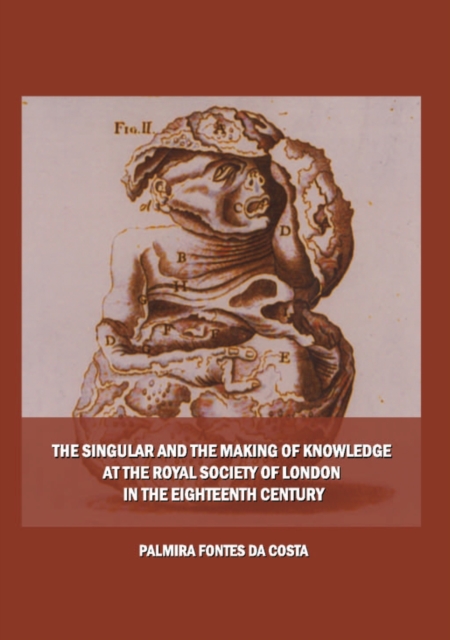
The singular and the making of knowledge at the Royal Society of London in the eighteenth century
The central subject of this book is the status of singular experiences in the making of natural knowledge at the Royal Society of London in the eighteenth century. It makes a significant contribution to our understanding of the importance of the reporting and display of extraordinary phenomena at the Royal Society in this period, and shows that the success of these practices was largely based on their multiple roles within the Society, where singular experiences not only promoted natural hist.
eBook

Rhetoric and the Early Royal Society
The Royal Society's establishment in 1660 signaled a new beginning for the rhetoric of science, mainly because the organization's founders advocated a modern plain style for scientific communication. Rhetoric and the Early Royal Society aims to initiate fresh debates about this watershed event in the history of rhetoric and science. In the last twenty years, scholars in numerous disciplines have produced significant work, ranging from theoretical essays to case studies of founding members such as Wilkins, Hooke and Boyle. This is the first book to collect in one volume the key contributions. The newly written introduction by editors Skouen and Stark places the reprinted essays into perspective by evaluating the Society's pioneering role in shaping modern scholarly communication.
eBook