
Catalogue Search | MBRL


Are you sure you want to remove the book from the shelf?

{{itemTitle}}
43,261
result(s) for
"Rubies."
Sort by:

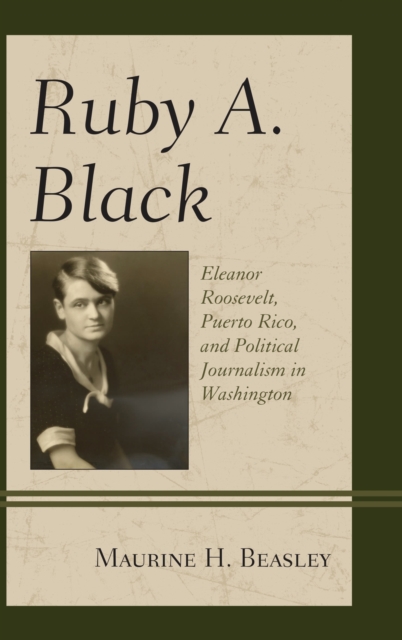
Ruby A. Black
This book explores the relationship of Washington journalist Ruby A. Black with two notable mid-twentieth-century figures: Eleanor Roosevelt and Luis Muñoz Marín. Black's role in the political atmosphere surrounding the first lady brought much-needed attention to Puerto Rico and enhanced Roosevelt's position, but had a detrimental effect on Black's career.
eBook

The fourth watcher : a Bangkok thriller
Seeking to retire and settle down with his girlfriend and newly adopted daughter, travel writer Poke Rafferty unexpectedly meets up with his long-lost father, who asks for his help in safeguarding a stolen cache of priceless rubies and forged identity papers.
Book


Ruby, sapphire & spinel : an archaeological, textual and cultural study
Until about two hundred years ago, no gemological distinction was made between ruby and spinel. Red spinel and red ruby are not infrequently found together and though gem cutters and engravers noticed and commented on the difference in hardness, the assumption was that spinel was simply an \"unripe\" version of ruby. Additionally, ruby and sapphire are both versions of the mineral corundum, distinguished only by color and minute traces of the metal oxides that caused these different colors. Sapphires may be pink, yellow, and green as well as blue, while rubies come in many shades of red which, inevitably causes confusion as one person's pale red ruby is another's pink sapphire--there are no absolutes. Consequently, the nomenclature is confused, both within early texts, and also in later translations of those texts. The ancient authors could only report on the basis of the information available to them at the time, while those writing the later translations were fine textual scholars or epigraphers, but not infrequently poor gemologists, not familiar with the mineralogical distinctions between the gems. It has often been difficult to get an overarching view of the many different factors that all played a part in the spread of precious gems and of the dissemination of knowledge about them. Given the paucity of available information concentrating exclusively on the use of ancient precious gemstones, the author combed the literature for relevant references. A surprising amount of descriptive and factual information was found, mostly scattered throughout early texts. The most interesting passages were selected and wherever possible the original authors' words were quoted rather than paraphrased. The early translations in the languages used by 17th-19th century scholars are given, names of people, places or objects that otherwise might have remained obscure are explained. Gems travel. They follow wealth and because of their natural immutability, the only way they can be identified by culture is by the way man has affected their appearance, deliberately or accidentally. The dating of gems that are still in original period settings is easier because the dated typology of rings and jewelry settings generally, is more secure than the study of gem shapes, while the study and dating of specific faceting styles of unmounted stones is still in its infancy.
Book
Ruby Under a Microscope
Ruby Under a Microscope gives developers an inside, hands-on look at Ruby's core, using simple diagrams coupled with clear explanations.
eBook
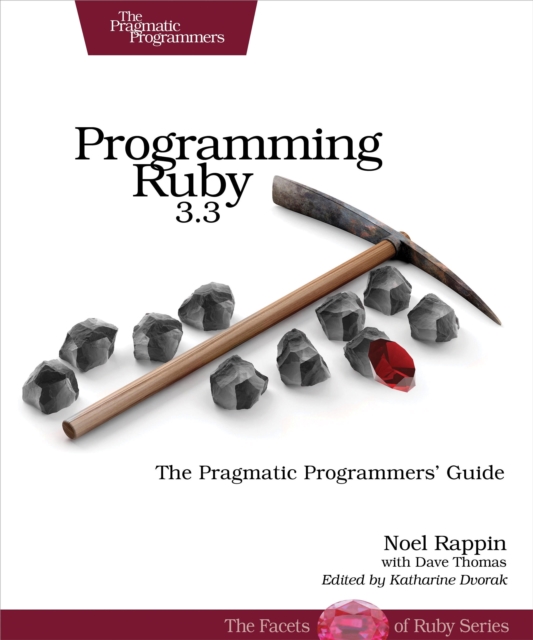
Programming Ruby 3.3
Ruby is one of the most important programming languages in use for web development. It powers the Rails framework, which is the backing of some of the most important sites on the web. The Pickaxe Book, named for the tool on the cover, is the definitive reference on Ruby, a highly-regarded, fully object-oriented programming language. This updated edition is a comprehensive reference on the language itself, with a tutorial on the most important features of Ruby - including pattern matching and Ractors - and describes the language through Ruby 3.3.Would you like to go from first idea to working code much, much faster? Do you currently spend more time satisfying the compiler instead of your clients or end users? Are you frustrated with demanding languages that seem to get in your way instead of helping you get the work done? Are you using Rails and want to dig deeper into the underlying Ruby language? If so, then we've got a language and book for you!Ruby is a fully object-oriented language. The combination of the power of a pure object-oriented language with the convenience of a scripting language makes Ruby a favorite tool of programmers that want to get things done quickly and cleanly.This comprehensive reference manual for Ruby includes a description of the most important standard library modules, built-in classes, and modules. It also includes all the new and changed syntax and semantics introduced through Ruby 3.3, including pattern matching and Ractors, and describes the language through Ruby 3.3.What You Need:This book assumes you have a basic understanding of object-oriented programming.In general, Ruby programmers tend to favor the the command line for running their code, and they tend to use text editors rather than IDEs.Ruby runs on Windows, Linux, and MacOS.
eBook

Effects of Low-Temperature Heat Treatment on Mong Hsu Rubies
This study examined the effects of low-temperature heat treatment on the characteristics of the rubies from Mong Hsu, Myanmar. Five ruby samples were heated to 400, 600, 900 and 1200 °C for different durations, respectively. Before and after each heating step, a visual examination was conducted with a gem microscope under different illumination conditions. Various spectral analyses such as UV-Vis, FTIR, Raman and PL were also used to examine the effect of heating on the ruby samples. The low-temperature heat treatment enhanced the ruby samples by causing the dark blue core to partially or completely fade away. It then increased the overall light transmittance and enhanced the fluorescence peak around 694 nm but did not improve the red hue of the samples. Two major changes were found in the experiments. One was the dark blue core of the samples that faded as the heating temperature increased. They were verified by the spectra to be the variation in the intervalence charge transfer between Fe2+ and Ti4+. The variation in the intervalence charge transfer of Mong Hsu ruby was not noticeable before heating to 900 °C but changed dramatically when heated to 1200 °C. The other was the shift of the FTIR peak, which is caused by decomposition of minerals due to heating. An FTIR 630 cm−1 peak proved to be sensitive to the low-temperature heating and might be helpful for detecting low-temperature treatment.
Journal Article

One-step strategy for developing wheat haploid inducer lines with efficient markers for haploid identification
Wheat (Triticum aestivum L.) is one of the most important staple crops globally. Doubled haploid technology enables rapid development of pure lines and has been extended from maize to several other crop species. A key step in DH breeding is the identification of haploids from diploids, which requires accurate and convenient phenotypic markers. In this study, we generated two wheat haploid inducers carrying different markers by a one-step strategy. One harbored a dual fluorescent marker system consisting of eGFP and TagRFP, the other carried a RUBY reporter. Both markers enabled near 100% accuracy of haploid identification at the immature embryo, mature embryo, and germinating seedling stages. Moreover, both lines consistently exhibited a high and stable haploid induction rate (∼20%). This study not only provides efficient wheat haploid inducers but also establishes a convenient pipeline for developing haploid induction systems in other crop species.
Journal Article