
Catalogue Search | MBRL


Are you sure you want to remove the book from the shelf?

{{itemTitle}}
41
result(s) for
"Ruins, Modern."
Sort by:


Counterpreservation
In Berlin, decrepit structures do not always denote urban blight. Decayed buildings are incorporated into everyday life as residences, exhibition spaces, shops, offices, and as leisure space. As nodes of public dialogue, they serve as platforms for dissenting views about the future and past of Berlin. In this book, Daniela Sandler introduces the concept of counterpreservation as a way to understand this intentional appropriation of decrepitude. The embrace of decay is a sign of Berlin’s iconoclastic rebelliousness, but it has also been incorporated into the mainstream economy of tourism and development as part of the city’s countercultural cachet. Sandler presents the possibilities and shortcomings of counterpreservation as a dynamic force in Berlin and as a potential concept for other cities. Counterpreservation is part of Berlin’s fabric: in the city’s famed Hausprojekte (living projects) such as the Køpi, Tuntenhaus, and KA 86; in cultural centers such as the Haus Schwarzenberg, the Schokoladen, and the legendary, now defunct Tacheles; in memorials and museums; and even in commerce and residences. The appropriation of ruins is a way of carving out affordable spaces for housing, work, and cultural activities. It is also a visual statement against gentrification, and a complex representation of history, with the marks of different periods—the nineteenth century, World War II, postwar division, unification—on display for all to see. Counterpreservation exemplifies an everyday urbanism in which citizens shape private and public spaces with their own hands, but it also influences more formal designs, such as the Topography of Terror, the Berlin Wall Memorial, and Daniel Libeskind’s unbuilt redevelopment proposal for a site peppered with ruins of Nazi barracks. By featuring these examples, Sandler questions conventional notions of architectural authorship and points toward the value of participatory environments.
eBook


Counterpreservation
In Berlin, decrepit structures do not always denote urban blight. Decayed buildings are incorporated into everyday life as residences, exhibition spaces, shops, offices, and as leisure space. As nodes of public dialogue, they serve as platforms for dissenting views about the future and past of Berlin. In this book, Daniela Sandler introduces the concept of counterpreservation as a way to understand this intentional appropriation of decrepitude. The embrace of decay is a sign of Berlin’s iconoclastic rebelliousness, but it has also been incorporated into the mainstream economy of tourism and development as part of the city’s countercultural cachet. Sandler presents the possibilities and shortcomings of counterpreservation as a dynamic force in Berlin and as a potential concept for other cities. Counterpreservation is part of Berlin’s fabric: in the city’s famed Hausprojekte (living projects) such as the Køpi, Tuntenhaus, and KA 86; in cultural centers such as the Haus Schwarzenberg, the Schokoladen, and the legendary, now defunct Tacheles; in memorials and museums; and even in commerce and residences. The appropriation of ruins is a way of carving out affordable spaces for housing, work, and cultural activities. It is also a visual statement against gentrification, and a complex representation of history, with the marks of different periods—the nineteenth century, World War II, postwar division, unification—on display for all to see. Counterpreservation exemplifies an everyday urbanism in which citizens shape private and public spaces with their own hands, but it also influences more formal designs, such as the Topography of Terror, the Berlin Wall Memorial, and Daniel Libeskind’s unbuilt redevelopment proposal for a site peppered with ruins of Nazi barracks. By featuring these examples, Sandler questions conventional notions of architectural authorship and points toward the value of participatory environments.In Berlin, decrepit structures do not always denote urban blight. Decayed buildings are incorporated into everyday life as residences, exhibition spaces, shops, offices, and as leisure space. As nodes of public dialogue, they serve as platforms for dissenting views about the future and past of Berlin. In this book, Daniela Sandler introduces the concept of counterpreservation as a way to understand this intentional appropriation of decrepitude. The embrace of decay is a sign of Berlin's iconoclastic rebelliousness, but it has also been incorporated into the mainstream economy of tourism and development as part of the city's countercultural cachet. Sandler presents the possibilities and shortcomings of counterpreservation as a dynamic force in Berlin and as a potential concept for other cities.Counterpreservation is part of Berlin’s fabric: in the city’s famed Hausprojekte (living projects) such as the Køpi, Tuntenhaus, and KA 86; in cultural centers such as the Haus Schwarzenberg, the Schokoladen, and the legendary, now defunct Tacheles; in memorials and museums; and even in commerce and residences. The appropriation of ruins is a way of carving out affordable spaces for housing, work, and cultural activities. It is also a visual statement against gentrification, and a complex representation of history, with the marks of different periods—the nineteenth century, World War II, postwar division, unification—on display for all to see. Counterpreservation exemplifies an everyday urbanism in which citizens shape private and public spaces with their own hands, but it also influences more formal designs, such as the Topography of Terror, the Berlin Wall Memorial, and Daniel Libeskind’s unbuilt redevelopment proposal for a site peppered with ruins of Nazi barracks. By featuring these examples, Sandler questions conventional notions of architectural authorship and points toward the value of participatory environments.
eBook

Urban ruins : memorial value and contemporary role
This monograph discusses the role that ruins play in urban centers in terms of their meaning, testimony, and value, and the opportunities they provide. After an outline of historical and contemporary approaches, with a special analysis of British and Italian approaches, Elisa Pilia puts forward a methodology for the investigation of the strategic values of such artifacts, and ideas for their potential contribution to a sustainable requalification of historic urban cores. The protocol is tested on the historical center of Cagliari, a midsized port city on the southern coast of the island of Sardinia, Italy, where the remains left by aerial bombardment during the Second World War are still a dramatic part of the controversial European debate on how to reuse ruins.
Book

A rhetoric of ruins : exploring landscapes of abandoned modernity / Andrew F. Wood
\"A Rhetoric of Ruins combines conceptual and theoretical frameworks to explore ghost towns, disaster sites, and environmental badlands as remnants of modernity. Methods of analysis include Jeremiadic, hauntological, psychogeographic, and heterotopian ways of reading U.S. and international sites\"--
eBook

Counterpreservation : architectural decay in Berlin since 1989
\"In Berlin, decrepit structures do not always denote urban blight. Decayed buildings are incorporated into everyday life as residences, exhibition spaces, shops, offices, and as leisure space. As nodes of public dialogue, they serve as platforms for dissenting views about the future and past of Berlin. In this book, Daniela Sandler introduces the concept of counterpreservation as a way to understand this intentional appropriation of decrepitude. The embrace of decay is a sign of Berlin's iconoclastic rebelliousness, but it has also been incorporated into the mainstream economy of tourism and development as part of the city's countercultural cachet. Sandler presents the possibilities and shortcomings of counterpreservation as a dynamic force in Berlpagesin and as a potential concept for other cities\"-- Publisher's Web site.
Book
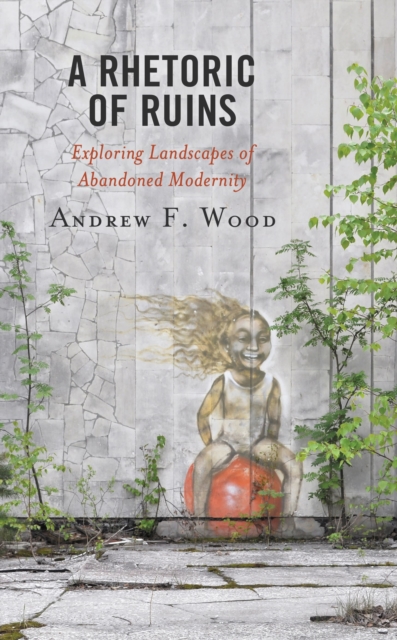
A Rhetoric of Ruins
A Rhetoric of Ruins contributes to an interdisciplinary conversation about the role of wrecked and abandoned places in modern life. Topics in this book stretch from retro- and post-human futures to a Jeremiadic analysis of the role of ruins in American presidential discourse. From that foundation, A Rhetoric of Ruins employs hauntology to visit a California ghost-town, psychogeography to confront Detroit ruins, heterochrony to survey Pennsylvania's once (and future) Graffiti Highway, an expanded articulation of heterotopia to explore the pleasurable contamination of Chernobyl, and an evening in Turkmenistan's Doorway to Hell that stretches across time from Homer's Iliad to Little Richard's \"Long Tall Sally.\" Written to engage scholars and students of communication studies, cultural geography, anthropology, landscape studies, performance studies, public memory, urban studies, and tourism studies, A Rhetoric of Ruins is a conceptually rich and vividly written account of how broken and derelict places help us manage our fears in the modern era.
eBook

Reimagining unfinished architectures
For the past five decades, hundreds of unfinished public works have been erected in Italy as the result of inconsistent planning and the presence of corruption and organised crime. A third of these constructions are located in Sicily alone, and so, in 2007, a group of artists labelled this phenomenon an architectural style: ‘Incompiuto Siciliano’. Through this creative approach, the artists’ objective is to put incompletion back on the agenda by viewing it from a heritage perspective. This article reviews the different approaches that the artists have envisaged to handle unfinished public works; whether to finish them, demolish them, leave them as they are or opt for an ‘active’ arrested decay. The critical implications of these strategies are analysed in order to, ultimately, conclude that incompletion is such a vast and complex issue that it will surely have more than one single solution; but rather a combination of these four. This is important because it opens up a debate on the broad spectrum of possibilities to tackle incompletion – establishing this as one of the key contemporary urban themes not only in Italy but also in those countries affected by unfinished geographies after the 2008 financial crisis.
Journal Article
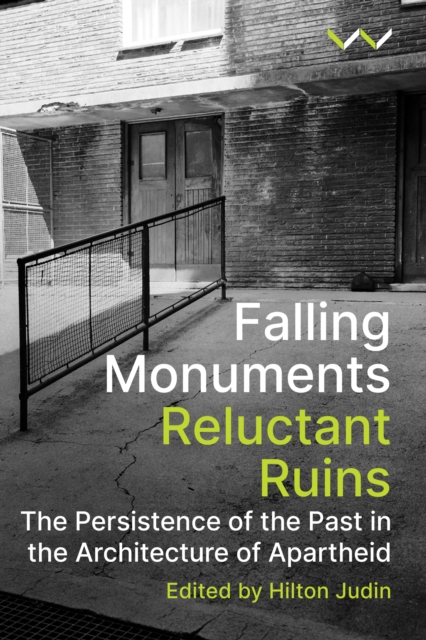
Falling Monuments, Reluctant Ruins
Falling Monuments, Reluctant Ruins: The Persistence of the Past in the Architecture of Apartheid interrogates how, in the era of decolonisation, post-apartheid South Africa reckons with its past in order to shape its future. Architects, historians, artists, social anthropologists and urban planners seek answers in this book to complex and unsettling questions around heritage, ruins and remembrance. What do we do with hollow memorials and political architectural remnants? Which should remain, which forgotten, and which dismantled? Are these vacant buildings, cemeteries, statues, and derelict grounds able to serve as inspiration in the fight against enduring racism and social neglect? Should they become exemplary as spaces for restitution and justice? The contributors examine the influence of public memory, planning and activism on such anguished places of oppression, resistance and defiance. Their focus on visible markers in the landscape to interrogate our past will make readers reconsider these spaces, looking at their landscape and history anew. Through a series of 14 empirically grounded chapters and 48 images, the contributors seek to understand how architecture contests or subverts these persistent conditions in order to promote social justice, land reclamation and urban rehabilitation. The decades following the dismantling of apartheid are surveyed in light of contemporary heritage projects, where building ruins and abandoned spaces are challenged and renegotiated across the country to become sites of protest, inspiration and anger. This ground-breaking collection is an important resource for professionals, academics and activists working in South Africa today. Falling Monuments, Reluctant Ruins: The Persistence of the Past in the Architecture of Apartheid interrogates how, in the era of decolonisation, post-apartheid South Africa reckons with its past in order to shape its future. Architects, historians, artists, social anthropologists and urban planners seek answers in this book to complex and unsettling questions around heritage, ruins and remembrance. What do we do with hollow memorials and political architectural remnants? Which should remain, which forgotten, and which dismantled? The contributors examine the influence of public memory, planning and activism on such anguished places of oppression, resistance and defiance. Their focus on visible markers in the landscape to interrogate our past will make readers reconsider these spaces, looking at their landscape and history anew. Through a series of 14 empirically grounded chapters and over 48 images, the contributors seek to understand how, in the decades following the dismantling of apartheid, architecture contests or subverts these persistent conditions in order to promote social justice, land reclamation and urban rehabilitation. This ground-breaking collection is an important resource for professionals, academics and activists working in South Africa today.
eBook