
Catalogue Search | MBRL


Are you sure you want to remove the book from the shelf?

{{itemTitle}}
3,114
result(s) for
"Ruiz, Raul"
Sort by:

The Chicano generation : testimonios of the movement
\"This is the story of the historic Chicano Movement in Los Angeles during the late 1960s and 1970s. The Chicano Movement was the largest civil rights and empowerment movement in the history of Mexican Americans in the United States. The movement was led by a new generation of political activists calling themselves Chicanos, a countercultural barrio term. This book is the story of three key activists, Raul Ruiz, Gloria Arellanes, and Rosalio Muنnoz, who through oral history related their experiences as movement activist to historian Mario T. Garcâia. As first-person autobiographical narratives, these stories put a human face to this profound social movement and provide a life-story perspective as to why these individuals became activists\"--Provided by publisher.
Book
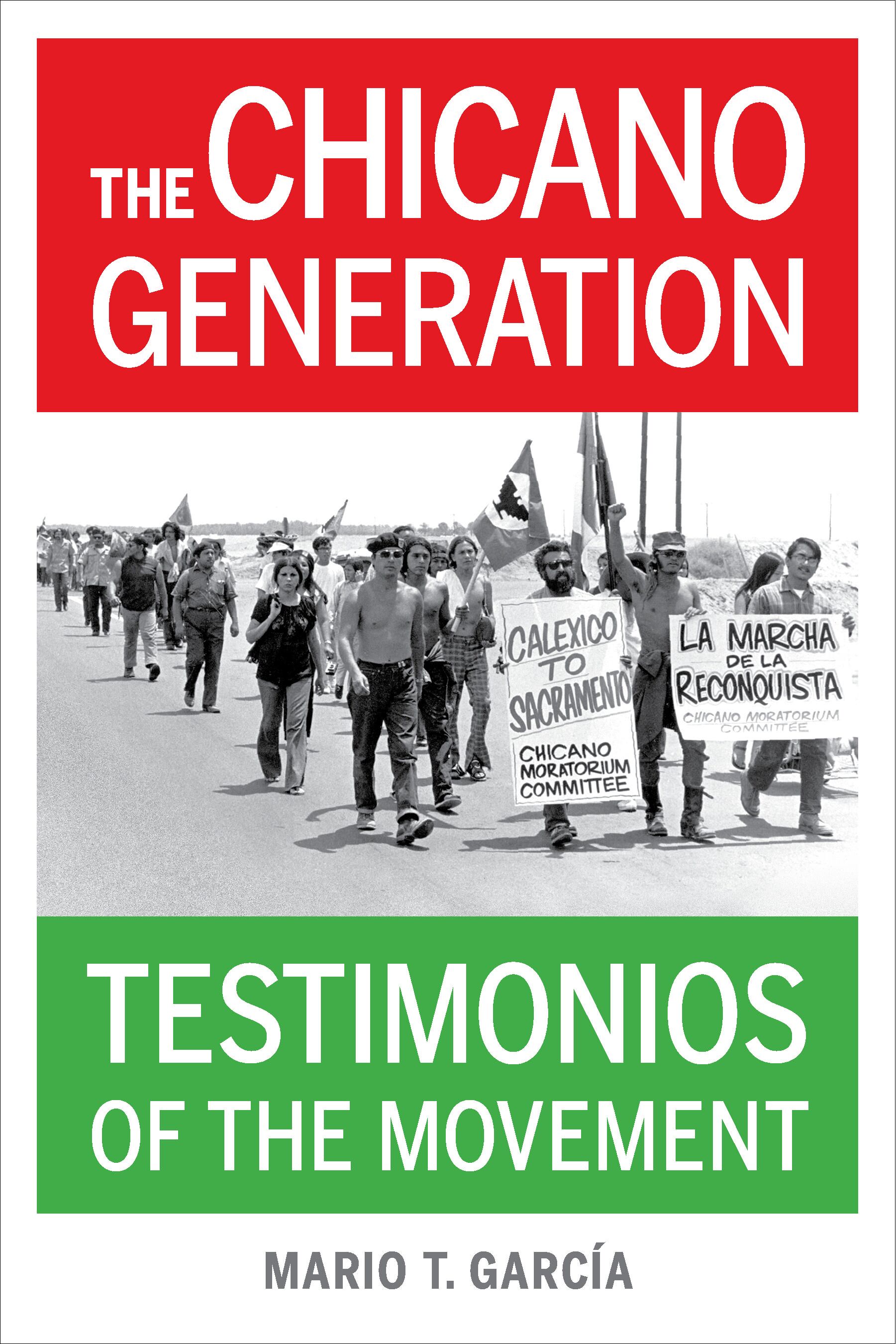
The Chicano generation
In The Chicano Generation, veteran Chicano civil rights scholar Mario T. García provides a rare look inside the struggles of the 1960s and 1970s as they unfolded in Los Angeles. Based on in-depth interviews conducted with three key activists, this book illuminates the lives of Raul Ruiz, Gloria Arellanes, and Rosalio Muñoz—their family histories and widely divergent backgrounds; the events surrounding their growing consciousness as Chicanos; the sexism encountered by Arellanes; and the aftermath of their political histories. In his substantial introduction, García situates the Chicano movement in Los Angeles and contextualizes activism within the largest civil rights and empowerment struggle by Mexican Americans in US history—a struggle that featured César Chávez and the farm workers, the student movement highlighted by the 1968 LA school blowouts, the Chicano antiwar movement, the organization of La Raza Unida Party, the Chicana feminist movement, the organizing of undocumented workers, and the Chicano Renaissance. Weaving this revolution against a backdrop of historic Mexican American activism from the 1930s to the 1960s and the contemporary black power and black civil rights movements, García gives readers the best representations of the Chicano generation in Los Angeles.
eBook
Veterans: Frontline Concerns - Rep. Raul Ruiz and McClatchy reporter Tara Copp
Rep. Raul Ruiz (D-Calif.), who is also a medical doctor, shares the legislative efforts he's working on to ensure veterans receive the highest quality of healthcare. McClatchy reporter Tara Copp joins Ruiz to share what she’s learned from her exclusive investigations into two decades of potential toxic exposures to American soldiers.
Streaming Video


Impossible cartographies: approaching Raúl Ruiz’s cinema
Raúl Ruiz (1931-2011), while considered one of the world’s most significant filmmakers by several film critics, is yet to be the subject of any thorough academic engagement with his work in English. My book Impossible Cartographies sets out on this task by mapping, as fully as possible, Ruiz’s cinematic trajectory across more than five decades of prolific work ranging from his earliest work in Chile to high budget ‘European’ costume dramas culminating in the recent Mysteries of Lisbon (2010). It does this by treating Ruiz’s work, with its surrealist, magic realist, popular cultural and neo-Baroque sources, as a type of ‘impossible’ cinematic cartography, mapping real, imaginary and virtual spaces, and crossing between different cultural contexts, aesthetic strategies, and technical media. In argues that across the different phases of Ruiz’s work identified, there are key continuities such as the invention of singular cinematic images and the interrogation of their possible and impossible combinations. This article will present some of the key themes of Ruiz’s cinema and use ideas of virtual cartography, tableaux vivants and the neo-baroque to illuminate a range of Ruiz’s films from the Hypothesis of the Stolen Painting (1978) to Mysteries of Lisbon, his last major project.
Journal Article
Biden's Economic Agenda; Olympic COVID Fears; Interview With Rep. Raul Ruiz (D-CA); COVID Cases Rising. Aired 3-3:30p ET
Congressman Raul Ruiz speaks out. COVID cases continue risingin the United States. Some U.S. Olympic athletes test positive forCOVID. President Biden's economic agenda faces key tests this week. GUESTS: Rennae Stubbs, Raul Ruiz
Transcript
Trump to Hold First Coronavirus Briefing in Nearly Three Months; L.A. Mayor Concedes California Opened Too Soon as Virus Surges. Aired 7-7:30a ET
Trump does not wear masks hours after recommending them. U.S.coronavirus cases top 3.8 million, nearly 141,000 dead. CNN reports,Fauci and Birx have not been told whether they will attend briefing.Trump tweets picture wearing mask after downplaying them. SenateRepublicans split with White House over testing funding. Three vaccinedevelopers report early promising results. White House objects toSenate push for more testing and tracing funding GUESTS: Raul Ruiz
Transcript
Rep. Raul Ruiz (D-CA) Interviewed on Rising Coronavirus Cases in California; Experts Believe States in U.S. Reopened Too Early to Prevent Resurgence of Coronavirus Spread; Miami Mandates Face Masks, Violators Face Fines; Kentucky Governor Andy Beshear on Justice for Breonna Taylor and Containing Coronavirus in His State. Aired 8-8:30a ET
The city of Miami is now mandating face masks in public; if youdon't wear one, you could face a fine. Kentucky Governor Andy Beshearis interviewed on justice for Breonna Taylor and containingcoronavirus in his state. Rep. Raul Ruiz (D-CA) is interviewed on therising number of coronavirus cases in California. Experts believestates in the U.S. reopened too early to prevent a resurgence ofcoronavirus spread. GUESTS: Francis Suarez, Andy Beshear, Raul Ruiz
Transcript

Imágenes sobre Chile: dos miradas para construir la memoria
Este artículo presenta un material pedagógico que, a través del cine, permite desarrollar contenidos incluidos en los programas de estudio del curriculum escolar chileno. Se trata de la obra de los cineastas Raúl Ruiz y Patricio Guzmán que, desde miradas muy diversas nos permiten acercarnos a un mismo país, antes y después de la dictadura militar. Estos materiales integran la colección editorial Educación Artística realizada por el Ministerio de las Culturas, las Artes y el Patrimonio, de Chile. This paper presents a pedagogic material that trough cinema allows to develop contents included in the study programs of the chilean scholar schedule. It’s about the work of the filmmakers Raúl Ruiz and Patricio Guzmán. Both of them, from very different point of view, allows us to get close to the same country, after and before the militar dictatorship. This pedagogic materials integrate the editorial collection of Artistic Education made by the Ministry of Cultures, Arts and Heritage of Chile.
Journal Article

DE LAFOURCADE A RUIZ: COMUNIONES Y POLARIDADES A PARTIR DE PALOMITA BLANCA1
Palomita blanca, novela escrita por Enrique Lafourcade en 1971, se convierte en un éxito de ventas que la lleva a ser adaptada al cine por Raúl Ruiz en 1973. Este artículo propone que se trata de dos productos culturales surgidos de un contexto epocal en el que se colocan en tensión los cánones narrativos tanto en la literatura como en el cine. El hecho que se trate de un escritor adscrito a la Generación literaria del '50 realizando un best seller, y a la vez un cineasta adscrito al Nuevo Cine Chileno realizando una película comercial, permite abordar la relación con lo popular, las formas y temas de ambas exploraciones estéticas, construyendo un retrato social del periodo.
Journal Article