
Catalogue Search | MBRL


Are you sure you want to remove the book from the shelf?

{{itemTitle}}
19,363
result(s) for
"Runoff Management."
Sort by:

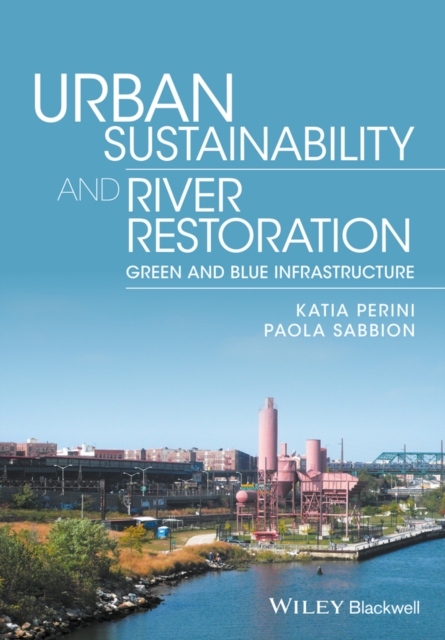
Urban sustainability and river restoration : green and blue infrastructure
Urban Sustainability and River Restoration: Green and Blue Infrastructure considers the integration of green and blue infrastructure in cities as a strategy useful for acting on causes and effects of environmental and ecological issues.
eBook

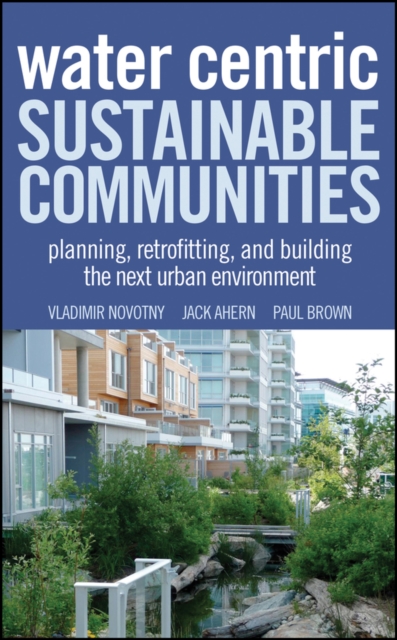
Water centric sustainable communities
The current literature compartmentalizes the complex issue of water and wastewater into its discrete components; technology, planning, policy, construction, economics, etc. Considered from the perspective of sustainability, however, water in the urban environment must be approached as a single resource that can be continuously reused and recycled. This book will be the first to capture all of the current work on this idea in a single, integrated, plan for designing the water-centric cities of the future. From new construction to the retrofitting of existing systems, this book presents the case for a new urban relationship to water, one with a more sustainableconnection tothe environment and the hydrological cycle. Through case studies of successfully planned and built systems around the world, the book will educate the reader about the need for a new approach to urban water management, and make the case that these changes are not only possible but imperative.
eBook

Using plants for stormwater management : a green infrastructure guide for the Gulf South
The subtropical climate of the Gulf South supports a varied abundance of flora, and this diversity is sustained by the ample amount of rainwater that characterizes the region. Managing rainwater in a planned environment and mitigating its effect on human habitation can test the skills of even the most seasoned landscape architect or designer. That challenge has never been more acute as increased human demand for natural resources compels professionals and home gardeners alike to seek out sustainable ecological solutions. In this guidebook, Dana Nunez Brown details ways to manage each drop of rainwater where it falls, using a cost-effective and environmentally sensitive approach. Under natural conditions, rainfall primarily percolates into the ground and flows as groundwater until it is absorbed by trees and other vegetation, after which it is evaporated into the atmosphere and the cycle starts anew. Brown identifies plants and techniques that leverage this natural process in order to filter, clean, and slow runoff, a practice known as Low Impact Development. Using Plants for Stormwater Management presents the native ecological communities and plant species of the Gulf South in easy-to-follow sections and diagrams. Information ranging from the productiveness of root structures and the compatibility of plants with local soils to the optimal elevation of specific vegetation and the average dimensions of foliage is represented by graphic icons for quick and easy identification. An accessible and essential resource, this book gives both novices and experts the know-how to harness rainfall and create beautiful, ecologically functioning landscapes. -- Provided by publisher.
Book
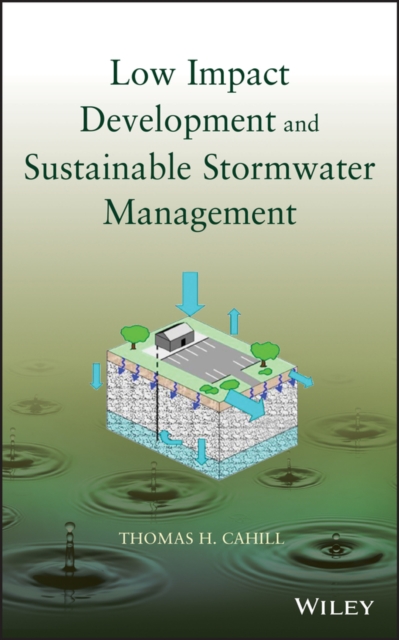
Low impact development and sustainable stormwater management
Sustainable Stormwater Management introduces engineers and designers to ideas and methods for managing stormwater in a more ecologically sustainable fashion.It provides detailed information on the design process, engineering details and calculations, and construction concerns.
eBook


Using Graywater and Stormwater to Enhance Local Water Supplies
Chronic and episodic water shortages are becoming common in many regions of the United States, and population growth in water-scarce regions further compounds the challenges. Increasingly, alternative water sources such as graywater-untreated wastewater that does not include water from the toilet but generally includes water from bathroom sinks, showers, bathtubs, clothes washers, and laundry sinks- and stormwater-water from rainfall or snow that can be measured downstream in a pipe, culvert, or stream shortly after the precipitation event-are being viewed as resources to supplement scarce water supplies rather than as waste to be discharged as rapidly as possible. Graywater and stormwater can serve a range of non-potable uses, including irrigation, toilet flushing, washing, and cooling, although treatment may be needed. Stormwater may also be used to recharge groundwater, which may ultimately be tapped for potable use. In addition to providing additional sources of local water supply, harvesting stormwater has many potential benefits, including energy savings, pollution prevention, and reducing the impacts of urban development on urban streams. Similarly, the reuse of graywater can enhance water supply reliability and extend the capacity of existing wastewater systems in growing cities.
Despite the benefits of using local alternative water sources to address water demands, many questions remain that have limited the broader application of graywater and stormwater capture and use. In particular, limited information is available on the costs, benefits, and risks of these projects, and beyond the simplest applications many state and local public health agencies have not developed regulatory frameworks for full use of these local water resources.
To address these issues, Using Graywater and Stormwater to Enhance Local Water Supplies analyzes the risks, costs, and benefits on various uses of graywater and stormwater. This report examines technical, economic, regulatory, and social issues associated with graywater and stormwater capture for a range of uses, including non-potable urban uses, irrigation, and groundwater recharge. Using Graywater and Stormwater to Enhance Local Water Supplies considers the quality and suitability of water for reuse, treatment and storage technologies, and human health and environmental risks of water reuse. The findings and recommendations of this report will be valuable for water managers, citizens of states under a current drought, and local and state health and environmental agencies.
eBook


Vacant to Vibrant
Vacant lots, so often seen as neighborhood blight, have the potential to be a key element of community revitalization. As manufacturing cities reinvent themselves after decades of lost jobs and population, abundant vacant land resources and interest in green infrastructure are expanding opportunities for community and environmental resilience. Vacant to Vibrant explains how inexpensive green infrastructure projects can reduce stormwater runoff and pollution, and provide neighborhood amenities, especially in areas with little or no access to existing green space.
Sandra Albro offers practical insights through her experience leading the five-year Vacant to Vibrant project, which piloted the creation of green infrastructure networks in Gary, Indiana; Cleveland, Ohio; and Buffalo, New York. Vacant to Vibrant provides a point of comparison among the three cities as they adapt old systems to new, green technology. An overview of the larger economic and social dynamics in play throughout the Rust Belt region establishes context for the promise of green infrastructure. Albro then offers lessons learned from the Vacant to Vibrant project, including planning, design, community engagement, implementation, and maintenance successes and challenges. An appendix shows designs and plans that can be adapted to small vacant lots.
Landscape architects and other professionals whose work involves urban greening will learn new approaches for creating infrastructure networks and facilitating more equitable access to green space.
eBook