
Catalogue Search | MBRL


Are you sure you want to remove the book from the shelf?

{{itemTitle}}
16,032
result(s) for
"Rural Region"
Sort by:

Two oxen ahead : pre-mechanized farming in the Mediterranean
\"This revealing study shows how careful analysis of recent farming practices, and related cultural traditions, in communities around the Mediterranean can enhance our understanding of prehistoric and Greco-Roman societies. Includes a wealth of original interview material and data from field observation Provides original approaches to understanding past farming practices and their social contexts Offers a revealing comparative perspective on Mediterranean societies' agronomy Identifies a number of previously unrecorded climate-related contrasts in farming practices, which have important socio-economic significance Explores annual tasks, such as tillage and harvest; inter-annual land management techniques, such as rotation; and intergenerational issues, including capital accumulation \"-- Provided by publisher.
Book

Two oxen ahead
TWO OXEN AHEAD
This revealing study of farming practices in societies around the Mediterranean draws out the valuable contribution that knowledge of recent practices can make to our understanding of husbandry in prehistoric and Greco-Roman times. It reflects increased academic interest in the formative influence of farming regimes on the societies they were designed to feed. The author's intensive research took him to farming communities around the Mediterranean, where he recorded observational and interview data on differing farming strategies and practices, many of which can be traced back to classical antiquity or earlier.
The book documents these variables, through the annual chaîne opératoire (from ploughing and sowing to harvesting and threshing), interannual schemes of crop rotation and husbandry, and the generational cycle of household development. It traces the interdependence of these successive stages and explores how cultural tradition, ecological conditions, and access to resources shape variability in husbandry practice. Each chapter identifies ways in which heuristic use of data on recent farming can shed light on ancient practices and societies.
eBook


Factors Related to Nutritional Status of Single Older Residents in Semi-Mountainous Rural Regions of Japan: A Cross-Sectional Study
Japan’s notably high aging rate presents the risk of malnutrition. This study aimed to clarify the nutritional status and factors related to the nutritional status of single older residents in a semi-mountainous rural region of Japan. Using a cross-sectional study design, surveys were administered to older adults in the semi-mountainous rural region in the area of Kochi Prefecture, Japan. Factors associated with a risk of malnutrition were identified using binomial logistic regression analysis. In addition, nutritional status was evaluated using the Mini Nutritional Assessment-Short Form (MNA-SF). Among 53 participants, the MNA-SF score was 12.1 ± 1.5 (mean ± standard deviation), and 71.7% had a normal nutritional status. We observed that participation in local residents’ association gatherings (odds ratio [OR]: 7.42, 95% confidence interval [CI]: 1.17–47.01) and risk of depression/anxiety (OR: 12.77, 95% CI: 1.99–81.94) were associated with an increased risk of malnutrition, whereas social interaction with friends (OR: 0.11, 95% CI: 0.02–0.76) were associated with a decreased risk. The nutritional status was normal overall. Community health workers should share information on the health of residents and promote social events to enable older residents living alone to continue leading healthy lifestyles.
Journal Article

My curious and jocular heroes : tales and tale-spinners from Appalachia
\"With this book, Jones introduces to new generations four scholars of Appalachian folkways who made major contributions to the arts, culture, and values of the Appalachian people. Bascom Lamar Lunsford, born in North Carolina, collected ballads, songs, tunes, and stories--before there were tape recorders--by committing them all to memory and later recording his \"memory collection\" for Columbia University (1935) and the Library of Congress (1949). Josiah H. Combs, a Kentuckian who got a doctorate at the Sorbonne, taught languages, collected stories and songs, gave ballad recitals, was an authority on Kentucky mountain speech, and was a great raconteur. Cratis D. Williams, another Kentuckian, was the father of Appalachian studies based on his massive dissertation, The Southern Mountaineer in Fact and Fiction. He was a scholar and teacher, a singer of the old ballads, and teller of folk tales. He became Jones's treasured mentor. And the master storyteller Leonard W. Roberts, also born in Kentucky, was a pioneer collector and publisher of Old World folktales, riddles, ballads, and lyric songs, too. Beyond mere biography, this book introduces the reader to some of the lore preserved and performed by Lunsford, Combs, Williams, and Roberts throughout their lives. The end of each biographical chapter is filled with collected stories, songs, and jokes representing the breadth of each man's research and repertoire. With \"My Curious and Jocular Heroes,\" Jones provides not only the historical and cultural contexts of the lives of four of his personal heroes, but also brings together significant texts and music from Appalachian folklore in order to make a contribution to the field of Appalachian studies\"-- Provided by publisher.
Book
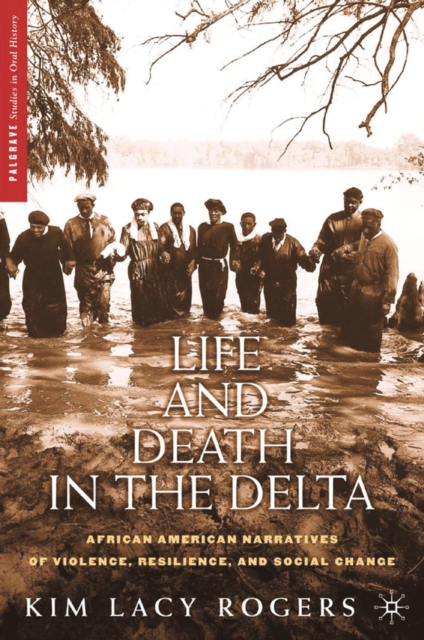
Life and death in the Delta : African American narratives of violence, resilience, and social change
Terrorism, black poverty, and economic exploitation produced a condition of collective trauma and social suffering for thousands of black Deltans in the Twentieth Century. Based on oral histories with African American activists and community leaders, this work reveals the impact of that oppression.
eBook

For God and revolution : priest, peasant, and agrarian socialism in the Mexican Huasteca
\"Saka's work discusses the peasants' agrarian revolution in the Huasteca Potosina between 1879 and 1884, and the national and cultural implications it had for Mexico\"-- Provided by publisher.
Book

Place-Based Environmental Philanthropy: The Role of Community-Based Organizations in the Skeena Watershed
This article explores the role of place-based philanthropy in rural community development through a case study of the Skeena watershed. The Skeena is an ecologically significant region in Northwest British Columbia that is confronting the complex and layered forces of change being experienced by many rural regions in Canada. Through qualitative interviews and document analyses, the article illustrates how a robust ecosystem of environmental community-based organizations (CBOs), funded by philanthropic capital, is extending beyond traditional environmental advocacy to fill important structural gaps in community development. Though pressed by capacity issues, the sector is shifting towards highly integrated and collaborative responses to development pressures and charting alternative pathways for development in the region. The complexity and scope of pressures in the Skeena offer insights for other rural regions and the dynamic potential and challenges associated with place-based philanthropy in community and regional development processes.
Journal Article


Women and authority in early modern Spain : the peasants of Galicia
While scholars have marveled at how accused witches, mystical nuns, and aristocratic women understood and used their wealth, power, and authority to manipulate both men and institutions, most early modern women were not privileged by money or supernatural contacts. They led the routine and often difficult lives of peasant women and wives of soldiers and tradesmen. However, a lack of connections to the typical sources of authority did not mean that the majority of early modern women were completely disempowered. In fact, in many peripheral areas of Europe, like Galicia, local traditions and gender norms provided them with extensive access to and control over economic resources and community authority. This book is an ethnohistorical examination of how peasant women in Northwestern Spain came to have significant social and economic authority in a region characterized by extremely high rates of male migration. Using a wide array of archival documentation, including Inquisition records, wills, dowry contracts, folklore, and court cases, this book examines how peasant women asserted and perceived their authority within the family and the community and how the large numbers of female-headed households in the region functioned in the absence of men. From sexual norms to property acquisition, Galician peasant women consistently defied traditional expectations of women's behavior.
eBook