
Catalogue Search | MBRL


Are you sure you want to remove the book from the shelf?

{{itemTitle}}
5,540
result(s) for
"Rural development India."
Sort by:


Displacement and Resettlement in India
In the past ten years or so, displacement by development projects has gone on almost untamed under the globalization pressures to meet the demand for land from local and increasingly foreign investors. Focusing on India, this book looks at the complex issue of resettling people who are displaced for the sake of development.
The book discusses how the affected farming communities are fiercely opposing the development projects that often leave them worse off than before, and how this conflict is a matter of serious concern for the planners, as it could discourage potential capital inflows and put India's growth trajectory into jeopardy. It analyses the challenge of protecting the interests of farmers, and at the same time ensuring that these issues do not hinder the path of development. The book goes on to highlight the emerging approaches to resettlement that promise a more equitable development outcome.
A timely analysis of displacement and resettlement, this book has an appeal beyond South Asian Studies alone. It is of interest to policy makers, planners, administrators, and scholars in the field of resettlement and development studies.
eBook


Electrifying India
Throughout the 20th century, electricity was considered to be the primary vehicle of modernity, as well as its quintessential symbol. In India, electrification was central to how early nationalists and planners conceptualized Indian development, and huge sums were spent on the project from then until now. Yet despite all this, sixty-five years after independence nearly 400 million Indians have no access to electricity. Electrifying India explores the political and historical puzzle of uneven development in India's vital electricity sector. In some states, nearly all citizens have access to electricity, while in others fewer than half of households have reliable electricity. To help explain this variation, this book offers both a regional and a historical perspective on the politics of electrification of India as it unfolded in New Delhi and three Indian states: Maharashtra, Odisha, and Andhra Pradesh. In those parts of the countryside that were successfully electrified in the decades after independence, the gains were due to neither nationalist idealism nor merely technocratic plans, but rather to the rising political influence and pressure of rural constituencies. In looking at variation in how public utilities expanded over a long period of time, this book argues that the earlier period of an advancing state apparatus from the 1950s to the 1980s conditioned in important ways the manner of the state's retreat during market reforms from the 1990s onward.
eBook


Gender and governance in rural services : Insights from India, Ghana, and Ethiopia
As the first output from the gender and governance in rural services project, this report presents descriptive findings and qualitative analysis of accountability mechanisms in agricultural extension and rural water supply in India, Ghana, and Ethiopia, paying specific attention to gender responsiveness. The gender and governance in rural services project seeks to generate policy-relevant knowledge on strategies to improve agricultural and rural service delivery, with a focus on providing more equitable access to these services, especially for women. The project focuses on agricultural extension, as an example of an agricultural service, and drinking water, as an example of rural service that is not directly related to agriculture but is of high relevance for rural women. A main goal of this project was to generate empirical micro level evidence about the ways various accountability mechanisms for agricultural and rural service provision work in practice and to identify factors that influence the suitability of different governance reform strategies that aim to make service provision more gender responsive. Three out of four poor people in the developing world live in rural areas, and most of them depend directly or indirectly on agriculture for their livelihoods. Providing economic services, such as agricultural extension, is essential to using agriculture for development. At the same time, the rural poor need a range of basic services, such as drinking water, education, and health services. Such services are difficult to provide in rural areas because they are subject to the \"triple challenge\" of market, state, and community failure. As a result of market failure, the private sector does not provide these services to the rural poor to the extent that is desirable from society's point of view. The state is not very effective in providing these services either, because these services have to be provided every day throughout the country, even in remote areas, and because they require discretion and cannot easily be standardized, especially if they are demand driven. Nongovernmental organizations (NGOs) and communities themselves are interesting alternative providers of these services, but they too can fail, because of capacity constraints and local elite capture. This triple challenge of market, state, and community failure results in the poor provision of agricultural and rural services, a major obstacle to agricultural and rural development.
eBook

Rural politics in India : political stratification and governance in West Bengal
\"Examines the everyday politics of rural India and tries to validate the analytical frameworks available for studying the social and political phenomena\"--Provided by publisher.
Book

Contemporary practices of Mahatma Gandhi National Rural Employment Guarantee Scheme : insights from districts
The Mahatma Gandhi National Rural Employment Guarantee Scheme (MGNREGS) is a major flagship programme of the Ministry of Rural Development (MoRD), Government of India, implemented since February 2006. Its primary objective is to expand wage employment besides natural resource management for sustainable development that addresses chronic poverty. The programme is also the largest rights-based social protection initiative in the world. This report is a critical assessment of the implementation of MGNREGS, bringing out its promising aspects as well as weaknesses. The document would help officials and policymakers improve planning and execution of the programme. It would guide researchers and activists in gaining insights into the social dynamics of the process of implementation.
eBook

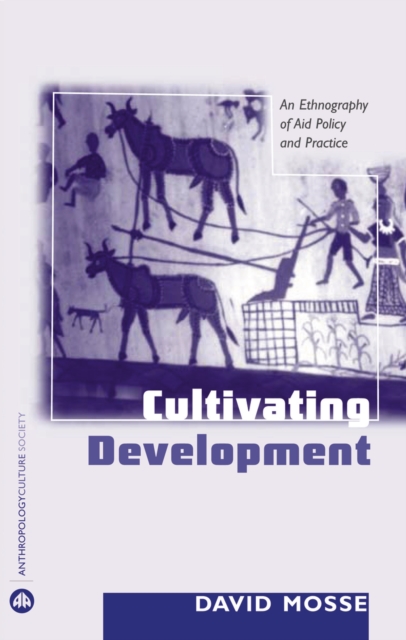
Cultivating development
What if development agencies and researchers are not driven by policy? Suppose that the things that make for 'good policy' - policy that legitimises and mobilises political support - in reality make it impossible to implement?
By focusing in detail on the unfolding activities of a development project in western India over more than ten years, as it falls under different policy regimes, this book takes a close look at the relationship between policy and practice in development. David Mosse shows how the actions of development workers are shaped by the exigencies of organisations and the need to maintain relationships rather than by policy; but also that development actors work hardest of all to maintain coherent representations of their actions as instances of authorised policy. Raising unfamiliar questions, Mosse provides a rare self-critical reflection on practice, while refusing to endorse current post-modern dismissal of development.
eBook